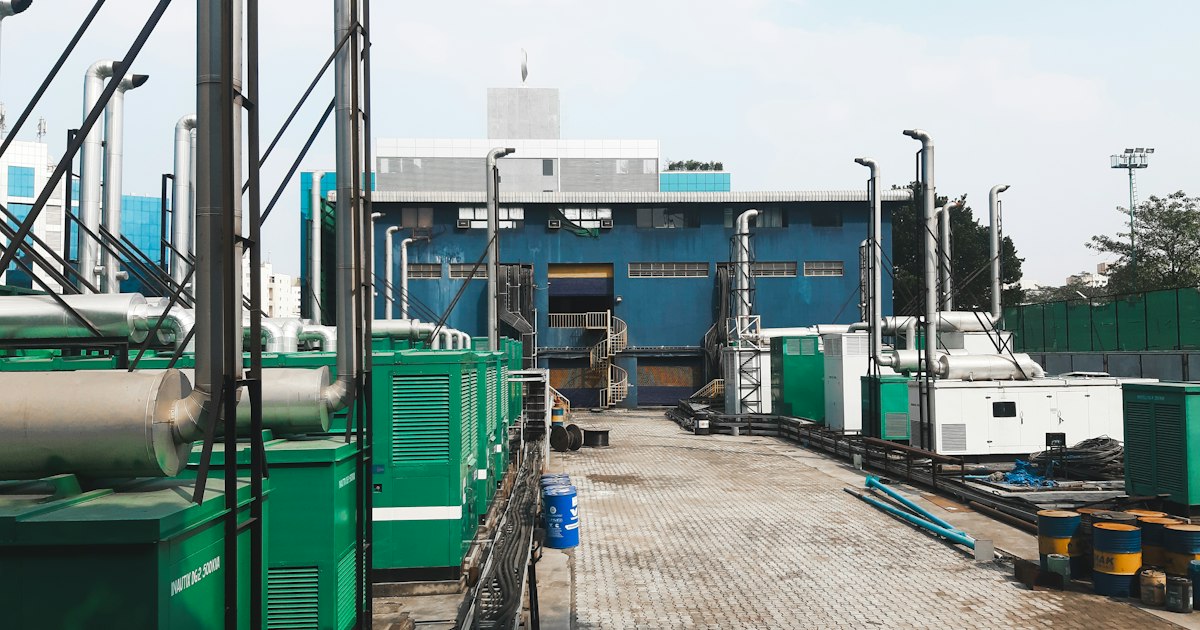
A gas-powered mining site stores more liquid than most operators think about. Engine oil in every genset and a drum or two of fresh oil beside them. Coolant. Hydraulic fluid. Mineral oil inside the transformers. At sites with backup generation, diesel in a day tank or a bulk tank.
Individually none of it seems like much. Totalled across a site, it is frequently enough to put the facility inside a federal rule that most operators have never heard of, and the obligation exists whether or not anybody has read it.
The Threshold That Catches People
The federal Spill Prevention, Control and Countermeasure rule applies to non-transportation facilities that store oil above a certain aggregate capacity and could reasonably discharge into navigable waters or adjoining shorelines. Two parts of that sentence do the work.
“Oil” is broader than diesel. It includes engine lubricating oil, hydraulic oil, and the mineral oil inside transformers. Operators who think they are under the threshold because they do not store fuel on site are frequently counting only the fuel.
Capacity, not contents. The calculation uses the capacity of each container, not how full it happens to be. An empty tank counts at its full capacity. So does a transformer at its oil capacity.
Add those up across a multi-megawatt site with several gensets and a couple of oil-filled transformers and the total climbs faster than expected. The exact thresholds and the question of whether your site could reach navigable water are determinations to make with somebody qualified rather than from an article, but the arithmetic is worth doing early, because the answer changes what you have to build.
What Secondary Containment Actually Means
Secondary containment is a second barrier that holds the liquid if the first one fails. It is a physical requirement, not a paperwork one, and it is far cheaper to build during construction than to retrofit around installed equipment.
The general principle is that containment must hold the capacity of the largest single container within it, plus enough freeboard for precipitation at an uncovered outdoor installation. That last part matters in practice: an outdoor containment area sized exactly to the tank volume will overflow in a heavy rain, which defeats the purpose and creates its own discharge.
Typical forms on a mining site:
Concrete bunds around bulk tanks and transformers. A curbed, sealed area. Sealed is the operative word, because a cracked slab or an unsealed joint is a containment area that drains.
Double-walled tanks. The containment is built into the tank. Simpler to install and simpler to inspect, which is why they are common for day tanks.
Spill pallets for drums. The cheapest item on this list and the one most often missing. Drums of fresh and waste oil sitting directly on a pad are an uncontained container, and inspectors look for exactly this because it is easy to spot.
Containment under equipment being serviced. Oil changes are a planned discharge risk. Our guide to oil analysis on mining gensets covers why those changes happen on a schedule; the containment under them is what keeps a routine job from becoming a reportable event.
Drainage Is the Part That Gets Missed
The most common containment failure on an industrial site is not a cracked bund. It is a drain valve left open.
Containment areas accumulate rainwater and need to be drained, so they have valves. Those valves are supposed to be closed by default, opened only after somebody has looked at the water and confirmed there is no sheen, and closed again afterward. In practice they get propped open so nobody has to keep walking out to them, and the containment becomes a drain.
The fix is procedural rather than structural: a locked valve, a named person responsible, and a record of each discharge. It belongs alongside the rest of your site’s written procedures, in the same place as the lockout and tagout documentation.
The second most common failure is site drainage that nobody mapped. If the pad slopes toward a ditch and the ditch runs to a creek, you have a pathway, and a spill that reaches it is a different category of problem from one that soaks into gravel. Knowing where your site drains is worth an afternoon.
What a Plan Actually Contains
Where a plan is required, it is a site-specific document, not a template with a name filled in. The substance includes:
- A site diagram showing every oil container, its capacity, and the drainage direction
- Containment description for each one, including how it is sized
- Inspection schedule and records, which in practice is the part that is audited most closely
- Response procedures: who is called, in what order, and what is on site to respond with
- Training records for the people who would actually respond
- Certification, which above certain thresholds must come from a professional engineer
The recurring theme in enforcement is not the absence of a plan. It is a plan that exists and does not match the site, usually because equipment was added afterward and nobody updated the document. Every genset you add changes the arithmetic.
Transformers Are the Container People Forget
Gensets get attention because they are obviously full of fluids and because somebody changes their oil. Transformers sit quietly for years and get counted as electrical equipment rather than as oil storage.
A liquid-filled transformer holds a meaningful volume of mineral oil, and at a multi-megawatt site there may be several of them. That volume counts toward your aggregate capacity, and a transformer failure is one of the more likely ways a site actually releases oil, because the failure modes that damage a transformer are the same ones that breach the tank.
Three practical points:
Containment under pad-mounted units. A transformer sitting on a bare concrete pad has no containment. The retrofit is a curbed and sealed area or an engineered containment system, and it is far easier to pour during the original civil works than to add around a live unit. Our guide to site preparation and civil works is the right place to raise it.
Less-flammable fluids are not the same as no containment. Transformers filled with ester-based fluids have a higher fire point, which is why they are specified indoors and in confined locations. They are still oil for containment purposes, and the volume still counts.
Oil condition tells you about failure risk. The same sampling discipline applied to genset oil applies here. A transformer whose oil shows rising moisture or dissolved gas is a transformer heading toward a fault, and a fault is how the oil gets out.
Response Capability, Sized Honestly
A spill kit on the wall is not a response capability if nobody knows where it is or what is in it.
What is worth having at a remote site: absorbent pads and booms sized against the largest realistic release rather than a token amount, drain covers to block the pathway you identified, non-sparking tools, labeled waste containers for used absorbent, and personal protective equipment. Used absorbent is itself a regulated waste and cannot simply go in the site dumpster, which is a detail that surprises people.
Then the part that actually determines the outcome: somebody on each shift who has physically opened the kit. A remote mining site may be an hour from any professional response, which means the first twenty minutes are entirely yours. Those twenty minutes decide whether this is a cleanup or an incident.
Why This Matters Commercially
Three reasons beyond the obvious one of not contaminating the ground you operate on.
Insurance. Environmental coverage frequently requires compliance with applicable requirements as a condition. A claim following a discharge at a facility that should have had containment and did not is a claim worth reading your policy about in advance.
Site value. Contamination is a liability that attaches to the property, and it surfaces during diligence when you refinance, sell or bring in a partner. Our guide to decommissioning and site remediation covers what that looks like at the end of a site’s life, and the cheapest version of that conversation is the one where nothing was ever released.
Hosting customers ask. Any institutional customer running diligence on a facility will ask about environmental compliance, and “we have never thought about it” is a poor answer when their own reporting depends on yours.
The Short Version
Count your oil capacity including transformers, not just fuel. Find out whether you are over the threshold before you build rather than after. Put containment under anything that holds oil, including the drums. Keep the drain valves closed and write down who is responsible for them. Know where your site drains. And make sure somebody on each shift has actually opened the spill kit.
None of it is expensive during construction. All of it is expensive afterward.
Where Rax Mining Fits
Containment, drainage and the associated documentation are part of how our hosted facilities are built and operated, so customers deploying into our capacity are not carrying this themselves. If you are developing your own site and want to talk through what the gas-powered build actually requires, contact our team.
Explore Rax Mining
- Bitcoin Miner Hosting — Competitive rates from $0.075/kWh
- NatGas MDU Units — 1MW modular datacenter containers
- Mining Profitability Calculator — Estimate your mining returns
- Our Facility — Tour our mining infrastructure