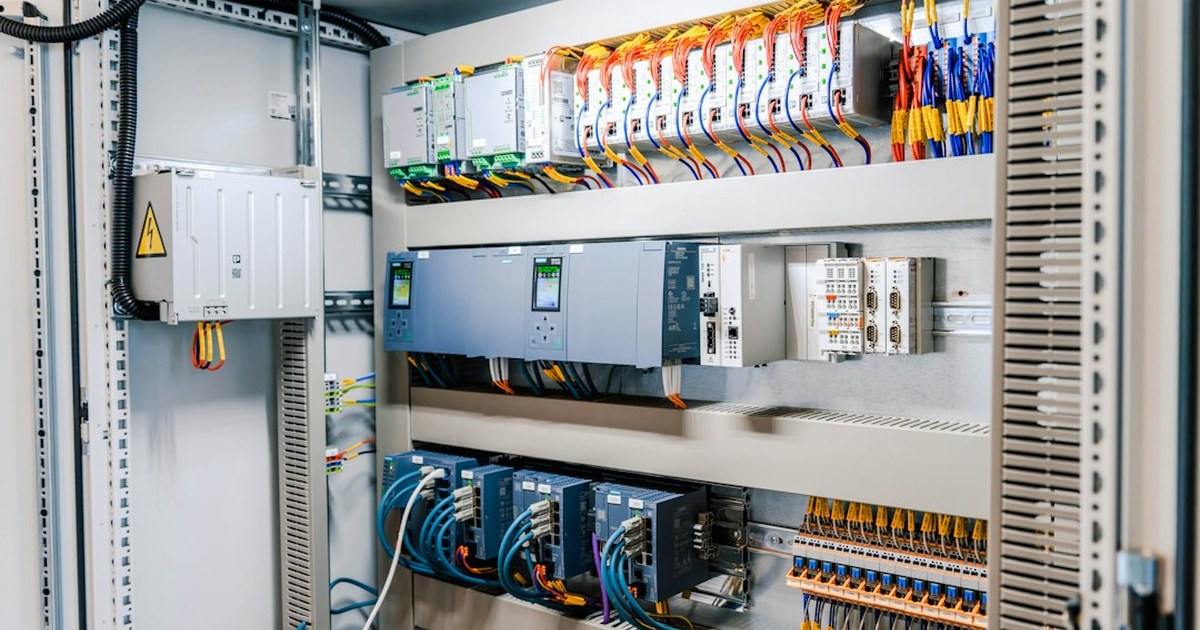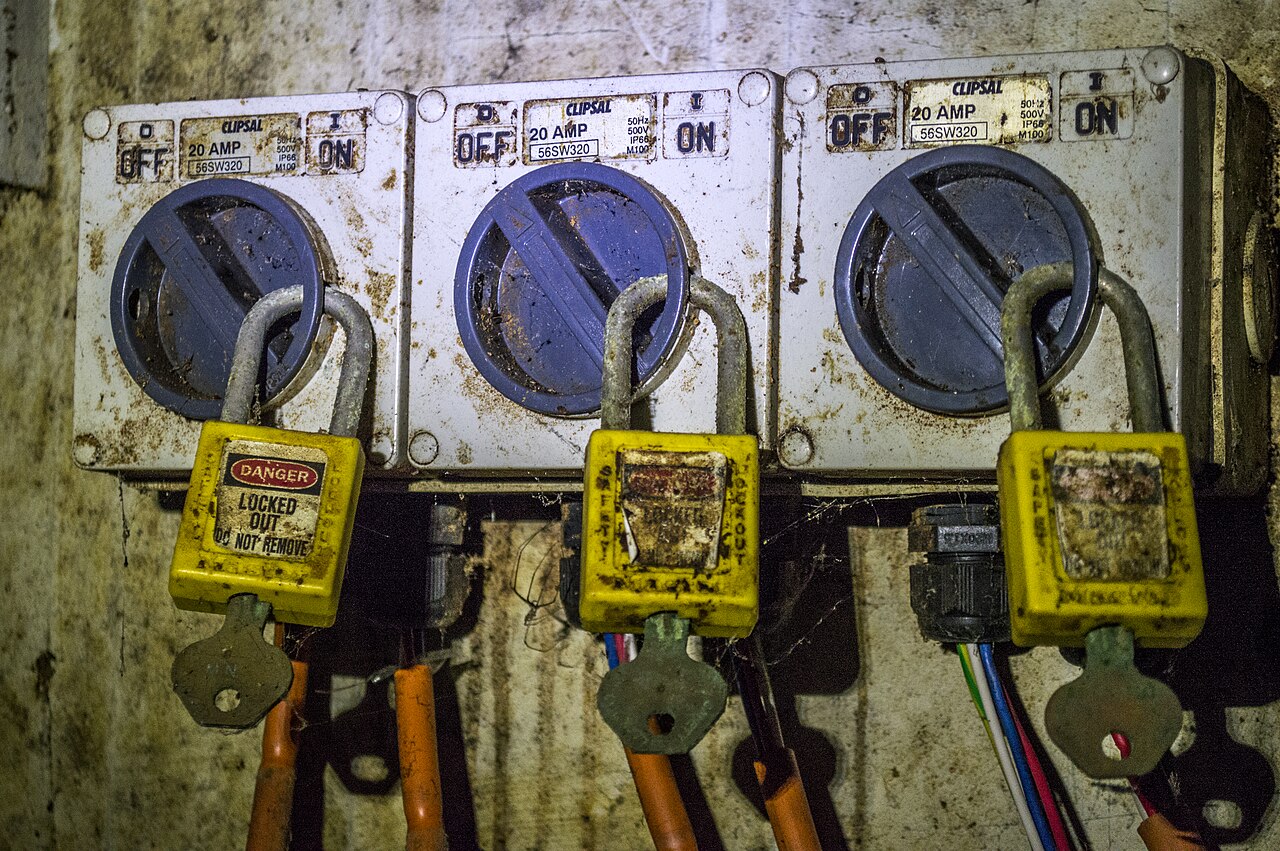
Most lockout/tagout programs written for bitcoin mining were written for data centres. They assume one hazard: electricity. Open the breaker, lock it, verify dead, start work. That assumption is reasonable inside a warehouse full of racks fed from a utility transformer.
It is not reasonable inside a containerized natural gas unit. A gas-powered mining container concentrates five distinct energy sources into roughly forty feet of enclosed space, and four of them are still live after you have opened the main breaker. A technician trained on a conventional hosting facility will isolate the one hazard they were taught about and walk into the other four.
This guide covers how to build an energy-isolation program for that environment. It is about procedure, not about arc-flash boundaries or personal protective equipment, which we cover separately in our guide to arc flash boundary calculations and NFPA 70E compliance.
The regulatory baseline
In the United States, the governing standard is OSHA 29 CFR 1910.147, usually called the Control of Hazardous Energy standard. It requires a documented energy control programme, written procedures specific to each machine, employee training, annual inspection of those procedures, and devices capable of holding an isolation point in the safe position.
Two parts of that list are where mining operations most often fall short. The first is that procedures must be machine-specific. A single generic lockout procedure covering “the container” does not satisfy the standard and, more importantly, does not survive contact with a real job. The second is the annual review. Procedures drift as equipment is modified, and a procedure that no longer matches the hardware is worse than no procedure, because people follow it and believe they are safe.
The five energy sources in a gas mining container
1. Electrical, utility or generator side
The obvious one. Isolation means opening and locking the main disconnect, then verifying absence of voltage at the point of work with a tester you have proved against a known source before and after the measurement. Testing a meter only before use is how people are killed by a meter that failed between the check and the measurement.
In a paralleled installation there is a complication worth stating plainly: opening one unit’s breaker does not isolate its bus if another generator can energise it. Any site running multiple units needs isolation points defined at the bus level as well as the unit level. We go deeper into the paralleling architecture in our guide to generator paralleling and synchronisation.
2. Electrical, stored
Variable frequency drives, uninterruptible supplies, power factor correction capacitors and the DC bus inside larger drives hold charge after the supply is removed. Manufacturer discharge times vary and are specified for a reason. The procedure must name the wait time for the specific equipment installed, and verification must happen after that wait, not instead of it.
3. Natural gas
This is the hazard a data-centre-trained technician will not be looking for. The fuel train feeding a genset holds pressurised gas downstream of the isolation valve. Closing the valve is not the end of the procedure. The downstream section must be vented to a safe location and proved at zero pressure before any fitting is broken.
Gas isolation also needs to be positive. A closed valve is not an isolation device in the sense the standard means, because valves pass. Where the work justifies it, the correct control is a double block and bleed arrangement, or physical disconnection and blanking of the line. Fuel composition matters here too, because liquids dropping out in the line change how a section behaves when it is vented. Our guide to gas quality conditioning for mining gensets covers that side.
4. Mechanical and pneumatic
Radiator fans windmill. A fan that is not powered can still turn, and a hand in a fan guard does not care whether the motion came from a motor or from airflow through the container. Rotating equipment needs to be physically blocked or restrained, not merely de-energised.
Containers also commonly carry a compressed air system for controls and actuators. That is a separate energy source with its own isolation point and its own bleed requirement.
5. Thermal
Exhaust manifolds, turbochargers and jacket water run hot enough to cause serious burns long after shutdown, and jacket water is both hot and pressurised. The procedure needs a stated cool-down period. In practice this is the control most often skipped, because the unit is down and the job is small and the technician wants to be finished.
Writing procedures people will actually follow
A procedure that is technically complete and practically unusable gets bypassed. A few things make the difference:
- One procedure per machine, not per site. The genset, the switchgear, the fuel train and the mining racks are different machines with different isolation points.
- Name the physical device. “Isolate the fuel supply” is not actionable. “Close FV-101 at the skid edge, lock, then bleed at the vent valve downstream” is.
- Put the sequence in order and make verification a numbered step, not an assumption buried in a sentence.
- Keep it at the machine. A procedure in a binder in an office trailer two hundred metres away will not be read.
Group lockout and contractors
Remote gas sites are worked by crews who do not all share an employer. The gas side may be a contractor, the electrical side another, and the mining hardware handled by your own technicians. OSHA’s standard anticipates this and requires that outside employers and the host exchange energy control information.
In practice the control that works is a group lockout box. The authorised employee applies the isolation, places the key in the box, and every person working applies their own lock to the box. The system cannot be restored until the last person removes their own lock. It is simple, it is visible, and it does not depend on anyone remembering who else is on site.
Shift handover deserves the same discipline. A lockout that spans a shift change needs a documented transfer, because the most dangerous moment in any isolation is when the person who applied it goes home and someone else assumes the job is finished.
Remote sites change the risk calculation
A hosting facility in a metropolitan area can have a second technician on site quickly. A gas pad two hours from the nearest town cannot. That distance changes two things.
First, lone working needs an explicit policy. Energy isolation work on gas and medium-voltage systems is not lone-worker work, and the honest answer is sometimes that a job waits until a second person is available.
Second, your emergency response plan has to be written for the actual response time, not an assumed one. That means knowing which facility can treat an electrical burn, and confirming it rather than assuming the nearest hospital can.
Verification and the annual review
The annual inspection required by the standard is not a paperwork exercise. It means watching the procedure performed, by someone other than the person who performs it routinely, and correcting what has drifted. Equipment gets modified. Valves get replaced with different tags. A drive gets swapped for a model with a different discharge time. Procedures silently stop matching reality.
Tie the review to something you already do. Sites that fold the energy-isolation review into their scheduled engine maintenance tend to keep it current, because the work is already planned and the equipment is already down. Our guide to gas engine maintenance intervals covers how those windows are usually structured.
Where this sits in a wider operations programme
Energy isolation is one piece of a competent remote-site operation. It connects directly to how you staff the site, because procedures are only as good as the people trained to use them, which we cover in our guide to hiring, training and managing mining technicians. It connects to your controls architecture, because a well-designed system makes isolation state visible rather than something a technician has to infer, as discussed in our guide to SCADA and PLC controls.
Rax Mining builds and deploys containerized natural gas mining units, and energy isolation is part of how a unit is specified rather than something bolted on after delivery. If you are planning a deployment and want to review the isolation design before the container is built, our consulting team works through exactly that.
Explore Rax Mining
- Bitcoin Miner Hosting — Competitive rates from $0.075/kWh
- NatGas MDU Units — 1MW modular datacenter containers
- Mining Profitability Calculator — Estimate your mining returns
- Our Facility — Tour our mining infrastructure