Most guidance on mining connectivity assumes you are in a building with an internet service to order. On a gas pad that assumption does not hold. There is frequently no fibre within miles, no wired service to buy, and no realistic prospect of either. The question is not which provider to choose, it is which physical medium can reach you at all.
This is a comparison of the three that usually can: satellite, cellular and licensed microwave. It is about getting a link to the site. What the link then has to carry is covered in our guide to bandwidth, latency and connectivity requirements.
What mining actually demands of a link
Start here, because the requirement is smaller than people expect and that changes which options are viable.
Mining itself is remarkably light on bandwidth. Stratum traffic between a fleet and a pool is small and bursty. A large fleet does not need anything close to the throughput of an office. What it needs is consistency, because a dropped connection means submitted shares do not land.
Latency matters, but less than intuition suggests, and it matters in a specific way: what costs you money is stale work, not raw round-trip time. Our guide to latency optimisation and stratum tuning goes into the mechanics.
The heavier demands usually come from everything else on site: remote monitoring and controls, camera systems, and the ability to actually administer the fleet without driving out. Cameras in particular will dominate your upstream if nobody sizes them deliberately.
Satellite
Low-earth-orbit satellite service has changed this calculation in the last few years. Where the only option used to be geostationary service with latency measured in hundreds of milliseconds, LEO constellations bring round-trip times into a range that is workable for mining.
What it is good at: it works essentially anywhere with a clear view of the sky, which is the whole point on a remote pad. Deployment is fast and does not depend on a carrier building anything for you.
What to watch: throughput varies with network congestion in your cell, and service terms differ substantially between consumer and business tiers. Weather attenuates the link, particularly heavy rain. And the dish needs a genuinely clear view: obstructions that look trivial on the ground cause intermittent, maddening drops that are hard to diagnose later.
Power draw is worth planning for too. The terminal and its heater are a continuous load, and on a site where you are metering everything it belongs in the calculation rather than being discovered later.
Cellular
Where there is coverage, a cellular router with a decent external antenna is often the cheapest and simplest link available, and gas-producing regions frequently have better coverage than their remoteness suggests because the industry itself drove the buildout.
What it is good at: low cost, trivial deployment, and the option of a second carrier as a genuinely independent backup.
What to watch: coverage maps are marketing. The only trustworthy test is a survey at the actual pad, with the antenna at the actual height, at more than one time of day. A signal that is adequate at noon and marginal at seven in the evening will produce failures that correlate with nothing you can see.
Antenna work does more here than anything else. An external directional antenna on a mast, aimed at a known tower, routinely converts an unusable link into a solid one. Also confirm whether your plan is genuinely unlimited or shaped after a threshold, because camera uploads will find that threshold.
Licensed microwave
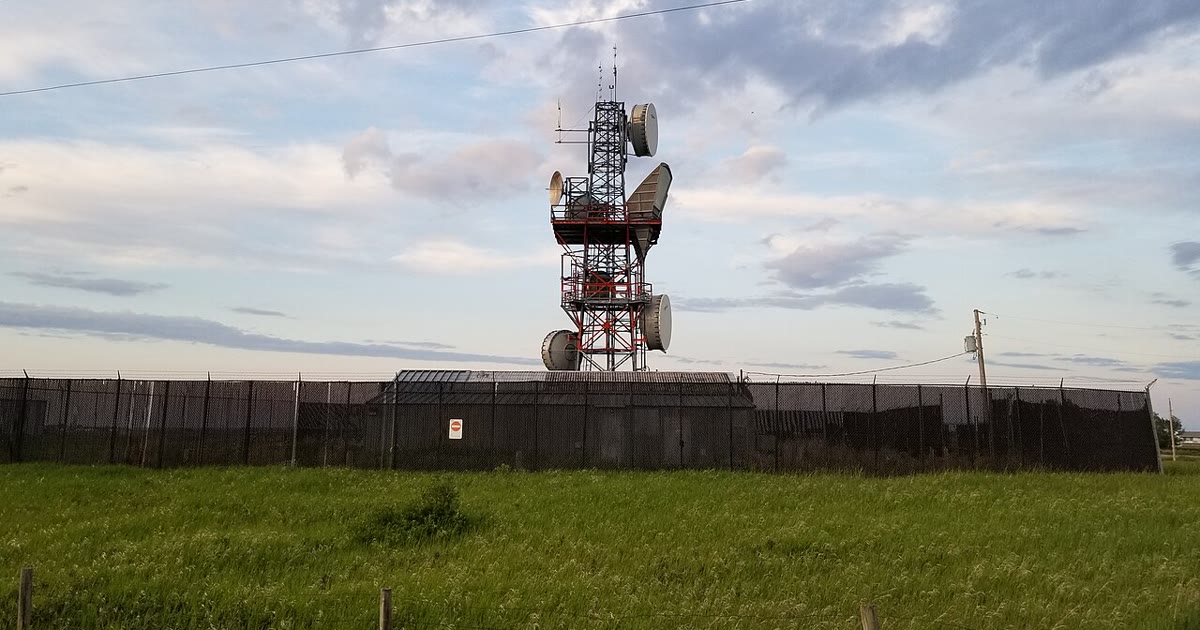
If there is a facility with real connectivity within line of sight, a point-to-point microwave link can deliver far more capacity than either alternative, with latency close to wired.
What it is good at: high throughput, very low latency, and a link you own rather than rent. Over a long enough horizon the economics can beat a recurring satellite or cellular bill.
What to watch: it needs line of sight, which means a path survey and often a mast at both ends. Licensed spectrum means coordination and fees. Capital cost is front-loaded and the install is a real project rather than an afternoon. It also only works if the far end exists, which rules it out for genuinely isolated sites.
The honest recommendation: do not pick one
An unmanned site with a single link has a single point of failure, and the failure will happen when nobody is there. The practical architecture for a remote pad is two links on different physical media with automatic failover.
Different media is the part people get wrong. Two cellular connections on the same carrier share a tower and fail together. Two carriers is better. Cellular plus satellite is better still, because almost nothing takes out both at once.
Make the failover automatic and then test it by actually unplugging the primary, not by reading the configuration. A failover that has never been exercised is a theory. Our guide to remote monitoring and fleet management covers what should be watching the link, and our guide to stratum proxy configuration covers pool-side failover, which is a separate layer and worth having as well.
Designing the on-site network
Whatever reaches the site, a few things hold.
- Segment the network. Miners, controls and cameras do not belong on one flat network. Our guide to IP address management and segmentation covers the addressing scheme.
- Give yourself out-of-band access. If the only way to reach the router is through the router, a bad change means a site visit.
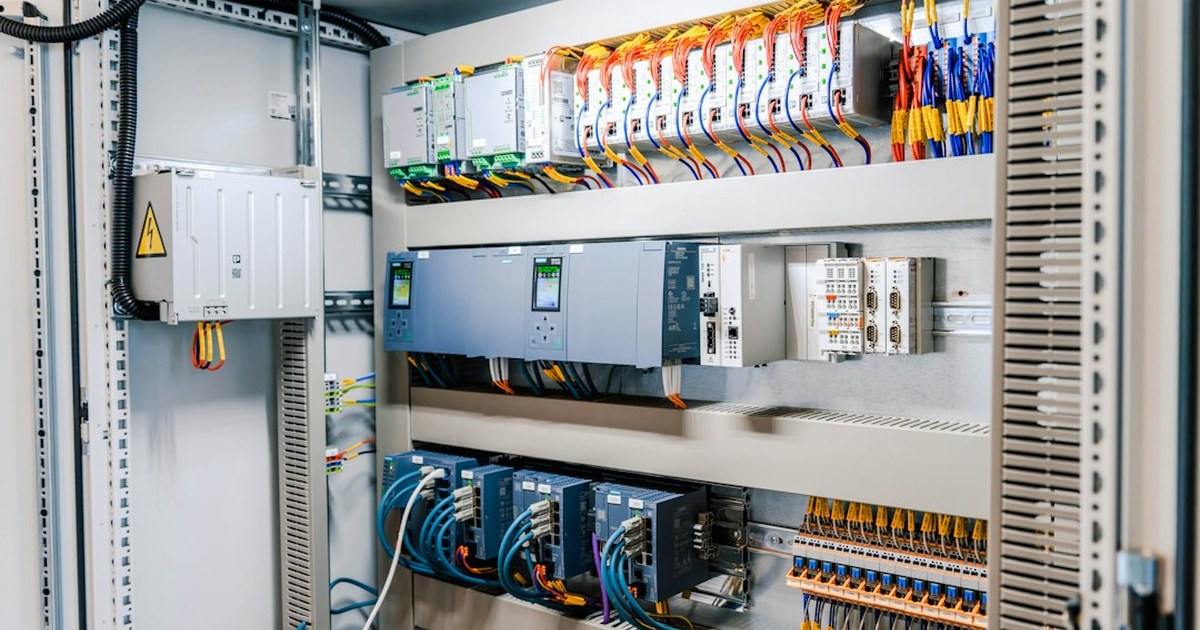
- Put the network gear on protected power. A link that drops every time the genset hiccups will be blamed on the carrier for months.
- Harden it. A remote site with a public-facing management interface will be found. See our guide to network hardening.
Comparing the real cost, not the headline cost
Each option hides its cost somewhere different, which makes headline pricing misleading.
Satellite is mostly recurring. Hardware is modest, the monthly is the number that matters, and business tiers cost substantially more than consumer ones but come with terms you can actually hold someone to. Budget for the continuous power draw of the terminal as well.
Cellular looks cheapest and often is, but the antenna, mast and mounting work is real money and real labour, and it is the part that determines whether the link works at all. Paying for a proper external antenna install is almost always cheaper than troubleshooting a marginal link for a year.
Microwave is almost entirely capital. Radios, masts, the path survey, licensing and the install are front-loaded, after which the recurring cost is close to nothing. On a site you expect to run for years it can be the cheapest option in total, and on a site that might move in eighteen months it is the most expensive.
Whichever you pick, add the cost of a truck roll. On a remote pad a site visit to reset a router is a half-day and a tank of fuel, and that figure should inform how much you spend on making the link reliable and remotely recoverable in the first place.
What to survey before you commit
- Cellular signal at the mast height you will actually use, on every carrier available, measured at more than one time of day rather than once at noon.
- Sky view for satellite, checking for obstructions that will matter at low elevation angles rather than straight overhead.
- Line of sight to any candidate far-end site, confirmed on the ground and not only on a terrain map.
- Power availability at the point where the network equipment will live, including what happens to it during a genset start.
- Physical security and environment for the equipment cabinet: temperature, dust, and whether anything is reachable by someone who should not be reaching it.
Choosing for your site
If there is usable cellular coverage, start there and add satellite as the diverse backup. If there is no cellular, satellite becomes primary and a second terminal or a cellular link on a mast is the fallback. If a connected facility sits within line of sight and the site is long-term, microwave is worth the capital.
Rax Mining deploys containerized natural gas mining units on sites that are frequently well beyond the reach of wired service, and connectivity is part of how a deployment is specified rather than something solved after the container lands. If you are evaluating a site and want the connectivity design worked through before commitment, our consulting team can help.
Explore Rax Mining
- Bitcoin Miner Hosting — Competitive rates from $0.075/kWh
- NatGas MDU Units — 1MW modular datacenter containers
- Mining Profitability Calculator — Estimate your mining returns
- Our Facility — Tour our mining infrastructure