Bitcoin mining is often discussed in terms of power and hashrate, but network connectivity is the invisible infrastructure that ties your miners to the blockchain. Without a reliable internet connection, even the most powerful ASIC fleet generates zero revenue — shares never reach the pool, and blocks never get submitted. Understanding the actual bandwidth, latency, and redundancy requirements for mining operations helps you avoid one of the most overlooked causes of lost hashrate.
How Much Bandwidth Does Bitcoin Mining Actually Use?
One of the most common misconceptions about mining is that it requires massive bandwidth. In reality, the data exchange between an ASIC miner and a mining pool is remarkably small:
| Metric | Per Miner | 100-Miner Farm | 500-Miner Farm |
|---|---|---|---|
| Average bandwidth | 5-15 KB/s | 0.5-1.5 MB/s | 2.5-7.5 MB/s |
| Daily data transfer | 500 MB – 1.3 GB | 50-130 GB | 250-650 GB |
| Monthly data transfer | 15-40 GB | 1.5-4 TB | 7.5-20 TB |
| Minimum connection speed | 256 Kbps | 25 Mbps | 100 Mbps |
| Recommended connection | 1 Mbps | 50 Mbps | 250 Mbps |
The data exchanged consists of small work assignments from the pool (block headers, nonce ranges) and share submissions from the miner (proof-of-work results). Each transaction is only a few hundred bytes. The recommended speeds above include generous headroom for monitoring dashboards, firmware updates, and management traffic.
Why Latency Matters More Than Bandwidth
While bandwidth requirements are modest, latency directly impacts mining revenue. When your miner finds a valid share or a pool distributes a new block template, every millisecond of delay matters:
- Stale shares: If your share submission arrives after the pool has already moved to a new block template, the share is “stale” and earns nothing. High latency increases stale share rates.
- Block propagation delay: When a new Bitcoin block is found, pools update their work templates. Miners with higher latency continue working on the old block longer, wasting hashrate on work that cannot produce valid shares.
- Target stale rate: Professional operations aim for less than 0.5% stale shares. Each percentage point of stale shares is a direct 1% revenue loss.
| Latency to Pool | Typical Stale Rate | Revenue Impact | Acceptable? |
|---|---|---|---|
| <20ms | 0.1-0.3% | Negligible | Excellent |
| 20-50ms | 0.3-0.5% | Minimal | Good |
| 50-100ms | 0.5-1.0% | $150-300/MW/month | Acceptable |
| 100-200ms | 1.0-2.0% | $300-600/MW/month | Marginal |
| >200ms | 2.0%+ | $600+/MW/month | Poor |
Protocols like Stratum V2 reduce the impact of latency through more efficient data encoding and encrypted connections, but low latency remains fundamental to maximizing effective hashrate.
Connectivity Redundancy for Mining Facilities
A single internet connection is a single point of failure. Professional mining facilities implement redundancy at multiple levels:
Dual ISP Connections
The most common approach is maintaining two independent internet connections from different Internet Service Providers, ideally using different physical paths (fiber + fixed wireless, or two separate fiber routes). An automatic failover system detects when the primary connection fails and switches traffic to the backup within seconds.
For remote behind-the-meter deployments at wellsites or rural generation facilities, options may be limited. In these cases, a primary fixed wireless or fiber connection paired with a cellular (4G/5G) backup provides reasonable redundancy. Starlink has also become viable as a primary or backup connection for remote mining sites, with latencies of 25-60ms being acceptable for mining.
Multi-Pool Failover
Most ASIC firmware platforms support configuring multiple mining pools in priority order. If the primary pool becomes unreachable (whether due to pool downtime or a network path failure), the miner automatically switches to the secondary or tertiary pool. This provides application-layer redundancy independent of the network connection itself.
Best practice: configure at least three pool endpoints, ideally including pools with servers in different geographic regions. This protects against both pool outages and regional network disruptions.
Local Network Architecture
Inside the facility, network design affects reliability:
- Managed switches: Enterprise-grade managed switches with VLAN support allow you to isolate mining traffic from management traffic and monitor port-level connectivity.
- Redundant core switches: For operations above 200 miners, a redundant core switch pair prevents a single switch failure from taking the entire facility offline.
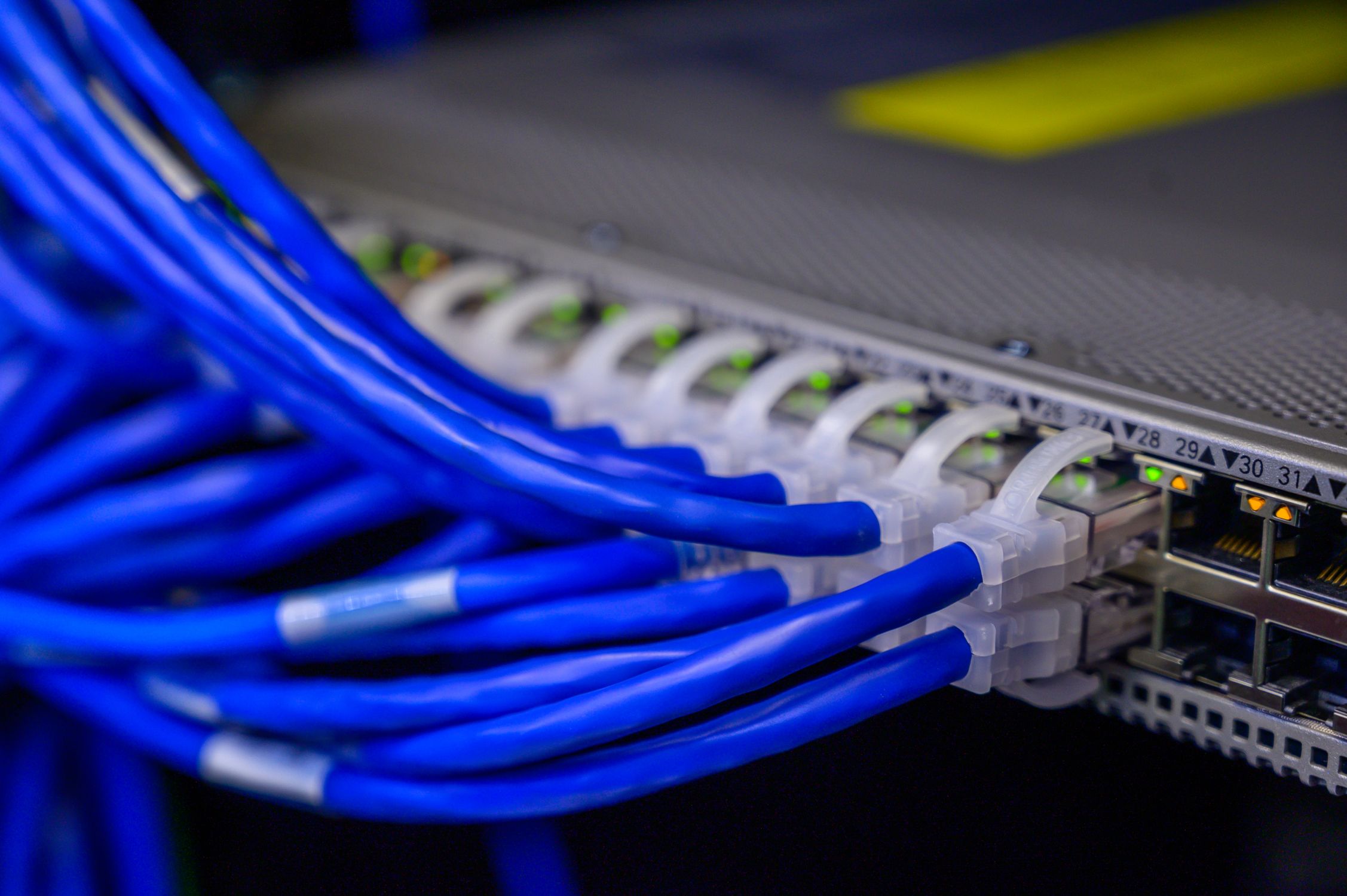
- Cable management: Ethernet cables in mining facilities face heat, vibration, and dust. Use Cat6 or Cat6a cabling rated for the ambient temperature, and route cables away from high-heat exhaust zones.
- DHCP vs static IP: DHCP simplifies deployment at scale. Static IPs are preferred for critical monitoring systems but unnecessary for individual miners.
Monitoring Network Health
Network issues are often intermittent and difficult to diagnose without proper monitoring. Essential metrics to track:
- Stale share rate: The most direct indicator of network performance issues. A sudden increase in stale shares usually points to latency spikes or packet loss, not hardware failure.
- Connection uptime: Track each miner’s pool connection status. Frequent reconnections indicate unstable connectivity.
- Bandwidth utilization: Monitor aggregate bandwidth to detect anomalies — a sudden spike might indicate a compromised device or firmware update storm.
- Latency trending: Ping or traceroute to pool servers every few minutes and log the results. Gradual latency increases can signal ISP routing changes or congestion patterns.
Most fleet management dashboards include network metrics. The key is reviewing them regularly rather than only investigating after revenue drops.
What to Ask Your Hosting Provider
When evaluating a colocation hosting provider, ask these network-specific questions:
- What ISP(s) provide connectivity to the facility? Is there a backup connection?
- What is the typical latency to major mining pools (Foundry, Antpool, F2Pool, ViaBTC)?
- What is the historical network uptime percentage over the past 12 months?
- Is the facility’s SLA inclusive of network uptime, or only power?
- What monitoring and alerting is in place for network issues?
Rax Mining’s data centers across our Midwest and Texas locations are engineered with redundant connectivity and low-latency connections to major pool servers. Schedule a consultation to discuss network infrastructure at your preferred hosting location.
Explore Rax Mining
- Bitcoin Miner Hosting — Competitive rates from $0.075/kWh
- NatGas MDU Units — 1MW modular datacenter containers
- Mining Profitability Calculator — Estimate your mining returns
- Our Facility — Tour our mining infrastructure