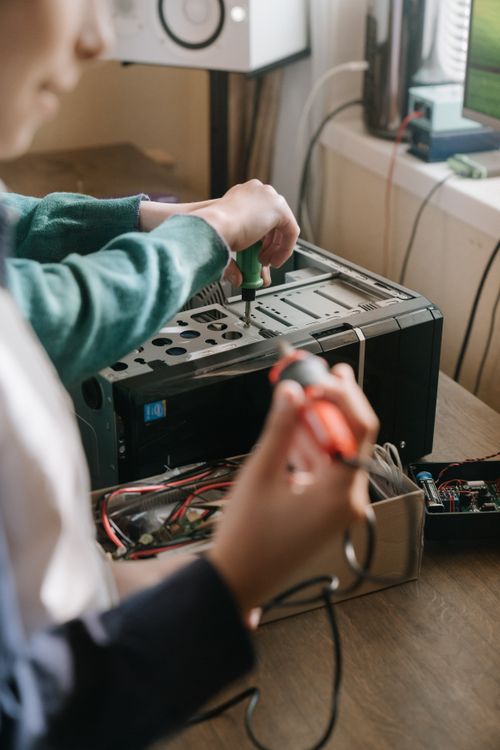
ASIC miners are high-performance machines that operate under extreme thermal and electrical stress 24 hours a day. Unlike consumer electronics that sit idle most of their lives, mining hardware runs at full load continuously, which makes warranty coverage and repair capabilities essential to protecting your investment. Understanding what manufacturer warranties actually cover, when third-party repair makes financial sense, and how to handle common failures can save operators thousands of dollars over the lifecycle of their hardware.
This guide covers warranty terms from major manufacturers, the most common ASIC failures, repair-vs-replace economics, and how to build a maintenance strategy that keeps your fleet running at maximum uptime.
Manufacturer Warranty Coverage: What You Actually Get
Every major ASIC manufacturer offers a warranty, but the terms vary significantly. Understanding what is and is not covered prevents unpleasant surprises when hardware fails mid-operation.
| Manufacturer | Standard Warranty | Coverage Scope | Key Exclusions | Claim Process |
|---|---|---|---|---|
| Bitmain (Antminer) | 180 days | Hash boards, control boards, fans, PSU | Physical damage, water, custom firmware | Ship to repair center (buyer pays outbound) |
| MicroBT (Whatsminer) | 365 days | Hash boards, control boards, fans | Overclocking damage, power surges | Ship to authorized service center |
| Canaan (Avalon) | 180 days | Full unit | Environmental damage, unauthorized mods | RMA through distributor |
| Iceriver / Goldshell | 180 days | Unit defects | Mining wear, user damage | RMA through purchase channel |
The critical detail most buyers overlook: manufacturer warranties start from the date of shipment, not the date of installation. If your miner sits in customs or transit for 30 days, you have already consumed a significant portion of a 180-day warranty window. Plan accordingly when purchasing from overseas manufacturers or through intermediary distributors.
Most Common ASIC Failures by Component
Understanding failure patterns helps operators prioritize preventive maintenance and build appropriate spare parts inventory. The following table summarizes the most frequent failure modes across thousands of deployed ASICs in commercial hosting facilities.
| Component | Failure Rate (Annual) | Common Symptoms | Typical Repair Cost | DIY Difficulty |
|---|---|---|---|---|
| Fans | 8 – 15% | Abnormal noise, speed errors, overheating alerts | $15 – $40 per fan | Easy (plug-and-play) |
| Hash Board Chips | 3 – 7% | Reduced hash rate, missing ASIC chips in dashboard | $150 – $500 per board | Expert (BGA rework) |
| Control Board | 1 – 3% | Unit unresponsive, no network connection, boot loops | $80 – $200 | Moderate (board swap) |
| Power Supply (PSU) | 2 – 5% | Unit won’t power on, intermittent shutdowns, voltage errors | $100 – $300 | Moderate (unit swap) |
| Temperature Sensors | 1 – 2% | False high-temp shutdowns, erratic readings | $20 – $50 | Moderate (soldering) |
| Network/Ethernet Port | Under 1% | No connectivity, intermittent drops | $30 – $80 | Expert (port replacement) |
Fan failures are the most frequent but also the cheapest and easiest to fix. Hash board failures are the most expensive and require specialized equipment including hot-air rework stations and BGA reballing tools. Maintaining a stock of replacement fans and PSUs for your specific models eliminates most downtime-related revenue losses.
Repair vs. Replace: The Economic Decision Framework
When an ASIC fails outside of warranty, operators face a fundamental decision: repair the unit or replace it with newer hardware. The right answer depends on the specific failure, the machine’s age, current hashprice levels, and available repair resources.
When Repair Makes Sense
- Fan or PSU failure: Almost always worth repairing. Parts cost is under $300 and downtime is minimal.
- Single hash board issue: If the unit has 3+ boards and only one fails, repair cost vs. remaining profitable life usually favors repair.
- Current-generation hardware: An S21 or M66S with a fixable issue is worth repairing because replacement cost is high and efficiency is still competitive.
- Bulk fleet operations: In-house repair capability at scale (100+ units) reduces per-unit repair cost by 40-60% versus sending units out.
When Replacement Is Better
- Multiple board failures: If 2+ hash boards fail on the same unit, repair cost may approach 50-70% of a replacement unit.
- Previous-generation hardware: Repairing an S19j Pro when the S21 XP offers 2-3x better efficiency rarely makes economic sense.
- Hashprice below breakeven: If the repaired unit will not be profitable at current conditions, repair cost is wasted capital.
- Warranty available on new unit: A new miner with a fresh 180-365 day warranty may offer better risk-adjusted value than an aging repaired unit.
Use the mining profitability calculator to model whether a repaired unit’s remaining profitable months justify the repair cost. If the payback period on the repair exceeds 3-4 months, replacement or liquidation is typically the better path.
Third-Party Repair Services
A growing ecosystem of independent ASIC repair shops has emerged to fill the gap between manufacturer warranty and full replacement. These services range from local electronics repair technicians who have learned BGA rework to specialized ASIC repair companies with dedicated production lines.
What to Look for in a Repair Provider
- Experience with your specific model: Hash board layouts differ significantly between manufacturers and generations.
- Diagnostic capability: Good shops can identify failed chips precisely before quoting, avoiding unnecessary board-level replacements.
- Turnaround time guarantee: Every day in the shop is lost revenue. Target 5-10 business day turnaround.
- Post-repair warranty: Reputable shops offer 30-90 day warranties on their work.
- Transparent pricing: Flat-rate per board or per chip replacement is preferable to hourly billing.
| Repair Type | Typical Cost | Turnaround | Success Rate |
|---|---|---|---|
| ASIC Chip Replacement (per chip) | $20 – $50 | 3 – 7 days | 85 – 95% |
| Full Hash Board Repair | $150 – $500 | 5 – 14 days | 75 – 90% |
| Control Board Repair | $80 – $200 | 3 – 7 days | 90 – 95% |
| PSU Repair | $50 – $150 | 3 – 7 days | 80 – 90% |
| Full Unit Diagnostic + Repair | $200 – $600 | 7 – 21 days | Varies |
Building In-House Repair Capability
For operators with 50+ ASICs, developing in-house repair capability makes strong economic sense. The initial investment in tools and training pays for itself within the first few repairs that would otherwise require shipping units out or replacing them entirely.
Essential Repair Toolkit
- Hot-air rework station ($200-$600): For BGA chip removal and replacement
- Soldering station ($100-$300): For connector and component-level repair
- Multimeter and oscilloscope ($100-$500): For voltage testing and signal analysis
- Thermal camera ($200-$500): For identifying hot chips and thermal issues without disassembly
- Spare parts inventory: Fans, PSUs, control boards, and common replacement chips for your fleet’s models
- ESD-safe workstation: Grounding mat, wrist strap, and proper workspace to prevent electrostatic damage
Total startup cost for a functional repair bench is $800-$2,500. Given that a single outsourced hash board repair costs $150-$500, the investment typically pays for itself after 3-5 repairs. Operators with larger fleets may find it worthwhile to hire or train a dedicated repair technician.
Warranty Best Practices for Mining Operations
Protecting Your Warranty
- Document everything: Photograph serial numbers, keep purchase receipts, and log installation dates.
- Use stock firmware: Custom firmware and overclocking typically void manufacturer warranties. If you plan to overclock, wait until the warranty period expires.
- Maintain proper power: Connect miners to properly sized circuits with surge protection. Power-related damage is a common warranty exclusion. Follow the electrical infrastructure guidelines for your facility.
- Environmental compliance: Keep operating conditions within manufacturer specifications. Temperature and humidity logs from your monitoring system serve as evidence if warranty claims arise.
Extended Warranty and Service Contracts
Some distributors and hosting providers offer extended warranty programs or service contracts that go beyond manufacturer coverage. These typically cost 5-10% of the hardware purchase price per year and cover component-level repair with guaranteed turnaround times. For operators who lack in-house repair capability, these contracts can be cost-effective insurance against unexpected failures.
Preventive Maintenance: The Best Warranty Is Prevention
The single most effective strategy for reducing repair costs is preventing failures in the first place. A structured maintenance program catches developing issues before they become expensive repairs.
- Monthly: Visual inspection of fans, check for unusual noise, verify all hash boards reporting
- Quarterly: Compressed air cleaning of heat sinks and fans, thermal scan for hot spots, firmware update review
- Semi-annual: Full disassembly and deep cleaning, connector inspection, power cable condition check
- Annual: Complete performance benchmark against baseline, evaluate for upgrade or liquidation
Proper cooling infrastructure is also critical to minimizing repair frequency. ASICs operating within their thermal specifications experience 50-70% fewer component failures than units running at elevated temperatures.
Hosted Mining and Warranty Considerations
If your ASICs are deployed at a colocation facility, warranty and repair responsibilities should be clearly defined in your hosting contract. Key questions to ask:
- Does the host handle warranty claims on your behalf?
- Who pays for shipping on warranty replacements?
- Does the facility have on-site repair capability for common issues like fan swaps?
- What is the guaranteed response time for hardware failures?
- Are you notified immediately when a unit goes offline?
Rax Mining provides proactive hardware monitoring and rapid response for hosted equipment. Our facilities maintain spare parts inventory and on-site technical capability to address common failures within hours rather than days. Contact us to learn about our hosting services and hardware support options.
{
“@context”: “https://schema.org”,
“@type”: “BlogPosting”,
“headline”: “ASIC Miner Warranty and Repair Guide: Coverage, Common Failures, and Maintenance Strategy”,
“description”: “Complete guide to ASIC miner warranties, common hardware failures, repair vs replace decisions, third-party repair services, and building in-house repair capability for mining operations.”,
“author”: {“@type”: “Organization”, “name”: “Rax Mining”},
“publisher”: {“@type”: “Organization”, “name”: “Rax Mining”, “url”: “https://raxmining.com”},
“datePublished”: “2026-07-16”,
“dateModified”: “2026-07-16”,
“mainEntityOfPage”: {“@type”: “WebPage”}
}
Explore Rax Mining
- Bitcoin Miner Hosting — Competitive rates from $0.075/kWh
- NatGas MDU Units — 1MW modular datacenter containers
- Mining Profitability Calculator — Estimate your mining returns
- Our Facility — Tour our mining infrastructure