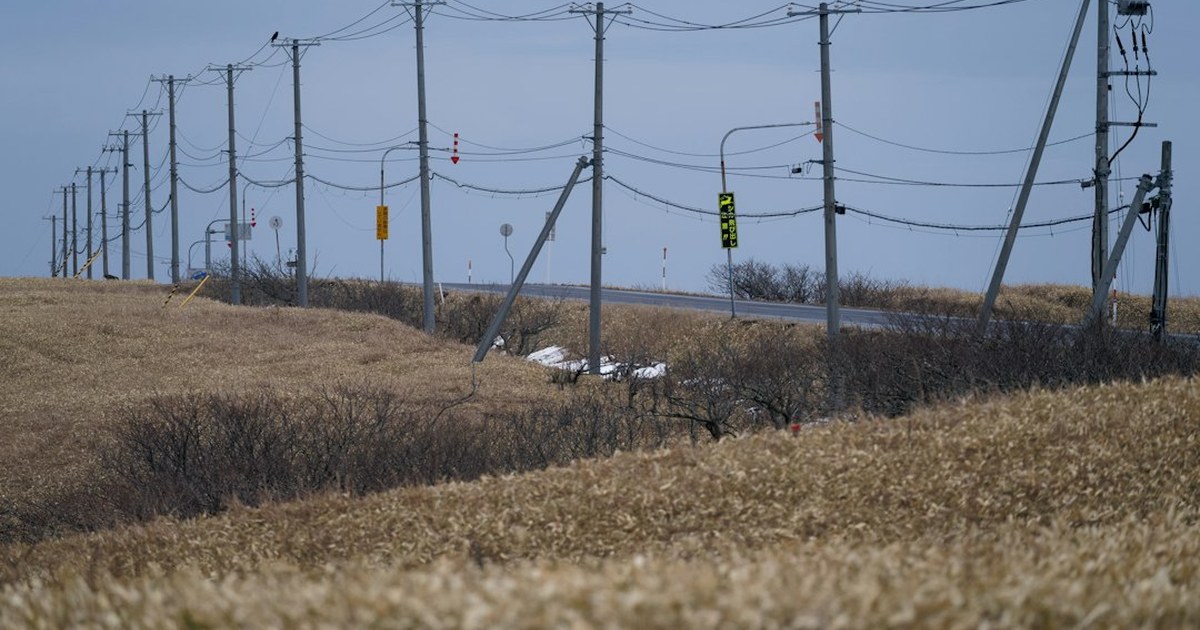
Sites are chosen for power. Power is cheapest where land is cheap and demand is thin, which is reliably the same place telecommunications infrastructure is thinnest. So the connectivity question arrives after the power question is settled, and by then the site is chosen.
Our guide to satellite, cellular and microwave for remote sites covers the wireless options and when each is the right answer. This is about the wired one: what it takes to get a carrier to build fiber to a rural parcel, who pays, and what the contract decides.
Start by finding out what is already in the ground
The first question is not what a circuit costs. It is how far the nearest usable fiber is, and that is rarely obvious from a map.
Fiber running past your property does not mean fiber available to your property. A long-haul route crossing a county may have no access point for many miles, and a cable owned by one carrier cannot be used by another without an agreement. What matters is the distance to a point where a carrier can actually hand off a circuit, which is a different and usually larger number.
Three sources are worth checking before assuming anything. The incumbent telephone company, which has the most rural copper and increasingly rural fiber. The regional electric cooperative, which in many areas has built fiber along its own distribution poles and sells access. And any state broadband office, which often maintains maps of subsidized builds that a private operator can connect to.
The co-op is the one operators overlook most often, and it is frequently the best answer at a mining site, because the co-op already has poles running to your meter.
It is worth asking the question in the right form. “Do you have fiber here” invites a no. “Where is your nearest point of presence, and what would it take to reach this address” produces a distance and a route, which is what you can act on. Carriers field the first question constantly and the second rarely.
Special construction is the real number
Where the gap is more than a short distance, the carrier does not absorb the build. They quote it as a one-time charge, usually called special construction or build-out, and it is typically far larger than the monthly circuit cost.
The charge is driven by distance and by what the route crosses. Aerial construction on existing poles is dramatically cheaper than trenching, so a route with usable poles costs a fraction of one without. Crossings are the expensive detail: a highway, a railroad or a waterway each brings a permit, an engineering requirement and a schedule risk disproportionate to its length. A single railroad crossing can add more time to a project than the rest of the route combined.
Two things are negotiable and worth pursuing. Carriers will often amortize the construction charge into the monthly rate across a longer term, which converts capital into operating expense. And where you can provide the path yourself, the number falls sharply, which is the point of the next section.
What you can contribute
A mining site under construction is already trenching. Our guide to site preparation and civil works covers the underground scope that happens before the containers arrive, and a conduit laid for your own use costs very little extra while the trench is open.
Carriers will frequently accept customer-provided conduit or even customer-placed fiber up to a demarcation point, and will price the build accordingly. The saving can be substantial. The conditions are usually specific: conduit of a particular size and type, pull strings in place, handholes at defined intervals, and a documented as-built. Ask for the specification before trenching, not after, because retrofitting a path to meet it is more expensive than building it right.
This is also the cheapest moment to lay a spare duct. A second empty conduit in the same trench costs almost nothing now and is the difference between a straightforward second carrier later and another full build.
Where the conduit crosses your own property, record exactly where it runs and mark it. A buried path nobody can locate is functionally gone: the next contractor either digs exploratory trenches to find it or gives up and quotes a new route. Our guide to site drainage makes the related point that backfilled trenches move water, so where the duct runs matters for more than one reason.
The contract decides what you actually get
Bandwidth is the least interesting term in a connectivity contract. A mining site’s real requirement is modest and steady; what matters is whether the link is up and how quickly it comes back when it is not.
Term and the construction clawback. Long terms buy better pricing and amortized construction, but early termination usually repays the unamortized build. That interacts badly with a site whose economics depend on a power contract of a different length. Match them, or at least know the gap.
The availability commitment and what it is worth. Most carrier agreements express availability as a monthly percentage with service credits attached. Read what a credit actually is: generally a partial rebate of that month’s circuit charge, not compensation for lost production. For a mining operation the circuit cost is small relative to downtime, so the credit will never approach the loss. Credits are a signal of the carrier’s confidence, not a remedy.
Repair response. This is the term that matters at a remote site and the one most often left vague. The useful questions are where the nearest technician is dispatched from, whether the response commitment is a target or an obligation, and what happens overnight and at weekends. A fiber cut in farmland can be a long repair simply because of travel.
Route diversity, honestly described. Two circuits are only redundant if they do not share a path. Carriers will sell a second circuit that follows the same poles through the same chokepoint, which fails at the same moment as the first. Ask for the physical route, not an assurance.
Who owns the equipment at your end. Carrier-provided hardware is usually simplest, but establish who is permitted to power-cycle it at three in the morning and whether doing so voids anything. At a site with no permanent staff, equipment that only the carrier may touch is equipment that stays down until a truck arrives.
What the site actually needs the link for
Sizing is where operators either overbuy or get surprised, because the obvious load is not the real one.
Mining traffic itself is light. Pool communication is small and continuous, and latency matters more than throughput, which our material on pool connectivity covers in detail. A site can mine over a link that would frustrate an office.
The load that actually drives the requirement is everything around it: fleet management polling thousands of devices, firmware pushes, camera and security streams, and remote access for whoever is diagnosing a problem at two in the morning. Our guide to remote monitoring and fleet management covers that side.
Two asymmetries are worth planning around. Camera systems and remote desktop are upload-heavy, and many rural services are built for the opposite. And the moment you most need the link to work well, during an incident, is the moment several people are pulling video and logs at once. Our guide to outage response assumes you can reach the site; the connectivity design is what makes that true.
Keep the wireless link
Where fiber arrives, the temptation is to cancel the cellular or satellite service that carried the site until then. Keeping it as a backup path is usually the better call, because it is genuinely diverse: a different medium on a different route, immune to the backhoe that takes out the fiber.
The useful arrangement is an automatic failover that carries control and monitoring, not full production. That is a modest ongoing cost for the ability to see and command the site during a fiber outage, rather than being blind until a crew arrives.
One practical note on commissioning the link: test it under the load it will actually carry, not with a speed test. Pull a week of camera retention, push a firmware image to a rack, and open the remote sessions a real incident would open, all at once. A circuit that looks fine idle can behave very differently when the upload path is saturated, and the time to learn that is before you depend on it.
Where to start
For a site in planning: establish the distance to a usable handoff before the site is committed, because it can be a material number and it is far easier to weigh against a slightly more expensive parcel than to absorb afterwards. Ask the electric cooperative first. And get the carrier’s conduit specification before you dig.
For a site already running on wireless: ask for a special construction quote even if you expect it to be high, because quotes age and rural fiber keeps being built. Many sites that were uneconomic to reach three years ago are now a short distance from a subsidized build.
Hosting removes the question entirely, since the facility has already solved it. Our breakdown of what hosting costs per kilowatt-hour covers what is included, and you are welcome to speak with our team about either approach.
Explore Rax Mining
- Bitcoin Miner Hosting — Competitive rates from $0.075/kWh
- NatGas MDU Units — 1MW modular datacenter containers
- Mining Profitability Calculator — Estimate your mining returns
- Our Facility — Tour our mining infrastructure