Cold climates get written up as an advantage for mining, and on the thermal arithmetic they are. Snow and ice are a separate question, and they are not an advantage. They are an operational hazard that arrives on a schedule, affects the parts of the site nobody instruments, and is easiest to deal with in the months before it shows up.
This is about the hazard rather than the thermal benefit. If your interest is how sub-zero ambient affects cooling cost and hashrate, that is a different discussion.
Access is the first failure, and it is usually the one that bites
A remote site is reachable right up until it is not, and the day it becomes unreachable is correlated with the day something needs attention.
The questions worth settling in autumn rather than January:
- Who plows, and on what trigger? A standing arrangement with a defined snow depth that triggers it, not a phone call made after the fact when every contractor in the county is already committed.
- Does the arrangement cover the whole route? Sites on private approach roads frequently find the public road is cleared and the last stretch is not.
- Can a loaded vehicle make it, not just a pickup? A fuel truck or a service vehicle with a replacement unit on it has different ground-bearing and turning requirements than the truck your technician drives.
- Where does the pushed snow go? Banks accumulate across a season, and a bank placed without thought ends up against a louvre, in front of a door, or on top of a transformer pad.
That last one is the most common self-inflicted injury on these sites. The plow operator is solving one problem and has no reason to know which wall is an air intake.
Blocked intakes and exhausts
Containerized deployments move very large volumes of air through openings that are, from the weather’s point of view, simply holes in a wall at a convenient height.
Three mechanisms cause trouble:
Drifting. Snow does not fall evenly around a structure. It accumulates in the lee and in any corner where airflow slows, and container rows create exactly those conditions. A drift that builds across several days can reach intake height without anyone registering it as a developing problem.
Ingestion. Fine, dry, wind-driven snow passes through intake louvres and filters and meets warm surfaces inside. It melts. Water then sits somewhere it was not designed to sit, and on the next cold cycle it freezes.
Exhaust recirculation under snow cover. Banked snow changes the airflow path around a container. Warm exhaust that previously dispersed can be deflected back toward an intake, which raises inlet temperature at precisely the time of year nobody is watching inlet temperature.
The practical defenses are ordinary: keep a cleared margin around every intake and exhaust face as a standing instruction rather than a reaction, specify hoods or baffles where drifting is predictable, and treat a rising inlet temperature in midwinter as the anomaly it is rather than a sensor fault.
Weight, and where it ends up
Snow load is a structural question and it is handled at design stage for the container itself. What is less often handled is everything bolted to or standing next to it.
Accumulation on cable trays, conduit runs, external ducting, canopies and lean-to structures adds load that was specified for the component, not for a season of snow on top of it. Ice loading is heavier than snow for the same depth and it bonds, so it does not shed when the wind picks up.
The hazard that injures people, though, is release rather than accumulation. Snow and ice sliding off a sloped surface onto a walkway, a door, or a technician is a known cause of injury on industrial sites. If a door opens under a surface that sheds, that is worth solving with a canopy or a relocated walking route before it is solved by an incident.
The cold restart
The most expensive winter event at a mining site is frequently not the outage. It is what happens when power returns.
Equipment that has sat unpowered in sub-zero conditions is at ambient. Energize it and warm, moist air meets cold surfaces, and condensation forms on electronics that were perfectly dry a moment earlier. Bringing a cold-soaked site back up quickly is how boards get damaged by water that was not present during the outage.
The discipline is to warm before energizing where that is possible, and to stage the restart rather than closing everything at once. Our guidance on black start procedure covers the sequencing; the winter addition is patience about temperature.
Generator sets have their own version of this. A block heater that has been failed for weeks is invisible until the unit is asked to start cold and cranks against thick oil. Block heater function belongs on the winter checklist, and it is checked by measuring coolant temperature rather than by confirming the heater has power.
Visibility is worse in winter, exactly when you need it more
Winter degrades the two things a remote site depends on: the ability to see what is happening, and the ability to go and look.
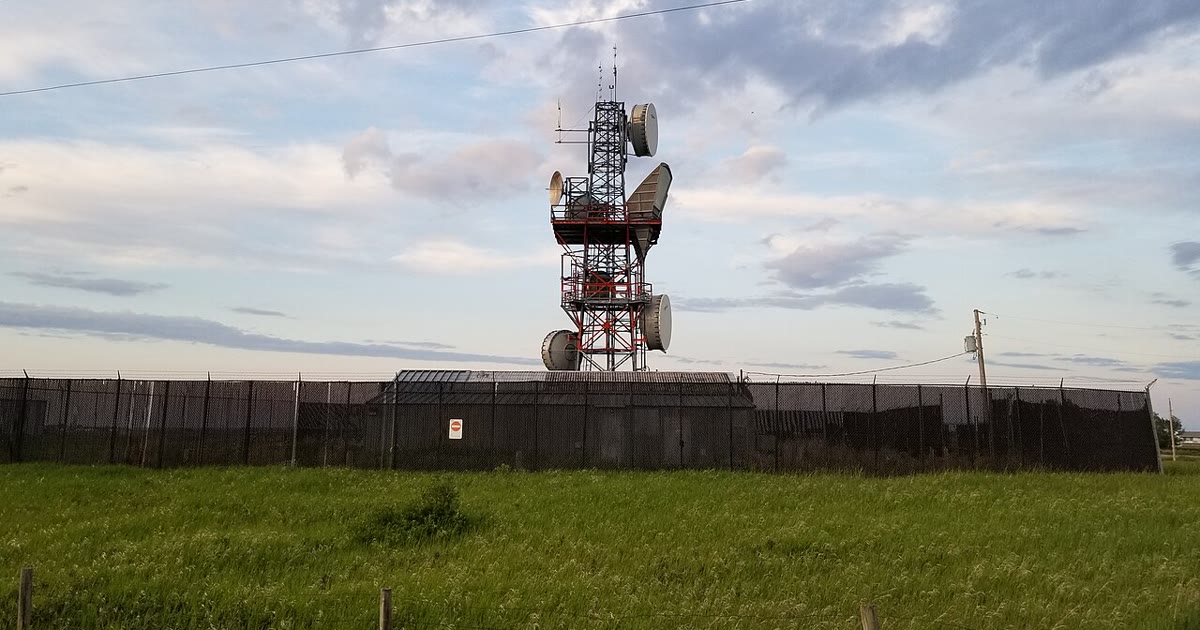
Satellite links are affected by accumulation on the dish itself. A few centimetres of wet snow on a reflector attenuates the signal, and because the failure is gradual rather than binary it reads as intermittent connectivity rather than an obvious physical problem. Heaters exist for exactly this and are worth specifying in climates where it will happen annually.
Cameras fog, ice over, and are pointed at a scene that is uniformly white and low-contrast. A camera that gave a useful view of the yard in September may be showing a flat grey rectangle in January, and nobody notices because nobody looks until there is a reason to.
Cellular coverage at the margin degrades in heavy weather. A site that works on a marginal signal in good conditions is a site that drops when it matters.
The compounding effect is what makes this worth planning for. Reduced visibility and reduced access arrive together, in the same weather, so the period when you most need to know what is happening on site is the period when you are least able to find out and least able to drive there. Redundant paths are worth more in winter than their annual cost suggests.
Staffing the season honestly
Winter response plans are frequently written on the assumption that someone will drive out. That assumption deserves examination.
Driving to a remote site in bad conditions carries genuine risk, and there is a point at which the correct answer is that nobody goes until the roads clear, even though equipment is down. Deciding that threshold in advance, in daylight, with nobody under pressure, is much better than deciding it at two in the morning with revenue stopped and someone volunteering.
If the site genuinely cannot tolerate that wait, the answer is not a braver technician. It is more redundancy on site, or remote capability to isolate and restart without hands, or an accepted and budgeted downtime window for the season. All three are legitimate. Pretending the problem does not exist is not.
The things that freeze that you forgot about
- Condensate drains. Any system producing condensate has a drain, and a frozen drain backs up into the equipment it was protecting.
- Low points in compressed air lines. Moisture collects there and freezes, and the instrument air that operates a valve stops arriving.
- Pressure regulators and gas trains. Where moisture is present, regulators are a cold-weather failure point. On a gas-fueled site that is a supply interruption, not an inconvenience.
- Door seals and latches. Ice in a seal means a door that will not close, which means a container that is no longer weather-tight, usually discovered on the next visit.
- Battery capacity. Available capacity falls with temperature. A battery string that is adequate in October may not hold the same load in January, and the time to find out is not during an outage.
A checklist worth running in autumn
- Snow clearing contracted, with a trigger depth and the full approach route included.
- Agreed locations for pushed snow, marked, and away from intakes, doors and electrical equipment.
- Cleared margin around every intake and exhaust defined as a standing requirement.
- Block heaters verified by coolant temperature, not by a powered indicator.
- Condensate drains and air-line low points checked and insulated or traced where needed.
- Battery capacity assessed at expected winter temperature.
- Walking routes checked for anything overhead that sheds.
- A written cold-restart sequence that someone other than its author can follow.
- Remote visibility good enough that you know about a developing drift before a site visit, which is where remote site connectivity earns its cost.
None of this is difficult and all of it is cheaper in October than in February. The sites that get through winter without incident are not the ones with better equipment. They are the ones that decided these things while the ground was still clear.
If you are planning a containerized deployment into a cold climate and want the winter exposure thought through at design stage rather than discovered, talk to our team.
Explore Rax Mining
- Bitcoin Miner Hosting — Competitive rates from $0.075/kWh
- NatGas MDU Units — 1MW modular datacenter containers
- Mining Profitability Calculator — Estimate your mining returns
- Our Facility — Tour our mining infrastructure