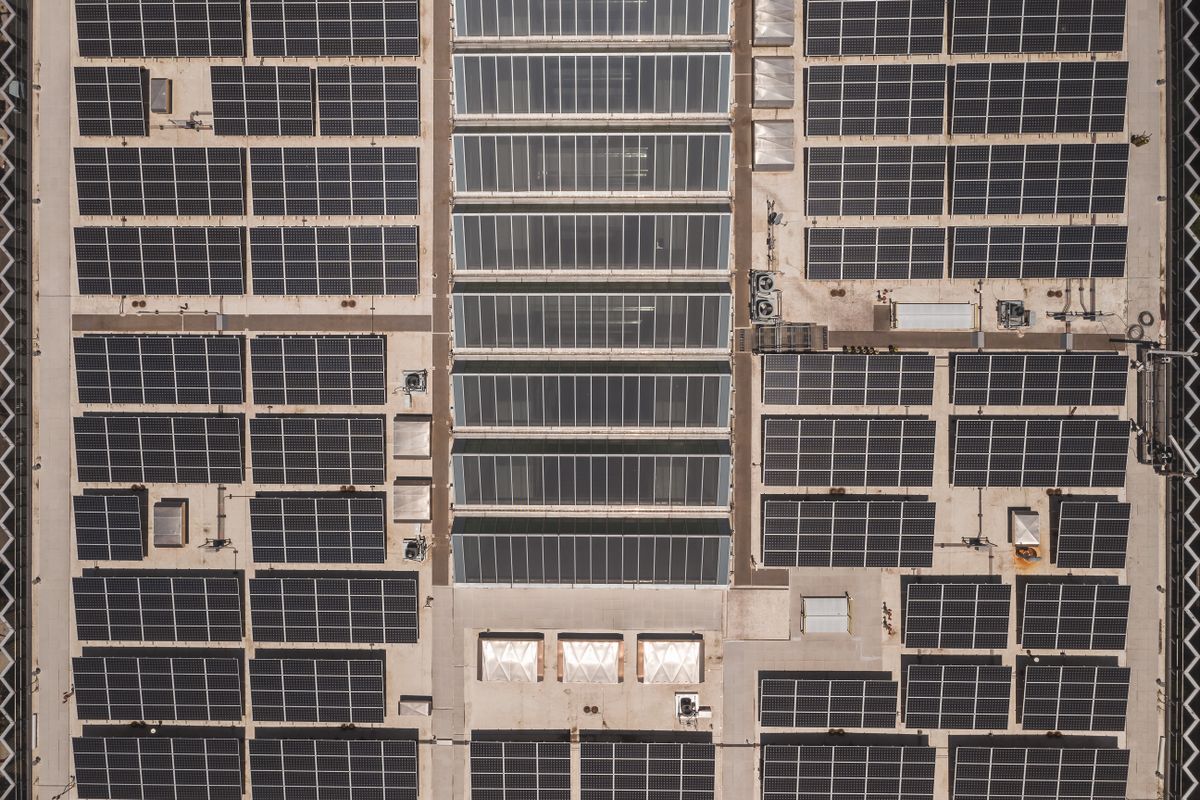
As energy costs dominate Bitcoin mining economics, an increasing number of operators are turning to renewable sources—solar, wind, and hydroelectric power—to gain a structural cost advantage. Far from being a PR exercise, renewable-powered mining operations can achieve electricity rates below $0.03/kWh in the right conditions, dramatically improving margins compared to grid-connected facilities paying $0.06–$0.10/kWh.
This guide breaks down the economics, engineering requirements, and practical considerations for building or transitioning to renewable-powered Bitcoin mining.
Why Renewables Make Economic Sense for Mining
Bitcoin mining is fundamentally an energy arbitrage business. The profitability of any mining operation depends on acquiring electricity at the lowest possible cost. Renewables offer several structural advantages:
- Zero fuel cost — once installed, solar panels and wind turbines produce electricity with no ongoing fuel expense
- Declining hardware costs — solar panel prices have fallen 90% in the last decade; utility-scale wind turbines have dropped 70%
- Tax incentives — the U.S. Investment Tax Credit (ITC) covers 30% of solar installation costs; the Production Tax Credit (PTC) provides per-kWh credits for wind
- Grid independence — off-grid or behind-the-meter installations avoid transmission charges, demand charges, and regulatory uncertainty
- ESG positioning — institutional investors and public markets increasingly favor operations with verifiable renewable energy usage
Renewable Source Comparison for Bitcoin Mining
| Factor | Solar | Wind | Hydroelectric |
|---|---|---|---|
| Capacity factor | 20–30% | 25–45% | 40–90% |
| LCOE ($/kWh) | $0.02–$0.05 | $0.02–$0.06 | $0.01–$0.04 |
| Best U.S. regions | TX, AZ, NV, CA, NM | TX, OK, IA, KS, ND | WA, OR, NY, TN, ID |
| Scalability | Highly modular | Site-dependent | Limited by water rights |
| Intermittency | Daytime only (no storage) | Variable, seasonal | Consistent baseload |
| Upfront cost per MW | $800K–$1.2M | $1.2M–$1.8M | $1.5M–$4M+ (existing dam) |
| Mining compatibility | Excellent with storage | Good with grid backup | Best — 24/7 baseload |
Solar-Powered Mining Operations
How Solar Mining Works
Solar mining facilities typically deploy utility-scale photovoltaic arrays (1–50+ MW) connected directly to modular datacenter units (MDUs) housing ASIC miners. The most cost-effective approach uses behind-the-meter connections, bypassing utility transmission charges entirely.
A 1 MW solar array in Texas or Arizona generates approximately 1,800–2,200 MWh annually. At current Antminer S21-class efficiency (17.5 J/TH), that powers roughly 300–350 TH/s of continuous hashrate during peak solar hours.
The Intermittency Challenge
Solar produces power only during daylight hours, creating a fundamental challenge for ASIC miners that operate optimally 24/7. Operators address this through several strategies:
- Grid hybrid — mine on solar during the day, switch to grid power at night (net metering or time-of-use arbitrage)
- Battery storage — lithium iron phosphate (LFP) batteries store excess daytime generation; costs have fallen to $150–$250/kWh of storage capacity
- Partial operation — run miners only during solar hours (12–14 hours/day in summer), accepting lower utilization but zero energy cost
- Oversized array — install 2–3x the solar capacity needed, sell excess to grid via power purchase agreements (PPAs)
Solar Mining Economics
| Metric | Grid-Only | Solar Hybrid | Solar + Battery |
|---|---|---|---|
| Effective $/kWh | $0.055–$0.08 | $0.03–$0.05 | $0.04–$0.06 |
| Uptime target | 95–99% | 60–75% | 85–95% |
| Capex per MW mining | $50K–$100K | $850K–$1.3M | $1.2M–$1.8M |
| Payback period | N/A (opex) | 3–5 years | 4–7 years |
| 25-year energy savings | Baseline | 40–60% | 30–50% |
Wind-Powered Mining Operations
Wind energy offers higher capacity factors than solar in the right locations, particularly across the Great Plains and Texas corridor. Wind farms in West Texas and Oklahoma regularly achieve 35–45% capacity factors, translating to 3,000–4,000 MWh per installed MW annually.
The key advantage of wind for mining is complementary generation patterns—wind often blows strongest at night and during winter, exactly when solar output drops. A combined solar+wind installation can achieve 70–85% effective capacity factor, approaching grid-quality reliability.
Wind Mining Considerations
- Site selection — average wind speeds above 7 m/s are essential for economic viability; the DOE Wind Resource Map identifies optimal sites
- Curtailed wind — many wind farms in Texas and the Midwest curtail 5–15% of generation due to transmission constraints, creating opportunities for behind-the-meter mining at near-zero cost
- Noise and siting — wind turbines require setbacks from residences; mining noise management becomes simpler at remote wind sites
- Maintenance access — remote locations increase logistics costs for ASIC maintenance
Hydroelectric Mining
Hydroelectric power represents the gold standard for Bitcoin mining energy—consistent baseload generation at the lowest cost per kWh of any source. Major mining operations in Washington state, Quebec, Paraguay, and Iceland leverage existing hydroelectric infrastructure to achieve electricity costs below $0.03/kWh.
The Pacific Northwest remains the most attractive U.S. region, where wholesale power rates from hydroelectric dams can reach $0.01–$0.03/kWh. However, access to these rates increasingly requires long-term PPAs and regulatory approval, as utility commissions scrutinize large mining loads.
Hydroelectric Advantages for Mining
- 24/7 baseload power — no intermittency, no storage needed, 90%+ capacity factors
- Lowest LCOE — existing dams with paid-off capital deliver electricity at $0.01–$0.02/kWh
- Natural cooling — proximity to cold water sources reduces cooling infrastructure costs
- Grid stability — hydroelectric provides frequency regulation and voltage support, improving power quality for sensitive electronics
Hybrid Energy Models: The Future of Mining
The most sophisticated mining operations combine multiple renewable sources with grid backup and battery storage to optimize cost, uptime, and resilience. A typical hybrid configuration might include:
| Component | Role | % of Annual Generation |
|---|---|---|
| Solar array (2 MW) | Daytime baseload | 35–40% |
| Wind turbines (1.5 MW) | Night/winter supplementation | 25–30% |
| Battery storage (1 MWh) | Peak shaving, bridging | 5–10% |
| Grid/NatGas backup | Gap filling, demand response | 20–30% |
This configuration achieves 90%+ uptime while maintaining a blended energy cost of $0.03–$0.04/kWh—significantly below the $0.075/kWh hosted mining rate from grid-connected facilities.
Renewable Energy Credits and Carbon Markets
Miners using verified renewable energy can generate additional revenue through Renewable Energy Certificates (RECs) and voluntary carbon markets. Each MWh of renewable generation produces one REC, currently trading at $1–$5 for wind/solar and $2–$8 for premium green-e certified credits.
While REC revenue is modest compared to mining income, it contributes to the overall economic case and provides documentation for ESG reporting. Some institutional mining funds require verified renewable energy usage as a condition of investment, making RECs an operational necessity rather than an optional bonus.
Site Selection for Renewable Mining
Choosing the right location is the single most impactful decision for a renewable mining operation. Key factors include:
- Solar irradiance / wind speed data — minimum 5.5 kWh/m²/day solar or 7 m/s average wind speed
- Land cost and availability — rural sites in Texas, Nevada, and Oklahoma offer the best combination of resource quality and low land costs
- Grid interconnection — even for off-grid operations, proximity to transmission lines provides backup power and excess energy sales options
- Permitting environment — some counties and states have streamlined permitting for combined renewable+mining projects
- Cooling climate — northern U.S. locations reduce cooling costs and extend air-cooled equipment viability
- Internet connectivity — mining requires minimal bandwidth (under 1 Mbps per 100 miners) but reliable connectivity
Financing Renewable Mining Projects
The primary barrier to renewable mining is upfront capital expenditure. A 5 MW solar+mining installation requires $4–$7 million in total investment. Common financing structures include:
- Power Purchase Agreements (PPAs) — a solar developer builds and owns the array; the miner purchases electricity at a fixed rate ($0.03–$0.05/kWh) for 10–25 years
- Equipment leasing — lease solar panels and wind turbines, preserving capital for ASIC purchases
- ITC/PTC tax equity — partner with tax equity investors who monetize federal tax credits in exchange for project ownership stakes
- Green bonds — issue bonds specifically for renewable energy infrastructure, often at favorable rates
Renewable Mining vs. NatGas Mining
For operators evaluating energy strategies, the comparison between renewable and natural gas-powered mining is critical:
| Factor | Renewable | NatGas |
|---|---|---|
| Energy cost ($/kWh) | $0.02–$0.05 | $0.03–$0.06 |
| Uptime reliability | 60–90% (source dependent) | 95%+ |
| Capex | High ($800K–$1.5M/MW) | Moderate ($600K per MDU) |
| Fuel price risk | None (zero fuel cost) | Moderate (gas price volatility) |
| ESG positioning | Strong | Moderate (if using stranded/flared gas) |
| Permitting complexity | Moderate | Lower (established frameworks) |
| Location flexibility | Limited by resource | Flexible (anywhere with gas supply) |
Many operators combine both approaches—using NatGas MDUs for baseload reliability while deploying solar arrays for daytime cost reduction.
The Regulatory Landscape
Renewable mining benefits from a generally favorable regulatory environment. The Inflation Reduction Act extended solar ITC at 30% through 2032, and the PTC for wind provides $0.026/kWh in 2026 dollars. Several states offer additional incentives:
- Texas — no state income tax, property tax exemptions for renewable energy equipment, competitive interconnection process
- Wyoming — favorable wind resources, low population density, crypto-friendly legislation
- New York — moratorium on fossil-fuel-powered mining makes renewables the only viable option for new operations
- Georgia/Tennessee — low-cost hydro from TVA, favorable business climate
Stay current on mining tax regulations and state-level policy changes, as the landscape evolves rapidly.
Getting Started with Renewable Mining
For miners considering a renewable energy transition, Rax Mining offers consulting services to evaluate site feasibility, energy modeling, and hybrid system design. Our hosted mining program provides a low-risk entry point for operators who want to begin mining immediately while exploring renewable infrastructure development.
Use our profitability calculator to model different energy cost scenarios. Even a modest reduction from $0.06/kWh to $0.04/kWh can increase annual mining revenue by 30–40% on a per-machine basis, making the renewable investment case compelling at current Bitcoin prices.
Contact Rax Mining at (718) 766-8559 or info@rax.ae to discuss renewable energy integration for your mining operation.
Explore Rax Mining
- Bitcoin Miner Hosting — Competitive rates from $0.075/kWh
- NatGas MDU Units — 1MW modular datacenter containers
- Mining Profitability Calculator — Estimate your mining returns
- Our Facility — Tour our mining infrastructure