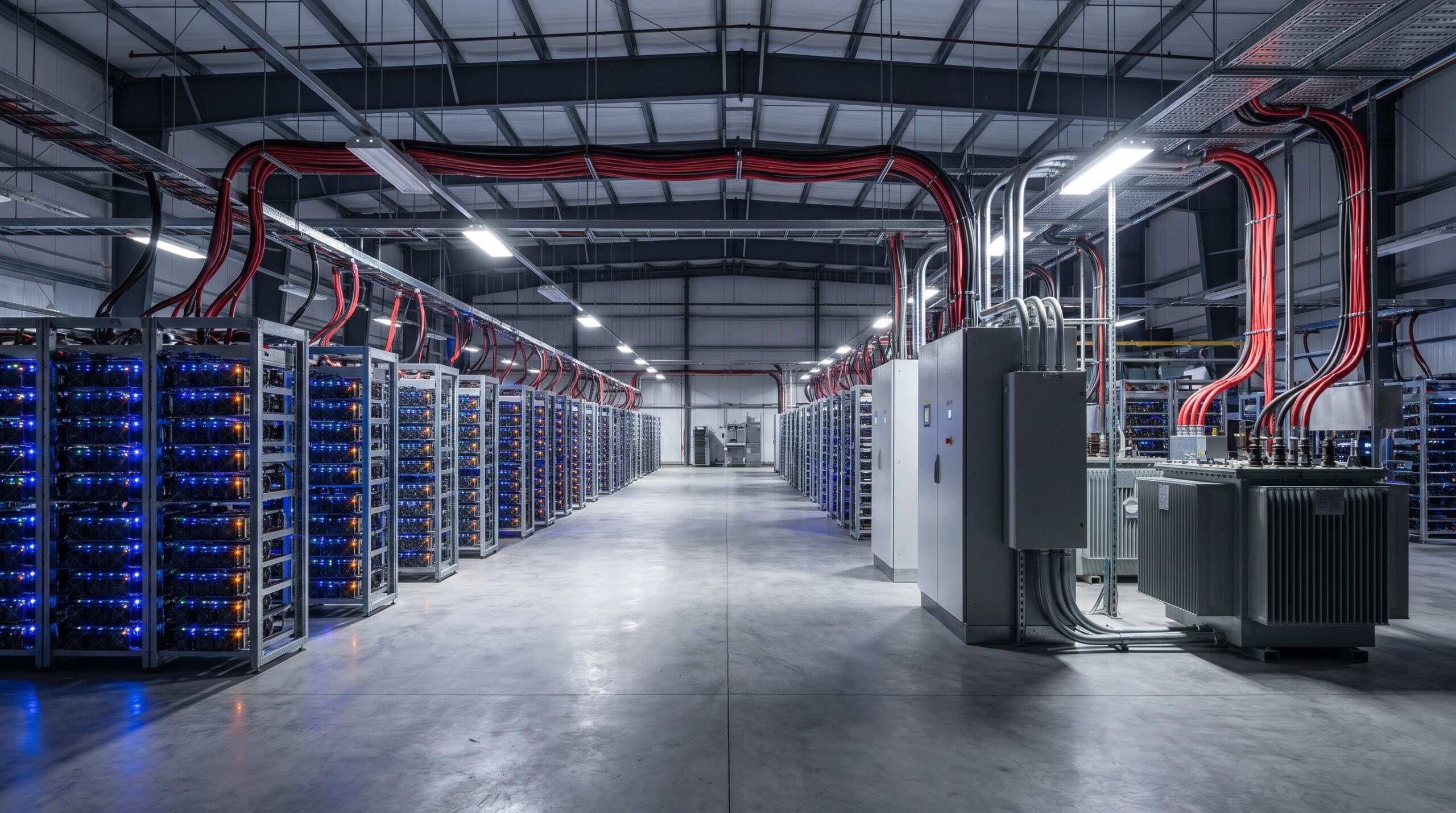
Understanding Wholesale Power in Bitcoin Mining
Electricity is the single largest operating expense in Bitcoin mining, often accounting for 60-80% of total costs. For large-scale operations, the difference between retail and wholesale electricity rates can mean the difference between a profitable mining business and one that bleeds money every month. Understanding how data center electricity pricing works is essential for any serious miner evaluating hosting and colocation options.
What Is Wholesale Power Pricing?
Wholesale electricity refers to power purchased directly from generators, utilities, or through deregulated energy markets at bulk rates, bypassing the retail markup that residential and small commercial customers pay. While a typical residential customer might pay $0.12-$0.16 per kWh, wholesale rates for large consumers can range from $0.03-$0.07 per kWh depending on location, contract structure, and load size.
In the context of Bitcoin mining, wholesale power access is what separates hobby miners from enterprise-grade operations. RAX Mining data center facilities negotiate wholesale power agreements directly with utilities, passing competitive rates through to hosted customers.
How Data Center Electricity Rates Are Structured
Mining facility electricity pricing typically includes several components that miners should understand before signing any agreement:
Energy Charge (Per-kWh Rate)
This is the base cost of electricity consumed, measured in kilowatt-hours. Wholesale energy charges vary significantly by region. In the Northwest United States, hydroelectric power can push rates as low as $0.035-$0.05/kWh, while Southwest regions with natural gas generation typically see $0.05-$0.065/kWh.
Demand Charge
Many utilities charge based on peak power draw (measured in kW or MW), not just total consumption. A facility drawing 5 MW consistently pays less per-kW in demand charges than one with erratic 2-8 MW swings. Professional mining facilities manage load balancing to minimize demand charges, a benefit individual miners cannot replicate.
Transmission and Distribution Fees
Even wholesale customers pay for grid infrastructure. These fees cover the cost of moving electricity from generation to the point of consumption. Facilities located near power generation sources (like natural gas wellhead operations) can reduce or eliminate transmission costs entirely.
Power Factor Penalties
ASIC miners are largely resistive loads with high power factors, which is advantageous. However, facilities with poor power factor correction on cooling and auxiliary systems may incur penalties that get passed to customers. Always ask about power factor management when evaluating a host.
Regional Power Cost Comparison for Mining
Location is arguably the most important factor in mining electricity costs. Here is how the major US mining regions compare:
| Region | Typical Wholesale Rate | Primary Generation | Curtailment Risk |
|---|---|---|---|
| Northwest (OR, ID, WY) | $0.035-$0.075/kWh | Hydroelectric, Wind | Low-Medium |
| Southwest (TX, OK, CO, UT) | $0.045-$0.065/kWh | Natural Gas, Wind, Solar | Medium (TX summer peaks) |
| Midwest (OH, IL, IN, IA, KS, NE) | $0.04-$0.06/kWh | Coal, Natural Gas, Wind | Low-Medium |
These rates represent the wholesale energy component. All-in hosting rates (including facility fees, maintenance, and management) typically add $0.01-$0.03/kWh on top of the base energy cost. RAX Mining facilities offer all-in rates starting from $0.065/kWh across our data center locations.
Fixed vs. Variable Rate Contracts
Mining hosting agreements generally fall into two pricing structures, each with distinct advantages:
Fixed Rate Agreements
A locked-in per-kWh rate for the duration of the contract (typically 6-24 months). Fixed rates provide budget predictability and protect against seasonal price spikes. The trade-off is that you will not benefit if wholesale prices drop below your locked rate. For miners focused on predictable ROI calculations, fixed rates are typically preferred.
Variable (Pass-Through) Rate Agreements
The facility charges actual wholesale cost plus a fixed management fee. This model offers the lowest possible rates during off-peak periods but exposes miners to price volatility during summer heat waves or winter cold snaps. Variable rates work best for miners who can tolerate occasional curtailments or who have the flexibility to power down during peak pricing windows.
What Drives Wholesale Electricity Prices
Several factors influence the wholesale rates available to mining facilities:
Natural gas prices: Since gas-fired generation sets the marginal price in most US power markets, natural gas commodity prices directly impact wholesale electricity rates. The shift toward abundant domestic gas production has kept rates competitive.
Renewable energy penetration: Regions with high wind or solar generation sometimes experience negative pricing during peak generation periods. Some mining operations specifically target these windows for maximum profitability.
Grid congestion: Transmission bottlenecks can create localized price spikes. Facilities with direct utility feeds or behind-the-meter generation avoid congestion premiums.
Demand response participation: Facilities that agree to curtail during grid emergencies often receive rate discounts. Bitcoin mining is uniquely suited to demand response because miners can power down within seconds without damaging equipment or losing work-in-progress.
Evaluating a Hosting Facility’s Power Infrastructure
When choosing a colocation provider, the quality of power infrastructure directly impacts both reliability and cost. Key questions to ask include:
- What is the facility’s total available capacity? Facilities with 10+ MW of capacity can negotiate better wholesale rates than smaller operations.
- Is there redundant power delivery? N+1 or 2N power redundancy means your miners keep running even during maintenance or partial outages.
- What is the Power Usage Effectiveness (PUE)? A PUE close to 1.0 means nearly all electricity goes to mining, not overhead. Typical air-cooled facilities run 1.1-1.3 PUE.
- Does the facility participate in demand response? If so, understand how curtailment events affect your uptime and whether you receive rate credits during downtime.
Wholesale Power and Mining Profitability
To illustrate the impact of wholesale versus retail power on mining profitability, consider a 10-unit deployment of Antminer S21 Pro miners (3,531W each, 234 TH/s each):
| Metric | Retail ($0.12/kWh) | Wholesale ($0.065/kWh) |
|---|---|---|
| Monthly Power Cost (10 units) | $3,050 | $1,652 |
| Annual Power Cost | $36,600 | $19,824 |
| Annual Savings at Wholesale | $16,776 per year | |
| 3-Year Total Savings | $50,328 | |
Over a 3-year hardware lifecycle, the difference between retail and wholesale power can exceed $50,000 for just 10 miners. At scale (100+ units), wholesale power access becomes the primary determinant of whether an operation is viable long-term. Use the RAX Mining profitability calculator to model your specific scenario.
How RAX Mining Delivers Wholesale Rates
RAX Mining operates joint venture data center facilities across the Northwest, Southwest, and Midwest United States, with over 30 MW of available capacity. By aggregating demand across hundreds of hosted miners, we negotiate wholesale power agreements that individual operators cannot access on their own.
Our facilities offer all-in hosting rates starting from $0.065/kWh, which includes power, cooling, security, monitoring, and maintenance. For operations requiring 1 MW or more, custom wholesale pricing structures are available. Schedule a consultation to discuss your power requirements and get a custom rate quote.
Explore Rax Mining
- Bitcoin Miner Hosting — Competitive rates from $0.075/kWh
- NatGas MDU Units — 1MW modular datacenter containers
- Mining Profitability Calculator — Estimate your mining returns
- Our Facility — Tour our mining infrastructure