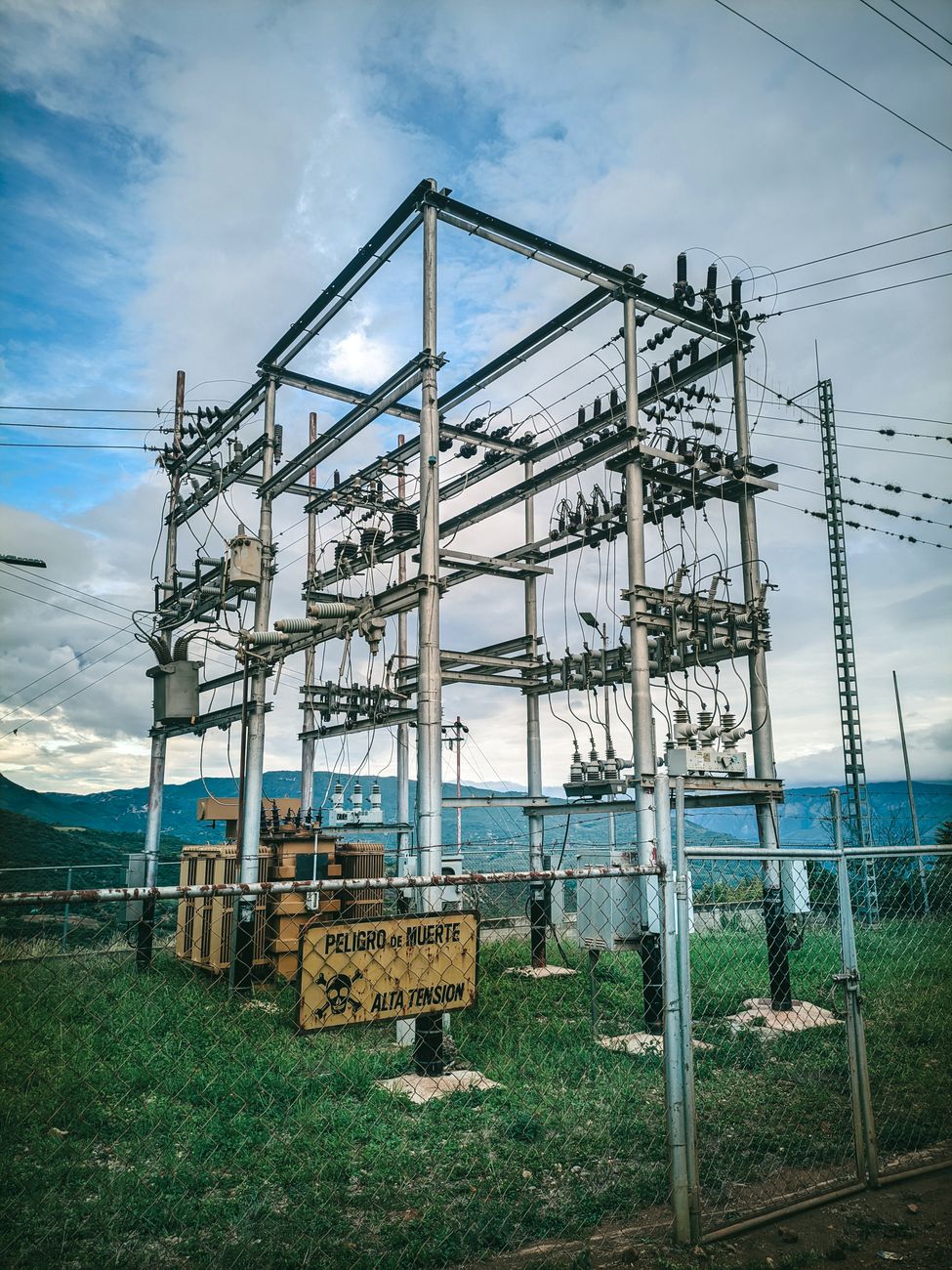
Connecting a Bitcoin mining facility to the electrical grid is one of the most critical — and often most underestimated — steps in launching a large-scale operation. Grid interconnection determines how much power you can draw, at what voltage, under which reliability standards, and on what timeline. Getting it wrong means costly delays, under-provisioned circuits, or stranded capital waiting for utility approval. This guide breaks down the grid interconnection process for Bitcoin mining facilities, covering utility requirements, permit timelines, engineering considerations, and cost benchmarks so you can plan your power delivery strategy with confidence.
What Is Grid Interconnection?
Grid interconnection is the process of physically and legally connecting a new electrical load (your mining facility) to the utility transmission or distribution system. Unlike plugging in a household appliance, a multi-megawatt mining facility requires formal agreements with the utility, engineering studies to confirm the grid can handle the additional load, and physical infrastructure upgrades (transformers, switchgear, dedicated feeders) before you can energize your site.
For Bitcoin miners, this process is uniquely important because mining loads are large, constant, and location-sensitive. A 10 MW facility running 24/7 at near-unity power factor behaves very differently from the seasonal or variable loads utilities typically plan for. Understanding how utilities evaluate your interconnection request — and how to present your project favorably — can shave months off your timeline and thousands off your costs.
The Interconnection Process: Step by Step
While specific procedures vary by utility and jurisdiction, the general interconnection workflow follows a predictable sequence. Here is what to expect from initial inquiry through energization.
Step 1: Pre-Application Site Assessment
Before filing a formal interconnection request, contact the utility to discuss available capacity at your target location. Key questions to ask:
- What is the available capacity on the nearest distribution feeder or substation?
- What voltage level is available (4 kV, 12.47 kV, 34.5 kV, 69 kV, 138 kV)?
- Are there any known constraints (thermal limits, voltage stability, protection coordination)?
- What is the estimated timeline for a load of your size?
- Are there other pending interconnection requests in the queue ahead of yours?
Many utilities offer pre-application reports for a modest fee ($1,000–$5,000) that summarize these factors. This step alone can prevent you from investing in a site where grid capacity is years away. If you are evaluating multiple mining locations, compare pre-application results side by side before committing.
Step 2: Formal Interconnection Application
Once you identify a viable site, file a formal interconnection application with the serving utility. This typically requires:
- Load size and profile: Total MW demand, power factor, expected ramp schedule
- One-line diagram: Showing your proposed electrical system (main breaker, transformers, distribution panels)
- Site plan: Physical layout including transformer pad locations, conduit runs, meter points
- Application deposit: Typically $10,000–$50,000 depending on load size and utility
- Timeline request: Your target energization date
Step 3: System Impact Study
The utility performs an engineering study to assess how your new load affects the existing grid. For mining facilities, this study evaluates thermal loading on conductors and transformers, voltage drop across the feeder, fault current contribution, protection coordination impacts, and whether existing infrastructure can handle your load without upgrades. Study timelines range from 30 to 180 days depending on the utility backlog and complexity. Costs typically run $25,000–$100,000 for loads above 5 MW. Understanding electrical infrastructure requirements ahead of time helps you prepare a cleaner application.
Step 4: Facilities Study and Cost Allocation
If the system impact study identifies required upgrades, the utility performs a facilities study that details the specific infrastructure improvements needed and allocates costs between the utility and the interconnecting customer. Common upgrades include new or larger transformers at the substation, dedicated feeder construction, protection relay upgrades, metering equipment, and in some cases, transmission-level reinforcements.
Step 5: Interconnection Agreement and Construction
After agreeing on costs and scope, you sign an interconnection agreement (IA) that specifies technical requirements, cost responsibilities, construction timelines, and ongoing obligations. Construction then begins on both utility-side and customer-side infrastructure simultaneously. The utility builds the grid-side improvements while you build your site electrical system to meet their technical specifications.
Interconnection Timelines and Cost Benchmarks
One of the most common questions from mining operators is “how long will this take and what will it cost?” The answer depends heavily on load size, location, and existing grid capacity. Here are typical benchmarks.
| Load Size | Voltage Level | Typical Timeline | Estimated Utility Cost | Customer-Side Cost |
|---|---|---|---|---|
| 1–2 MW | 12.47 kV distribution | 3–6 months | $50K–$150K | $30K–$80K |
| 5–10 MW | 34.5 kV sub-transmission | 6–12 months | $200K–$800K | $100K–$300K |
| 10–30 MW | 69–138 kV transmission | 12–24 months | $500K–$3M+ | $250K–$1M |
| 30+ MW | 138+ kV transmission | 18–36 months | $2M–$10M+ | $500K–$3M |
These estimates are conservative midpoints. Sites with existing surplus capacity can energize much faster, while sites requiring new substation construction or transmission line extensions can take significantly longer. When evaluating power costs by state, factor in interconnection timelines — a state with cheap power but a two-year interconnection queue may not be the best choice for operators who need to deploy capital quickly.
Voltage Levels and Service Types
The voltage at which your facility interconnects determines equipment requirements, efficiency, and cost. Higher voltage connections are more efficient (less line loss) but require more expensive switchgear and more rigorous safety protocols.
| Voltage Level | Typical Capacity | Common Equipment | Best For |
|---|---|---|---|
| 480V (secondary) | Up to 500 kW | Standard panels, small transformer | Home mining, small pilots |
| 4.16–12.47 kV | 500 kW–5 MW | Pad-mount transformer, medium-voltage switchgear | Small to mid-size facilities |
| 34.5 kV | 5–20 MW | Substation transformer, reclosers, sectionalizers | Mid-size to large facilities |
| 69–138 kV | 20–100+ MW | High-voltage substation, breakers, CTs/PTs | Large-scale mining campuses |
Most Bitcoin mining facilities in the 5–20 MW range interconnect at the 34.5 kV level, which offers a good balance between cost, efficiency, and available capacity. Understanding these tiers helps you specify the right equipment from the start, avoiding expensive mid-project redesigns. If you are considering modular data center units (MDUs), note that many come pre-configured for specific voltage inputs — verify compatibility with your interconnection voltage before ordering.
Common Interconnection Challenges for Bitcoin Miners
Load Profile Concerns
Utilities are accustomed to loads that fluctuate — factories that ramp up during shifts, HVAC loads that peak in summer. Bitcoin mining loads are flat: high demand, 24/7, with very little variation. Some utilities view this favorably (predictable revenue) while others see risk (no diversity benefit to offset against other loads). Present your load profile clearly and emphasize the revenue stability your flat demand provides.
Curtailment and Demand Response Compatibility
Many utilities are more willing to approve large interconnections when the customer commits to demand response participation. Offering to curtail during peak grid stress events — something Bitcoin miners can do with minimal operational impact — makes your application more attractive and can accelerate approval timelines. Some utilities offer reduced interconnection costs in exchange for demand response commitments, effectively subsidizing your grid connection.
Permitting Layers
Grid interconnection is just one of several permits required to operate a mining facility. You will also typically need local zoning approval, building permits for your facility structure, environmental permits (especially if using generators or cooling towers), and possibly state-level utility commission approval for large loads. Coordinating these parallel permitting tracks is essential — a grid interconnection approval is useless if your zoning application is denied. Research state and local requirements early and engage permitting consultants if needed.
Queue Position and Speculative Projects
In regions with high demand for grid connections (Texas, parts of the Midwest), interconnection queues can be congested. Your application may sit behind dozens of other projects — including solar farms, battery storage, and other mining operations. Understanding your queue position and the likelihood of projects ahead of you dropping out is important for realistic timeline planning. Some jurisdictions allow “queue jumping” for ready-to-build projects or those willing to pay for expedited studies.
Strategies to Accelerate Grid Interconnection
Speed is money in Bitcoin mining. Every month your facility sits un-energized is a month of lost mining revenue. Here are proven strategies to accelerate the interconnection process:
- Target sites with existing capacity: Shuttered factories, decommissioned power plants, and industrial parks often have surplus grid capacity already in place. Interconnecting at these sites can reduce timelines from years to months.
- Engage the utility early: Pre-application meetings with utility planning engineers build relationships and surface potential issues before they become formal objections.
- Provide complete applications: Incomplete applications get returned for revision, adding weeks or months. Submit detailed one-line diagrams, load calculations, and site plans from the start.
- Offer demand response: As noted above, curtailment commitments make your application more attractive and may qualify for expedited processing.
- Consider phased energization: Instead of waiting for full capacity approval, request interim service at a lower capacity while full interconnection proceeds. Deploy your first containers on interim power, then scale up as grid upgrades complete.
- Use a hosting provider: If interconnection complexity is prohibitive, hosting your ASICs at an established facility eliminates grid interconnection entirely. Providers like Rax Mining handle all utility relationships, letting you focus on mining operations.
Customer-Side Electrical Requirements
While the utility handles grid-side infrastructure, you are responsible for building everything on your side of the meter. This includes the main service entrance and switchgear, step-down transformers (if interconnecting at medium or high voltage), power distribution units (PDUs), branch circuits to mining containers or racks, metering and monitoring equipment, grounding and bonding per NEC requirements, and backup or emergency power (if desired). Aligning your customer-side design with NEC code requirements from the start prevents costly rework during inspection. Engage a licensed electrical engineer experienced with large industrial loads to design your system and coordinate with the utility on protection schemes.
Behind-the-Meter and Off-Grid Alternatives
Not every mining operation needs a traditional grid interconnection. Behind-the-meter (BTM) arrangements and off-grid solutions offer alternatives that bypass utility interconnection queues entirely:
- Co-located with generation: Mining facilities co-located with stranded natural gas wells or renewable generation assets can operate behind the meter, drawing power before it enters the grid. This eliminates interconnection requirements but requires a power purchase agreement with the generator.
- Islanded microgrids: Some operators build self-contained microgrids using natural gas generators, creating fully off-grid mining facilities. This trades interconnection complexity for generator procurement and fuel logistics.
- Hybrid approaches: A grid connection for base load combined with on-site generation for peak capacity offers flexibility. You interconnect at a smaller load size (faster, cheaper) and supplement with local generation during favorable hashprice conditions.
Working with Hosting Providers vs. Self-Interconnection
For many miners, especially those deploying fewer than 100 machines, the grid interconnection process is cost-prohibitive and time-consuming relative to the revenue potential. This is where ASIC hosting providers provide significant value. Established hosting facilities have already completed grid interconnection, negotiated power rates, and built the electrical infrastructure. You ship your miners, they plug them in. The tradeoff is less control over your power costs and facility environment, but the speed-to-hashrate advantage is substantial — often measured in weeks rather than months or years.
Use our mining profitability calculator to compare the all-in cost of self-hosting (including interconnection capital) versus hosting your machines at an established facility. For operations under 5 MW, hosting is almost always the faster, lower-risk path to production. For larger deployments, self-interconnection may offer better long-term economics if you can absorb the upfront capital and timeline.
Key Takeaways
- Grid interconnection is a multi-step process involving pre-application assessment, formal application, engineering studies, facilities construction, and final energization
- Timelines range from 3 months (small loads, existing capacity) to 36+ months (large loads, transmission-level upgrades)
- Costs include utility-side upgrades (potentially millions for large loads) plus customer-side electrical build-out
- Demand response commitments, phased energization, and targeting surplus-capacity sites can significantly accelerate the process
- Behind-the-meter and off-grid alternatives bypass interconnection queues entirely for qualifying sites
- For most operators, hosting with an established provider like Rax Mining eliminates interconnection complexity and delivers faster time-to-revenue
Have questions about grid interconnection or need help evaluating power delivery options for your mining project? Contact Rax Mining — our team has direct experience navigating utility interconnection across multiple U.S. markets and can help you find the fastest path to energized, profitable mining operations.
Explore Rax Mining
- Bitcoin Miner Hosting — Competitive rates from $0.075/kWh
- NatGas MDU Units — 1MW modular datacenter containers
- Mining Profitability Calculator — Estimate your mining returns
- Our Facility — Tour our mining infrastructure