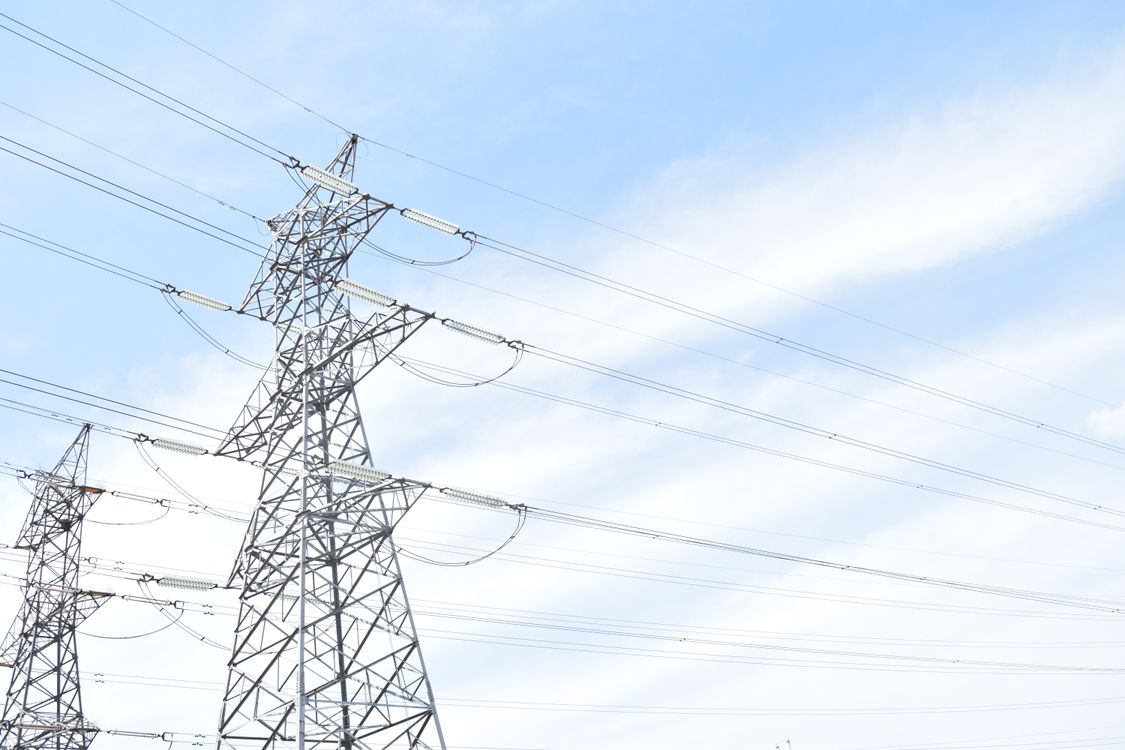
Block rewards and transaction fees are the obvious revenue streams in Bitcoin mining. But a growing number of industrial-scale miners are tapping into a third income source that most newcomers never consider: demand response programs. These grid-services agreements pay miners to reduce power consumption during peak electricity demand — and the payouts can be substantial enough to shift a facility’s entire profitability equation.
Demand response is not a niche strategy anymore. In deregulated power markets like ERCOT (Texas) and PJM (Mid-Atlantic), Bitcoin mining operations that participate in demand response or ancillary services can earn $50,000 to $200,000+ per megawatt per year in supplemental revenue. For a 10 MW facility, that adds up to $500K–$2M annually — income that flows regardless of Bitcoin’s price.
What Is Demand Response?
Demand response (DR) is a grid-management mechanism where large electricity consumers agree to reduce or curtail their power usage during periods of high grid stress. In exchange, they receive payments from grid operators, utilities, or independent system operators (ISOs). Bitcoin mining operations are ideal DR participants because ASIC miners can be shut down within seconds and restarted just as quickly — a flexibility that few other industrial loads can match.
When a grid operator issues a curtailment signal — typically during extreme heat, cold snaps, or unexpected generation outages — participating miners power down their rigs. The grid stays stable, and the miner earns a payment that often exceeds the mining revenue they would have earned during those hours anyway.
Types of Grid Services Available to Miners
| Service Type | How It Works | Typical Payment | Response Time |
|---|---|---|---|
| Economic DR | Reduce load when wholesale prices spike above threshold | $0.50–$9.00/kWh during events | 30–60 minutes |
| Emergency DR | Mandatory curtailment during grid emergencies | $2,000–$5,000/MW per event + capacity payments | 10–30 minutes |
| Ancillary Services (Reg Up/Down) | Provide frequency regulation by adjusting load in real-time | $8,000–$25,000/MW/year | Seconds |
| Capacity Market | Commit to being available for curtailment during peak seasons | $30,000–$80,000/MW/year | Varies (seasonal commitment) |
| 4-Coincident Peak (4CP) | Reduce load during the 4 highest-demand intervals (ERCOT) | Avoid $50,000–$150,000/MW in transmission charges | Predictive (weather-based) |
Why Bitcoin Miners Are Ideal DR Participants
Not all industrial loads qualify for demand response — or at least not effectively. Bitcoin mining has several inherent advantages that make it the most flexible industrial load on any power grid:
- Sub-second response time: ASIC miners can be powered down in under 5 seconds via automated controls. Gas turbines take 10–30 minutes to ramp. Miners are faster than almost any other grid resource.
- No production spoilage: Unlike manufacturing (where stopping mid-process wastes materials) or cold storage (where interruptions risk product), turning off a miner wastes nothing. You simply mine fewer sats during downtime.
- Granular control: Facilities can curtail 10%, 50%, or 100% of their load in increments. This allows participation in both partial and full curtailment programs.
- Location flexibility: Miners often site in low-cost power regions where grid congestion is common — exactly the areas where DR programs pay the most.
- Economic alignment: Peak electricity prices (when DR events trigger) are the same hours when mining is least profitable anyway. Getting paid to stop mining during $0.15/kWh hours while you normally mine at $0.075/kWh is pure upside.
Real Revenue Numbers: What Miners Actually Earn
The economics of demand response vary significantly by market, but here are representative figures from 2025–2026 data:
| Market | Program Type | Revenue per MW/Year | Typical Events/Year | Hours Curtailed/Year |
|---|---|---|---|---|
| ERCOT (Texas) | 4CP avoidance + economic DR | $80,000–$180,000 | 15–40 | 60–200 |
| PJM (Mid-Atlantic) | Capacity + emergency DR | $50,000–$120,000 | 5–15 | 30–100 |
| MISO (Midwest) | Emergency DR | $25,000–$60,000 | 3–10 | 20–60 |
| SPP (Central US) | Demand response | $20,000–$45,000 | 5–12 | 25–80 |
| NYISO (New York) | ICAP + special case resources | $40,000–$90,000 | 8–20 | 40–120 |
At Rax Mining’s Nebraska facility, strategically located in the SPP market, demand response participation is a core part of operations. Our hosted mining clients benefit from this additional revenue stream, which helps offset hosting costs during curtailment events. When the grid operator calls for a reduction, our facility responds within minutes — and the curtailment notices we publish demonstrate this grid partnership in action.
How to Participate: Step-by-Step
1. Identify Your ISO/RTO
Determine which independent system operator (ISO) or regional transmission organization (RTO) manages the grid where your facility is located. The major US grid operators are ERCOT, PJM, MISO, SPP, NYISO, ISO-NE, and CAISO. Each has different DR program structures, qualification requirements, and payment mechanisms.
2. Choose a Curtailment Service Provider (CSP)
Most miners don’t interact directly with the ISO. Instead, they work through a Curtailment Service Provider — a company that aggregates load, handles enrollment, manages dispatch, and settles payments. Popular CSPs in the mining space include Voltus, CPower, Enel X, and Leap. The CSP typically takes a 10–20% commission on DR revenue.
3. Install Metering and Control Infrastructure
DR programs require interval metering (usually 15-minute or 5-minute resolution) and automated load control. Most modern mining facilities already have SCADA or BMS systems that can interface with DR dispatch signals. The CSP will help integrate their platform with your control systems.
4. Define Your Baseline and Committed Capacity
Your baseline is the power consumption level that you’re expected to be at when not curtailed. The difference between your baseline and your actual consumption during a DR event is your “curtailment” — and that’s what you get paid for. Be conservative with your committed capacity; failing to deliver during an event can result in penalties.
5. Respond to Events and Track Revenue
When a DR event is dispatched, your system reduces load according to your commitment. The CSP tracks your performance, calculates settlements, and distributes payments — typically monthly or quarterly.
Demand Response vs. Mining Revenue: When to Curtail
The decision to participate in a DR event is fundamentally an economic comparison: Is the DR payment worth more than the Bitcoin I would have mined during those hours?
For a facility running S21 Pro miners (234 TH/s, ~3500W each) at $0.075/kWh, the mining revenue per MW per hour is approximately $40–$60 (depending on hashprice). If a DR event pays $2,000–$5,000/MW for a 4-hour curtailment, the DR revenue ($500–$1,250/MW/hour) vastly exceeds the foregone mining revenue. The math almost always favors participating in DR events.
This is why ROI calculations should always include DR revenue as a line item. It materially improves payback periods, especially in ERCOT and PJM markets.
Tax and Accounting Considerations
DR payments are taxable income, classified as either service revenue or utility rebates depending on the program structure. Consult your tax advisor about proper classification. Some programs issue 1099s; others settle through your utility bill as credits. Keep detailed records of every curtailment event, including timestamps, MW reduced, and payments received.
Risk Factors to Consider
- Non-performance penalties: If you commit to curtailing 5 MW but only deliver 3 MW, you may face financial penalties or removal from the program. Size your commitment conservatively.
- Frequency of events: In volatile weather years, you might face 30+ curtailment events. Model the lost mining revenue against DR income to ensure net positive.
- Contract lock-in: Some programs require annual commitments. If Bitcoin price surges and mining becomes far more profitable, you may regret being locked into curtailment obligations at pre-set rates.
- Regulatory changes: Grid operator rules evolve. ERCOT has modified its 4CP methodology several times. Stay informed about program changes through your CSP.
The Strategic Advantage for Hosted Mining
If you’re considering colocation with a hosting provider, ask whether they participate in demand response and how (or whether) that revenue is shared with hosted clients. At Rax Mining, our participation in grid services is part of our competitive advantage — it allows us to offer rates starting at $0.075/kWh while maintaining facility margins that fund professional equipment maintenance and high uptime SLAs.
Miners who operate their own facilities should treat demand response not as a distraction from mining, but as a strategic revenue diversification that reduces dependence on Bitcoin price and hashrate variables. In a market where difficulty continues to climb and halvings compress margins, every supplemental dollar matters.
Getting Started
If you’re running 1 MW or more of mining capacity, demand response participation is almost certainly worth exploring. Contact your regional CSP, request a revenue estimate based on your location and load profile, and compare the projected DR income against your current profitability model. For facilities at Rax Mining’s locations, our operations team handles DR enrollment and dispatch as part of our hosting service.
Ready to explore hosted mining with built-in demand response benefits? Contact Rax Mining at (718) 766-8559 or email info@raxmining.com to discuss how grid services can boost your mining ROI.
Explore Rax Mining
- Bitcoin Miner Hosting — Competitive rates from $0.075/kWh
- NatGas MDU Units — 1MW modular datacenter containers
- Mining Profitability Calculator — Estimate your mining returns
- Our Facility — Tour our mining infrastructure