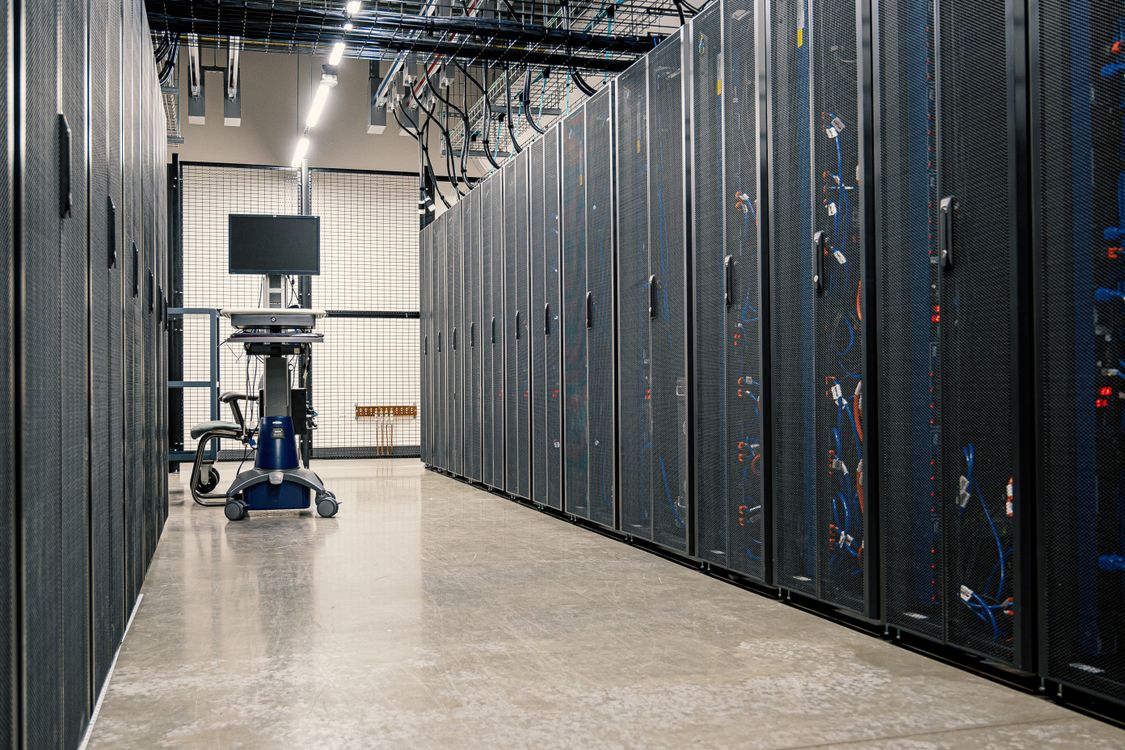
A single Bitcoin mining facility can house millions of dollars worth of ASIC hardware, consume megawatts of power, and process valuable cryptocurrency around the clock. That combination of concentrated value, remote location, and 24/7 operation makes mining facilities attractive targets for both physical theft and cyberattacks. Yet security is one of the most under-discussed topics in the mining industry — and one of the most consequential when it fails.
This guide covers the full security stack that professional mining operations should implement, from perimeter fencing and access control to network segmentation and firmware integrity. Whether you’re hosting miners at a colocation facility or running your own site, understanding these protections is critical to safeguarding your investment.
Physical Security: Protecting the Hardware
ASIC miners are compact, valuable, and relatively easy to transport — a single Antminer S21 Pro (234 TH/s) is worth $3,000–$5,000 and weighs about 15 kg. A facility with 1,000 units has $3–5 million in hardware that fits in a few trucks. Physical security must be robust enough to deter, detect, and delay any unauthorized access.
Perimeter Security
| Layer | Components | Purpose | Estimated Cost (10-acre site) |
|---|---|---|---|
| Outer Perimeter | 8-ft chain-link + barbed wire/razor wire, vehicle barriers, signage | Deter casual intruders, slow deliberate entry | $50,000–$120,000 |
| Detection Zone | Motion sensors, infrared cameras, ground vibration sensors | Alert security to perimeter breach attempts | $30,000–$80,000 |
| Inner Perimeter | Concrete bollards, access-controlled gates, mantrap entries | Prevent vehicle ram attacks, control pedestrian access | $40,000–$100,000 |
| Building Envelope | Steel doors, reinforced walls, tamper-proof locks, access badges | Final layer before hardware access | $20,000–$60,000 per building |
Surveillance Systems
Camera coverage should be continuous with no blind spots. Best practices for mining facility surveillance:
- Camera density: 1 camera per 2,000 sq ft interior, plus coverage of all entry points, loading docks, and parking areas. Minimum 4K resolution for forensic identification.
- Night vision: Infrared or thermal cameras for perimeter monitoring. Mining facilities often operate in rural areas with minimal ambient lighting.
- Retention: 90-day minimum video retention with offsite backup. Cloud storage for critical feeds (entry points, server rooms).
- Monitoring: 24/7 remote monitoring by a professional security operations center (SOC), supplemented by on-site guards during staffed hours.
- Analytics: AI-powered motion detection that distinguishes between wildlife, weather, and human intrusion. Reduces false alarms by 80%+ and ensures real threats get immediate response.
Access Control
Who can enter your facility — and when — is the most critical physical security decision. Professional mining operations implement multi-factor access control:
- Badge + PIN: RFID badge plus 6-digit PIN for standard entry. Badges are non-transferable and deactivated immediately upon personnel departure.
- Biometric: Fingerprint or facial recognition for high-security zones (network rooms, power distribution). Cost-effective at scale with modern systems.
- Visitor management: Pre-registered visitors only. Escort required at all times. Visitor badges auto-expire after 8 hours.
- Audit trails: Every badge swipe logged with timestamp, door, and identity. Anomaly detection for unusual access patterns (midnight entry by day-shift worker, multiple failed attempts).
Cyber Security: Protecting the Network
Physical theft gets headlines, but cyber threats are more frequent and potentially more damaging. A compromised mining operation can have its hashrate redirected to an attacker’s pool, its firmware replaced with malicious versions, or its management systems held for ransomware. The financial losses from a successful cyberattack can exceed the value of the hardware itself.
Network Architecture
The single most important cyber security measure for any mining facility is network segmentation. Mining traffic (stratum protocol to pools) should be on a completely separate network from management traffic (SSH, web interfaces, monitoring dashboards).
| Network Zone | Devices | Access Rules | Monitoring |
|---|---|---|---|
| Mining VLAN | ASIC miners | Outbound only to pool endpoints (stratum ports). No inbound from internet. No lateral movement to management VLAN. | Stratum traffic analysis, hashrate anomaly detection |
| Management VLAN | Farm management software, dashboards, IPMI/BMC | VPN-only access. No direct internet exposure. Whitelisted admin IPs only. | Login attempts, configuration changes, firmware updates |
| IoT/Facilities VLAN | Environmental sensors, HVAC controls, power monitors | Isolated from mining and management. Read-only API access for dashboards. | Temperature/humidity anomalies, unauthorized device connections |
| Guest/Corporate VLAN | Office computers, visitor Wi-Fi | Internet access only. No routing to mining or management networks. | Standard endpoint protection |
Firmware Integrity
Compromised ASIC firmware is one of the most insidious threats in mining. Malicious firmware can redirect a percentage of hashrate to an attacker’s pool address while displaying normal metrics to the operator. This “hashrate theft” can run undetected for months.
Protection measures:
- Download firmware only from official manufacturer sources (Bitmain, MicroBT, etc.). Never install firmware from third-party sites or forums.
- Verify checksums (SHA-256 hash) of every firmware file before deployment. Compare against manufacturer-published hashes.
- Monitor pool dashboards for hashrate discrepancies. If your facility’s measured hashrate doesn’t match pool-reported hashrate within 3–5%, investigate immediately.
- Restrict firmware update access to authorized personnel only. Log every firmware change with who, when, which units, and which version.
- Consider factory firmware unless you have a specific, validated reason to run aftermarket firmware. The efficiency gains from custom firmware rarely justify the security risk for hosted operations.
Common Attack Vectors
| Attack | How It Works | Impact | Prevention |
|---|---|---|---|
| Pool hijacking | Attacker changes pool address in miner config to their own | 100% hashrate theft on affected units | Config lockdown, monitoring, network segmentation |
| Firmware rootkit | Malicious firmware silently diverts 1–5% of hashrate | Slow bleed of revenue, hard to detect | Checksum verification, hashrate auditing |
| Ransomware | Management systems encrypted, ransom demanded | Full operational shutdown until resolved | Offline backups, network segmentation, endpoint protection |
| Insider threat | Employee steals hardware, alters configs, or sells access | Variable — from minor theft to full compromise | Background checks, access controls, audit trails, camera coverage |
| Social engineering | Phishing email to admin, fake vendor call for “remote support” | Credential theft leading to management access | Security training, MFA on all admin accounts, no remote access without VPN |
Insurance: The Financial Safety Net
Even with robust physical and cyber security, risk cannot be eliminated entirely. Mining operations should carry insurance coverage appropriate to their scale:
- Property insurance: Covers hardware damage from fire, flood, storm, and theft. Ensure your policy covers the replacement cost (not depreciated value) of ASIC miners, which depreciate rapidly.
- Business interruption insurance: Covers lost mining revenue during downtime caused by insured events. Critical for operations where even a week of downtime represents significant lost income.
- Cyber liability insurance: Covers costs associated with data breaches, ransomware payments, and business interruption from cyberattacks. Increasingly important as mining facilities become more connected.
- Directors & officers (D&O): For corporate mining operations, covers management liability. Important if investors are involved.
Insurance premiums for mining facilities range from 1.5% to 4% of insured value annually, depending on location, security measures, and claims history. Colocation contracts should clearly specify who carries insurance and what’s covered.
Hosting Provider Security: What to Ask
If you’re choosing a colocation provider, security should be a top evaluation criterion. Ask these questions before signing:
- What are your physical access control procedures? Look for badge + biometric, visitor escort policies, and 24/7 monitoring.
- Is the mining network segmented from management systems? If the answer is no, that’s a red flag.
- What’s your firmware update policy? Reputable hosts maintain firmware version control and don’t allow clients to install arbitrary firmware.
- Do you carry insurance? Ask for certificate of insurance showing property, business interruption, and cyber liability coverage.
- What’s your incident response plan? Professional operations have documented procedures for theft, fire, cyberattack, and natural disaster scenarios.
- Can I visit the facility? If a host refuses facility tours (even scheduled ones), question what they’re hiding.
At Rax Mining, our U.S.-based facilities implement multi-layer physical security, network segmentation, and 24/7 monitoring. Every hosted client’s equipment is tracked with serial numbers, and our uptime SLA is backed by security infrastructure designed to prevent both physical and digital threats.
Building a Security Culture
Technology alone doesn’t create security — people do. The most expensive cameras and firewalls are worthless if staff prop doors open, share passwords, or click phishing links. Building a security culture means:
- Regular training: Quarterly security awareness sessions covering phishing, social engineering, and physical security procedures.
- Incident reporting: Make it easy and non-punitive for employees to report security concerns. An anonymous tip line costs nothing but can prevent major incidents.
- Regular audits: Monthly physical security walk-throughs and quarterly penetration tests of network infrastructure.
- Background checks: For all employees with physical or digital access to mining equipment. The cost of a $50 background check is trivial compared to the risk of insider theft.
Security ROI: It Pays for Itself
The total cost of a professional security program for a 5 MW mining facility runs $150,000–$300,000 per year (personnel, technology, monitoring, insurance). That sounds significant until you consider that the facility contains $5–$15 million in hardware and generates $2–$8 million in annual revenue. Security spending of 2–4% of asset value is standard across all industries that manage high-value physical assets.
A single theft event targeting 100 S21 miners costs $300,000–$500,000 in hardware alone, plus lost revenue, investigation costs, and insurance deductible. A successful ransomware attack can cost even more. Proper security is not an expense — it’s a core operating cost that protects your investment and enables the uptime that drives profitability.
Questions about facility security for your hosted miners? Contact Rax Mining at (718) 766-8559 or email info@raxmining.com to discuss our security infrastructure and hosting contracts.
Explore Rax Mining
- Bitcoin Miner Hosting — Competitive rates from $0.075/kWh
- NatGas MDU Units — 1MW modular datacenter containers
- Mining Profitability Calculator — Estimate your mining returns
- Our Facility — Tour our mining infrastructure