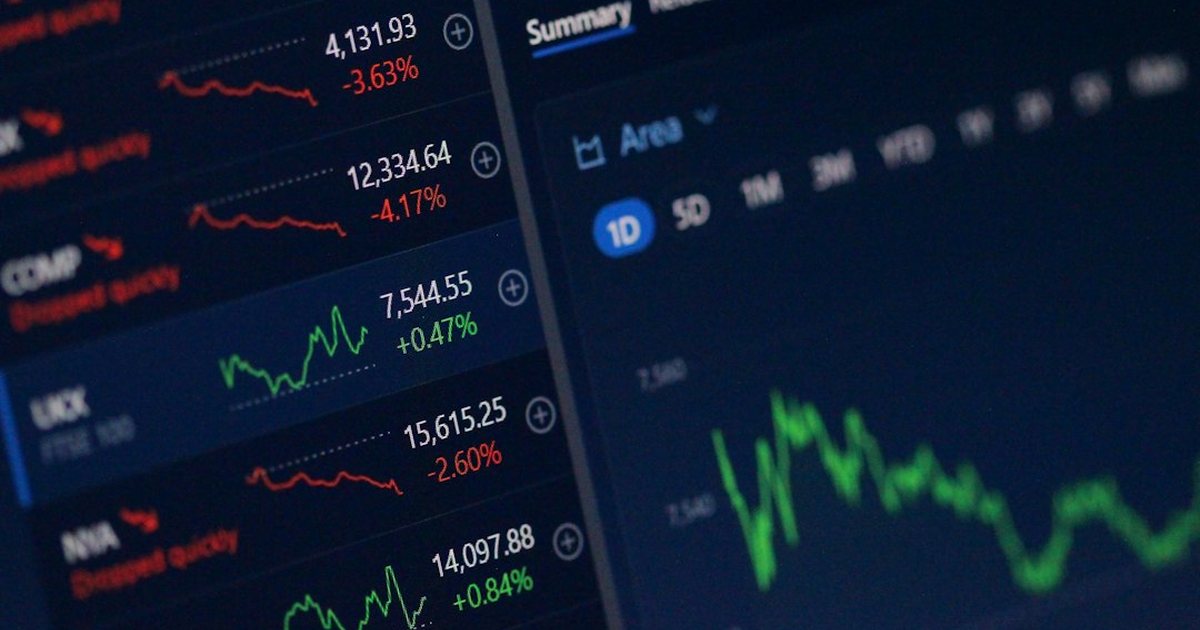
Bitcoin broke below $82,000 on elevated volume this week, driven by macroeconomic headwinds that rippled through risk assets broadly. For traders, the move triggered stop losses and margin calls. For miners, it raises a more fundamental question: at what price does mining become unprofitable, and what separates the operations that survive drawdowns from those that are forced to shut down?
The answer, as it has been through every cycle, comes down to electricity cost. Here is how the current price drop affects mining economics, why this drawdown is different from previous ones, and what operators should consider before making reactive decisions about their mining operations.
The Current State of Mining Economics Despite the Price Drop
While the BTC price decline grabs headlines, the broader picture for mining in October 2026 is more nuanced than the spot price alone suggests:
- Monthly revenue remains strong: Despite the drop below $82,000, total network mining revenue for October 2026 stands at approximately $1.12 billion — the best month since January 2026.
- Hashprice holds above $40/PH/day: Hashprice, the metric that combines price, difficulty, and fees into a single revenue-per-hashrate figure, remains above $40 per petahash per day. This represents healthy economics for efficient operations.
- Difficulty below record: Network difficulty sits approximately 15 percent below its all-time high, which means miners are earning more bitcoin per unit of hashrate than they were at peak difficulty. This partially offsets the lower dollar price.
- Upcoming difficulty adjustment: A 5.5 percent difficulty increase is scheduled for October 16, which will compress margins further. The combined effect of lower price and higher difficulty creates a dual squeeze on less efficient operations.
The takeaway is that mining remains profitable for well-positioned operations, even at sub-$82,000 BTC. The question is where the breakeven line falls for different cost structures.
Understanding Mining Breakeven: Where Electricity Cost Draws the Line
Mining breakeven is the BTC price at which a specific operation’s mining revenue exactly equals its operating costs. Below breakeven, every block mined costs more in electricity than the bitcoin it produces is worth.
The primary variable that determines breakeven is electricity cost. Hardware efficiency (measured in joules per terahash, or J/TH) is the secondary variable. Together, they define where the line falls:
- Sub-15 J/TH hardware at $0.075/kWh: Breakeven sits well below $50,000 — these operations have substantial buffer even during significant price drawdowns.
- Sub-15 J/TH hardware at $0.07/kWh: Breakeven rises into the mid-$50,000 range — still profitable at $82,000 but with less margin for further price declines.
- 20-25 J/TH hardware at $0.065/kWh: Breakeven approaches the mid-$60,000s — workable at current prices but vulnerable to the combination of lower BTC price plus the upcoming difficulty increase.
- 25+ J/TH hardware at $0.08/kWh: Breakeven climbs above $75,000 — these operations are operating on razor-thin margins at $82,000 and may face negative economics after the difficulty adjustment.
The math is unforgiving: every cent per kilowatt-hour of electricity cost difference translates to thousands of dollars of breakeven difference. This is why hosting location and power contract terms are the single most important strategic decisions a mining operator makes.
Colocation Rate Landscape: Where Your Power Comes From Defines Your Survival
The range of colocation rates available to miners in 2026 is wider than many operators realize:
- US retail colocation: $0.06 to $0.09/kWh — the most common range for standard data center hosting. At the upper end, these rates leave very little margin at current prices and difficulty.
- Hydro regions (Pacific Northwest, Quebec, Paraguay): $0.03 to $0.05/kWh — among the lowest grid-connected rates available, though availability is limited and permitting can be complex.
- Natural gas-powered hosting: $0.04 to $0.06/kWh — NatGas-powered modular data units (MDUs) deliver competitive rates with the advantage of deployment flexibility and independence from grid pricing volatility.
Natural gas has become the single largest individual energy source for Bitcoin mining, now accounting for approximately 38.2 percent of mining electricity globally — up from 25 percent in 2022. This shift reflects miners’ recognition that gas-powered infrastructure provides structural cost advantages that are difficult to replicate with grid-connected facilities.
Rax Mining’s NatGas MDU containers deliver hosted mining at $0.075/kWh — positioned at the competitive end of the natural gas range and significantly below US retail colocation rates.
Why You Should Not Panic-Sell Hardware During Price Dips
One of the most costly mistakes miners make during price drawdowns is liquidating hardware at distressed prices, only to watch the market recover within weeks or months. The historical pattern is clear:
- Price dips create hardware buying opportunities: When BTC drops, panicking miners flood the secondary market with hardware, depressing ASIC prices. The operators who buy during these periods acquire hashrate at significant discounts.
- Price recovery follows drawdowns: While no one can predict timing, every major BTC price decline in Bitcoin’s history has been followed by a recovery that eventually exceeded the previous high. Miners who sold hardware at the bottom locked in losses that were only temporary for those who held.
- Mining economics improve on recovery: When price recovers but difficulty lags (as it often does, since shutdowns during price drops reduce hashrate), the miners who stayed online earn outsized returns during the recovery window.
The exception to this guidance is hardware that is genuinely uneconomical to operate at any foreseeable price point. If an ASIC’s efficiency is so poor that it cannot be profitably operated even with a significant price recovery, selling it while it still has some residual value is rational. But selling current-generation hardware during a price dip is almost always a wealth transfer from panicking sellers to patient buyers.
Miner Reserves and Selling Behavior in 2026
Miner selling behavior in 2026 shows a pattern of decreasing sell pressure. Each major selling wave has been smaller than the last:
- February 2026: Approximately 24,000 BTC sold by miners — the largest liquidation event of the year.
- Subsequent waves: Each successive selling event has been smaller, with the September rally triggering sales of only about 10,000 BTC.
- Current reserves: Miner reserves sit at approximately 1.19 million BTC, representing a substantial war chest for the industry as a whole.
This pattern suggests that the mining industry has matured in its approach to treasury management. Rather than reflexively selling bitcoin to cover operating costs during every dip, more operators are building cash reserves during strong periods and holding through volatility — a strategy that is only viable when operating costs are low enough to avoid forced selling.
The Dual Squeeze: Price Drop Plus Difficulty Increase
What makes the current moment particularly important for mining operators is the combination of a price decline with an imminent difficulty increase. BTC falling below $82,000 reduces the dollar value of each bitcoin mined. The 5.5 percent difficulty increase scheduled for October 16 reduces the number of bitcoin earned per unit of hashrate.
Together, these factors create a dual squeeze on margins. For an operation running 15 J/TH hardware at $0.075/kWh, this squeeze is uncomfortable but manageable. For an operation running 25 J/TH hardware at $0.08/kWh, it may push past breakeven into negative territory.
This is precisely why the time to optimize your cost structure is before the squeeze hits — not after. Operators who locked in low power rates and upgraded to efficient hardware during the strong months earlier in 2026 are now weathering this dual pressure from a position of strength.
Looking Ahead: The 2028 Halving Adds Another Layer
Beyond the immediate price and difficulty dynamics, the 2028 Bitcoin halving looms as the next major structural compression event. When the block reward drops from 3.125 BTC to 1.5625 BTC, every metric discussed in this article — breakeven price, margin compression, the importance of electricity cost — will be amplified by a factor of two.
Operators who are marginally profitable at $82,000 with current block rewards will face a much starker picture when those rewards are halved. The operators who are building a cost advantage now — through low-cost hosting, efficient hardware, and disciplined treasury management — are the ones positioning themselves to mine through the halving and beyond.
What Operators Should Do Right Now
Evaluate Your Actual Breakeven
Know your numbers. Calculate your all-in cost per bitcoin mined, including electricity, hosting fees, hardware depreciation, and any overhead. If your breakeven is above $70,000, you are operating in a zone where further price declines could push you into negative economics.
Reduce Your Largest Cost
If your electricity rate is above $0.065/kWh, explore alternatives. Transitioning to NatGas-powered hosting or securing a lower-cost colocation contract is the single highest-impact change most mining operations can make. Even a $0.01/kWh reduction in electricity cost translates to meaningful margin improvement across an entire fleet.
Do Not Make Permanent Decisions Based on Temporary Conditions
A price dip to $82,000 is not a permanent state. Selling hardware, shutting down operations, or exiting mining entirely based on short-term price action has historically been a wealth-destroying decision. If your operation is profitable at current prices — even if margins are tight — the strategic move is to optimize costs, not to exit.
Build for Resilience, Not Just Profitability
The mining operations that endure through market cycles are not the ones that are most profitable at the top — they are the ones that remain solvent at the bottom. Low-cost hosting, efficient hardware, and patient capital allocation are the three pillars of mining resilience.
Rax Mining delivers the infrastructure foundation that mining operations need to stay profitable through price volatility, difficulty increases, and halving cycles. From NatGas MDU containers to professional colocation at $0.075/kWh, our hosting solutions are built for the operators who plan to be mining regardless of where BTC trades next week.
Contact Rax Mining to discuss hosting rates and infrastructure options for your operation.
Explore Rax Mining
- Bitcoin Miner Hosting — Competitive rates from $0.075/kWh
- NatGas MDU Units — 1MW modular datacenter containers
- Mining Profitability Calculator — Estimate your mining returns
- Our Facility — Tour our mining infrastructure