Your machines went quiet for six hours during a grid emergency. The hashboards cooled, the fans wound down, and somewhere in the market settlement process a payment was generated for that curtailed load. The question almost nobody asks before signing a hosting agreement is a simple one: who receives that money?
It is not a trivial sum. Curtailment payments are one of the few revenue lines in hosted mining that are uncorrelated with bitcoin price, and in a tight summer they can be material. But the machines that stopped are yours, while the entity registered with the grid operator is almost always the host. That gap between who owns the load and who holds the market position is where the money gets allocated, and it is decided by a contract clause rather than by fairness.
Why the host is the one the grid pays
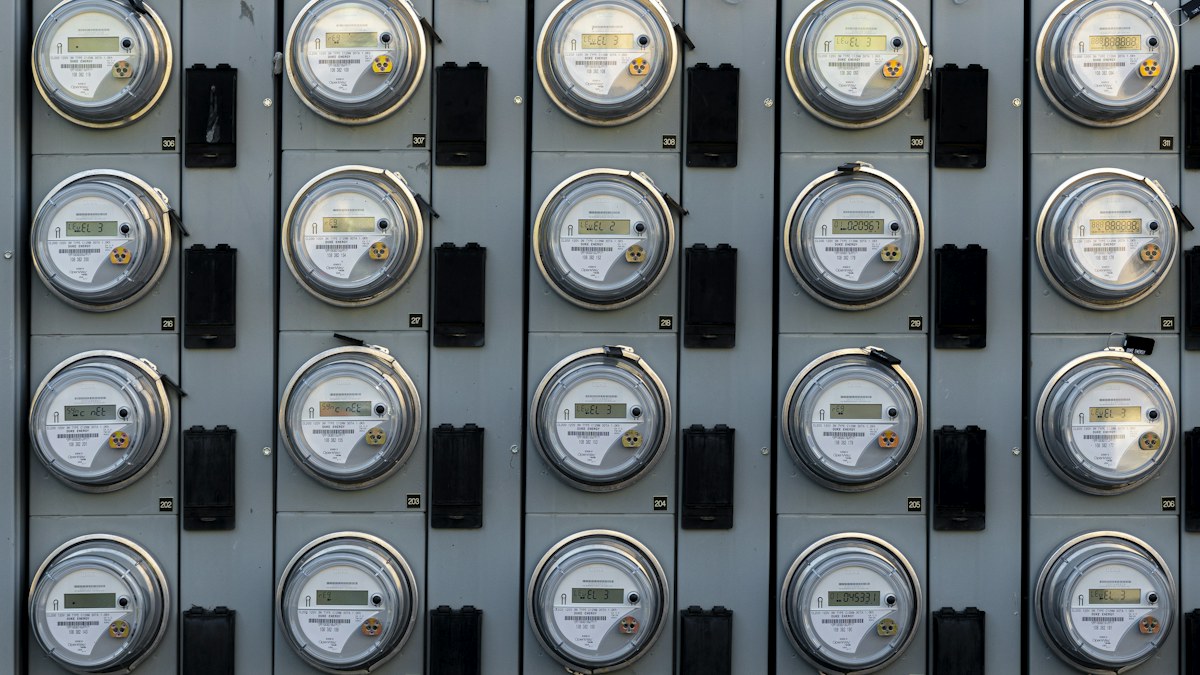
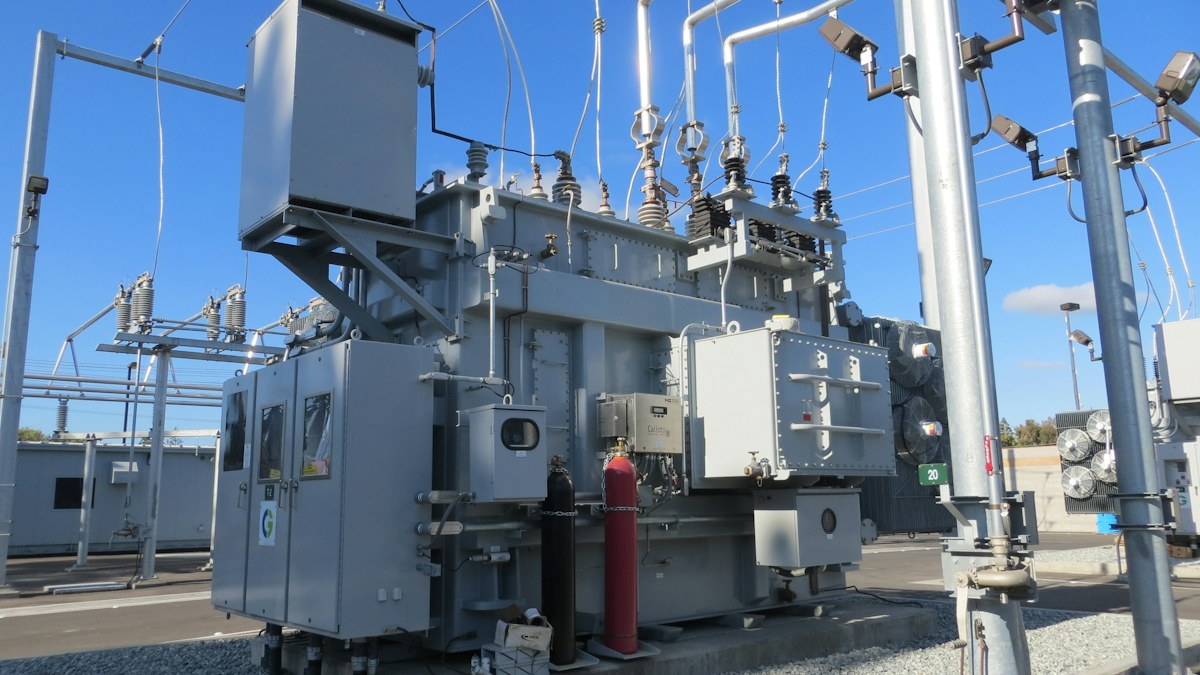
You cannot sell your own curtailment directly, and the reason is structural rather than contractual. Wholesale demand response programs settle against a metered point of delivery registered to a qualified market participant. Your miners sit behind the facility meter. From the grid’s perspective your fleet is not a market actor at all; it is part of the host’s load profile.
That registration carries real obligations. The participant must meet minimum load thresholds that a single customer rarely clears alone, submit telemetry, and accept penalties for failing to deliver a reduction once committed. Federal energy regulators have spent years working through how aggregators of retail demand response customers participate in organized wholesale markets, which is why aggregation exists as a business at all. What none of it did was turn individual tenants into market participants. The host aggregates you, bids the combined load, and carries the performance risk.
So the host earns its position in the transaction. The argument is not that hosts should not be paid. It is that the split should be written down, and in most agreements it is not.
The three structures, and the one that is most common
Read enough hosting agreements and the treatment of curtailment revenue falls into three patterns.
The host keeps all of it. This is the default, and it is usually the default by silence rather than by negotiation. The agreement describes the host’s right to curtail your machines, often framed under force majeure or a grid-event clause, and says nothing at all about compensation flowing the other way. If the contract is silent, the host has the market position, the metering and the payment, and you have no contractual claim on it.
A stated revenue share. Some agreements split curtailment proceeds after the host recovers its program costs. This is the honest structure, and the detail that matters is what counts as a cost before the split: aggregator fees, telemetry, metering, and the penalty reserve are all legitimate deductions, and all of them are places where a 50-50 split quietly becomes something else.
A rate reduction instead of a payment. Rather than passing cash through, the host prices the expected curtailment revenue into a lower cents-per-kilowatt-hour figure for everyone. This is simpler to administer and it is genuinely reasonable, but notice what it does: it converts a variable, weather-dependent revenue stream into a fixed discount, and the host keeps the upside in an unusually hot summer. Whether that is a good trade depends on whether the discount was sized against a normal year or a quiet one.
None of the three is wrong. The problem is not knowing which one you are in.
The number that actually matters is the net
A curtailment payment is not profit. When your machines power down you stop producing hashrate, and the mining revenue you would have earned in those hours is gone. The economics only work if the payment exceeds what the machines would have made running.
That comparison is yours to make, not the host’s, and the two sides of it sit in different places. Your foregone revenue depends on your hashrate, your fleet efficiency and the hashprice on that day. The curtailment payment depends on the program, the hours and the clearing price. A host optimizing its own position will curtail when the payment beats its own marginal cost, which is the power cost, not your mining revenue. Those two thresholds are not the same number, and when the host keeps the payment they are not even pointed in the same direction.
This is the real argument for a share rather than a flat rate cut. A share aligns the decision. If you receive nothing when the machines stop, every curtailment hour is pure loss to you and pure gain to the host, and you are relying on the host’s restraint rather than on its interest.
Not all curtailment is the same transaction
Lumping every power-down into one category hides the economics. Three distinct things get called curtailment in conversation.
- Emergency programs. The grid operator is short of capacity and calls on pre-committed load to drop. Participation is contracted in advance and typically pays an availability component plus an energy component. Texas runs a program of this kind under the name Emergency Response Service, procured through competitive bidding for defined time blocks.
- Economic curtailment. Nobody ordered anything. Power prices rose above the level at which mining is profitable, so the rational move is to stop consuming and, where the arrangement allows, sell the contracted power back. This is a trading decision, and whether you or the host is making it is a question worth asking directly.
- Transmission cost avoidance. In ERCOT, a large consumer’s transmission charges for the following year are set by its demand during four specific fifteen-minute intervals, one in each summer month. Powering down during those windows does not generate a payment at all; it reduces next year’s transmission cost allocation, which is set under the open access tariff framework at 18 CFR 35.28. The benefit is real but it arrives as a lower bill twelve months later, which makes it very easy for the saving to stay entirely with whoever pays that bill.
That third category deserves particular attention, because it is the one most likely to be invisible to you. There is no payment to share. There is only a cost that did not happen, to an entity that is not you.
Measurement is where disputes actually happen
Demand response pays for a reduction, and a reduction is measured against a baseline: an estimate of what the load would have been had nothing been curtailed. Baselines are calculated from historical consumption over comparable days, and for a mining facility that runs flat at near-constant load they are usually straightforward.
Usually. A fleet that has recently expanded, or one that was already curtailed for maintenance on the baseline days, can produce a baseline that understates normal load, which understates the reduction, which understates the payment. If your agreement gives you a share of proceeds, you have an interest in how that baseline was computed and you should have the right to see it. An audit rights clause is the mechanism that turns that interest into something you can actually act on.
What to put in the contract
These are ordinary commercial asks. A host with a clean program has no reason to refuse them.
- Name the treatment explicitly. One sentence stating whether curtailment revenue is retained by the host, shared, or already reflected in the rate. Silence defaults to the host, so silence is a decision you made by not asking.
- Define the deductions. If it is a share, list what comes off the top before the split, and cap it. “Net of reasonable program costs” is not a number.
- Separate the three categories. Emergency, economic and transmission-cost avoidance should be addressed individually. An agreement covering only “demand response payments” says nothing about the 4CP saving.
- Require notice and a log. Date, start and end time, program, and the reason. Without it you cannot reconcile your downtime against anything, and you cannot tell an emergency event from an economic decision made on your behalf.
- Set a curtailment ceiling. Hours per month or per year, beyond which either the rate drops or you can exit. This matters more than the revenue split, because it bounds the downside. Uptime guarantees frequently carve out grid events entirely, which can leave curtailment hours uncounted against the SLA.
- Ask for the baseline methodology. In writing, before signing, not after a disputed settlement.
Work out what it is worth before you argue about it
Before negotiating hard on a split, size the thing. Ask the host how many curtailment hours the facility recorded in each of the last two years, broken down by category. A site that curtailed forty hours and one that curtailed four hundred are different investments, and the second one needs a far more careful read of the revenue clause than the first.
Then compare that against the rate. A host quoting a slightly higher cents-per-kilowatt-hour figure while passing through a real share of curtailment proceeds may deliver a better net result than a cheaper host that keeps everything, and the comparison is arithmetic rather than judgement. It is the same exercise as sizing your deposit and prepayment exposure alongside the headline rate: the number on the quote sheet is not the number that decides the outcome.
Curtailment revenue is one of the genuinely good things about hosting in a competitive power market. It is a second income stream that does not depend on the bitcoin price, and it exists because mining load is uniquely able to stop on short notice. That value is real. The only question is whose balance sheet it lands on, and that is settled long before the grid ever calls.
Explore Rax Mining
- Bitcoin Miner Hosting — Tiered rates from $0.085/kWh, NatGas from $0.055/kWh
- NatGas MDU Units — 1MW modular datacenter containers
- Mining Profitability Calculator — Estimate your mining returns
- Our Facility — Tour our mining infrastructure