Every bitcoin miner runs on electricity, but not all electricity is delivered the same way. The difference between single-phase and three-phase power might sound like an electrician’s concern rather than a miner’s, but it directly affects your energy efficiency, hardware lifespan, infrastructure costs, and ability to scale. Understanding which power configuration your mining operation needs, and why, is one of the most overlooked decisions in the industry.
Whether you are setting up a few miners at home or evaluating a professional colocation facility, this guide breaks down everything you need to know about single-phase versus three-phase electrical systems for bitcoin mining.
Understanding Single-Phase Power
Single-phase power is the standard electrical service delivered to most homes and small businesses in North America. It uses two wires, one hot (live) and one neutral, carrying alternating current (AC) that oscillates in a single sinusoidal wave. In the United States, residential single-phase service typically delivers 120V or 240V.
The key characteristic of single-phase power is that voltage drops to zero twice per cycle. At 60 Hz (standard US frequency), the voltage crosses zero 120 times per second. This means power delivery is pulsed rather than continuous. For most household appliances this is irrelevant, but for high-draw computing loads running around the clock, those zero-crossing moments represent tiny but real gaps in power delivery.
Most residential ASIC miners ship with power supply units (PSUs) designed for single-phase 220-240V input. This makes single-phase the default for small-scale and home mining operations. If you are running one to ten miners on a residential service panel, single-phase 240V is likely your only option without significant electrical upgrades.
Understanding Three-Phase Power
Three-phase power uses three hot wires, each carrying AC that is offset by 120 degrees from the others. Because the three waves overlap, the combined power delivery never drops to zero. There is always at least one phase near peak voltage at any given moment, resulting in smooth and continuous power flow.
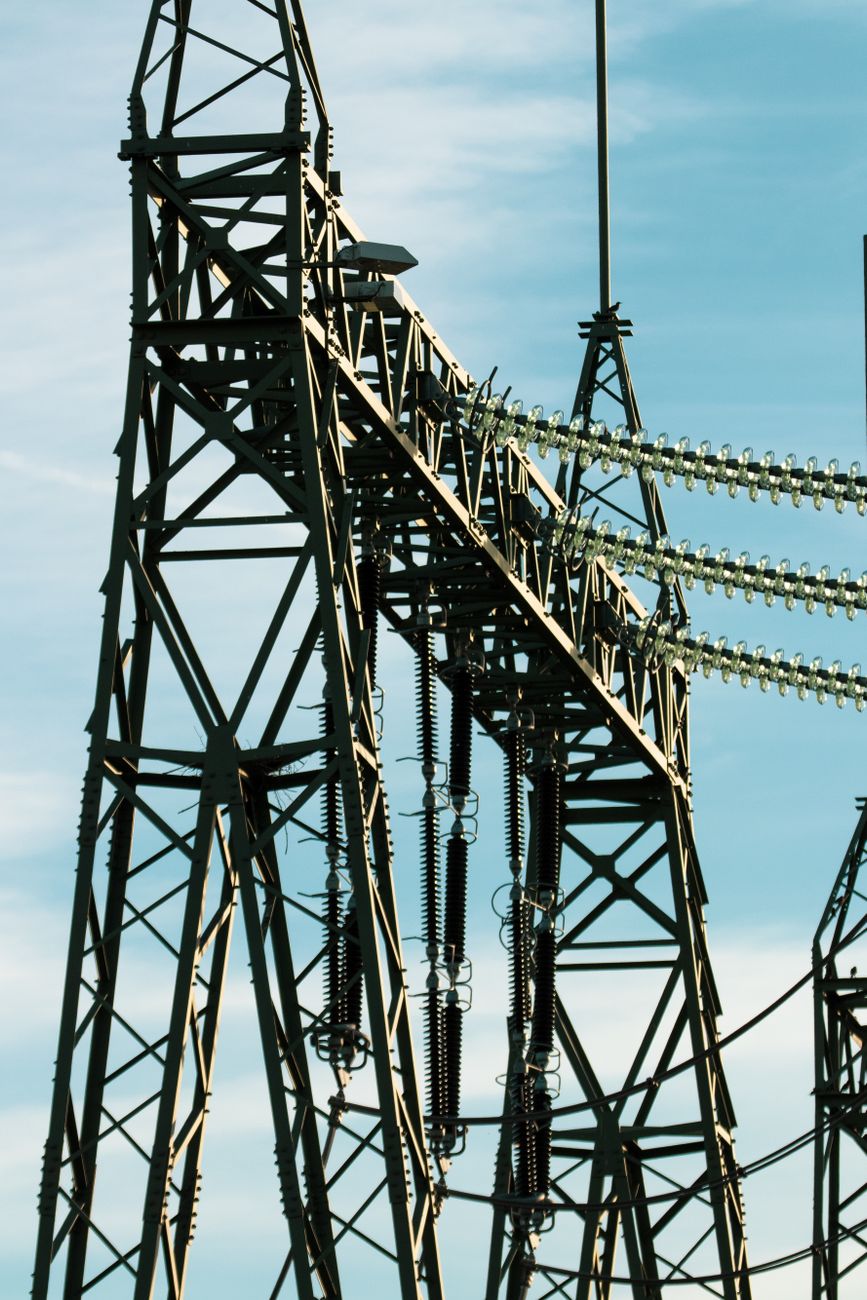
Three-phase systems are standard in commercial and industrial settings across North America, typically delivered at 208V, 480V, or higher voltages depending on the utility and the facility’s transformer configuration. Professional mining facilities, data centers, and dedicated hosting operations like Rax Mining run exclusively on three-phase power for good reason.
The math is straightforward: three-phase power delivers 73% more power than single-phase using the same wire gauge and amperage. This is not a marketing claim. It is a function of the physics. Three overlapping sine waves simply move more energy through the same conductors than a single wave can.
Efficiency: Where Three-Phase Wins
Efficiency is the primary reason commercial mining operations use three-phase power. The advantages compound at every level of the electrical system:
Reduced Line Losses
Electrical losses in wiring are proportional to the square of the current (I-squared-R losses). Three-phase power delivers the same total wattage at lower current per conductor, which means less energy wasted as heat in the wiring between the utility transformer and your miners. For a 1MW mining operation, the difference in line losses between single-phase and three-phase distribution can amount to 2% to 4% of total power consumption. At $0.06 per kWh, that is $10,000 to $21,000 in annual savings on wiring losses alone.
PSU Efficiency Gains
Power supply units operating on three-phase input tend to run at slightly higher efficiency because the input voltage waveform is smoother. The PSU’s internal rectifier and power factor correction circuits work less hard when the input power never drops to zero. Modern three-phase ASIC PSUs from manufacturers like Bitmain achieve 93% to 95% conversion efficiency, compared to 90% to 93% for equivalent single-phase units.
Use our mining profitability calculator to model how even a 1-2% efficiency improvement affects your annual returns at different electricity rates.
Balanced Loading
One of the most practical advantages of three-phase power is balanced loading across phases. In a single-phase system, all load sits on one circuit. In a three-phase system, miners can be distributed evenly across three phases, preventing any single phase from being overloaded. Unbalanced loads cause excess neutral current, increased transformer heating, and accelerated wear on circuit components. A well-balanced three-phase mining installation runs cooler, lasts longer, and wastes less energy.
Cost Comparison: Infrastructure Investment
The upfront cost picture is more nuanced than efficiency alone suggests:
Single-Phase Infrastructure Costs
- Panel upgrade (200A): $1,500 to $4,000
- 240V circuit installation (per circuit): $300 to $800
- PDU for 4-6 miners: $200 to $500
- Total for 10-miner home setup: $5,000 to $15,000
Single-phase infrastructure is cheaper to install but scales poorly. Each additional miner needs its own dedicated circuit, and residential panels have hard limits on total amperage. Scaling beyond 10 to 15 miners on a single residential service often requires a utility service upgrade costing $10,000 or more.
Three-Phase Infrastructure Costs
- Three-phase utility service: $5,000 to $25,000 (depends on distance to utility transformer and local utility policies)
- Three-phase distribution panel: $2,000 to $8,000
- Three-phase PDU (supports 20+ miners): $1,500 to $4,000
- Total for 50-miner commercial setup: $15,000 to $40,000
Three-phase infrastructure costs more upfront but the per-miner cost drops dramatically at scale. A three-phase PDU that costs $3,000 and supports 20 miners works out to $150 per miner. Achieving the same capacity with single-phase circuits could cost $300 to $800 per miner in wiring alone.
Scalability: Planning for Growth
This is where the decision becomes strategic rather than purely technical. If you plan to grow beyond a handful of miners, three-phase power is not just better; it is practically necessary.
Single-phase services in residential areas typically max out at 200A to 400A. At 240V, that is 48kW to 96kW of total capacity, enough for roughly 15 to 30 modern ASIC miners depending on the model. Growing beyond that requires either a utility service upgrade (expensive and slow) or a second service entrance (often prohibited by utility regulations).
Three-phase commercial services commonly start at 200A per phase (144kW at 480V) and scale up to thousands of amps. Professional hosting facilities operate at megawatt scale precisely because three-phase power distribution makes this physically and economically viable. A single three-phase switchgear assembly can feed hundreds of miners through properly sized distribution panels and PDUs.
The lesson: if your mining business plan includes the word “scale,” start with three-phase or plan your migration path early. Retrofitting from single-phase to three-phase after the fact is significantly more expensive than designing for three-phase from the beginning.
Which ASIC Miners Support Three-Phase Input?
Modern high-performance ASIC miners are increasingly designed for three-phase power input directly:
- Bitmain Antminer S21 XP Hyd: Ships with a three-phase PSU option for facility-scale deployments.
- MicroBT Whatsminer M60 series: Available with three-phase power supply configurations.
- Canaan Avalon A15 series: Supports both single-phase and three-phase input depending on PSU model.
Older models designed for single-phase input can still run on three-phase power through step-down transformers or single-phase PDUs fed from individual phases. This is standard practice in hosting facilities and does not void manufacturer warranties. Browse available ASIC miners and configurations in our shop to see current options.
When Single-Phase Makes Sense
Three-phase is not universally better. Single-phase power is the right choice in specific scenarios:
- Home mining (1-5 miners): The cost of bringing three-phase service to a residential property rarely makes sense for a handful of units.
- Testing and development: If you are evaluating new hardware or firmware configurations before deploying at scale, single-phase is simpler and sufficient.
- Temporary installations: Short-term mining setups where infrastructure investment cannot be recouped.
- Remote locations: Some rural areas do not have three-phase utility service available without major infrastructure investment from the utility company.
For most miners starting at home, the practical path is to begin with single-phase power and transition to a hosted colocation environment when your operation outgrows residential electrical capacity. This avoids the large upfront cost of commercial electrical work while still allowing you to scale through a provider that has already made that investment.
Power Distribution Units: The Critical Link
Regardless of whether your facility runs single-phase or three-phase power, the power distribution unit (PDU) is the critical piece of hardware between your electrical panel and your miners. PDU selection directly affects safety, monitoring capability, and operational flexibility.
Three-phase PDUs designed for mining applications include features that single-phase power strips cannot provide:
- Per-outlet power monitoring: Track individual miner power consumption in real time to identify failing units or inefficient configurations.
- Phase balancing indicators: Visual or digital readouts showing load distribution across all three phases, making it easy to maintain balance as miners are added or removed.
- Circuit protection: Individual breakers per outlet or outlet group prevent a single miner failure from taking down an entire row.
- Remote management: Enterprise PDUs offer remote power cycling, which allows operators to restart a hung miner without physically visiting the facility.
Safety Considerations
Both single-phase and three-phase installations carry electrical safety requirements that should not be shortcut:
- Wire sizing: All conductors must be sized for continuous duty (the miner draws full load 24/7) with appropriate derating for ambient temperature and conduit fill. NEC Article 210 and 215 provide the relevant standards.
- Grounding: Proper equipment grounding is essential for both safety and miner stability. Ground faults in mining equipment can damage hash boards and PSUs. Three-phase systems have specific grounding requirements that differ from single-phase installations.
- Arc flash protection: Three-phase systems at 480V and above require arc flash hazard analysis and appropriate labeling per NFPA 70E. This is a regulatory requirement, not a suggestion.
- Licensed electrician: All electrical work should be performed by a licensed electrician familiar with high-density computing loads. Mining installations are not standard electrical work, and errors can cause fires, equipment damage, or code violations.
Frequently Asked Questions
Can I run a single-phase miner on three-phase power?
Yes. You connect the miner’s single-phase PSU between one phase and neutral (for 120V loads) or between two phases (for 208-240V loads). This is standard practice in hosting facilities. The key is distributing miners evenly across phases to maintain balanced loading.
Is three-phase power more expensive from the utility?
The per-kWh rate for three-phase commercial service is often lower than residential single-phase rates because commercial tariffs are structured differently. However, commercial service usually includes demand charges (a fee based on your peak power draw) that residential service does not. The net cost depends on your utilization rate and local utility tariff structure.
How do I know if three-phase power is available at my location?
Contact your local electric utility. They can tell you whether three-phase service exists on the nearest distribution line and provide a cost estimate for extending service to your property if needed. In urban and suburban commercial areas, three-phase is almost always available. In rural residential areas, it may require a line extension at the customer’s expense.
What voltage should I use for a mining facility?
Most US mining facilities operate on 480V three-phase service stepped down to 240V at the PDU level for individual miners. The 480V distribution minimizes line losses throughout the facility, while 240V at the miner matches the PSU input requirements. Newer facility designs are moving toward keeping 480V all the way to the miner as more manufacturers release native 480V PSUs.
Can I convert my home from single-phase to three-phase?
Technically yes, but it is rarely economical for residential mining. The utility upgrade alone can cost $10,000 to $50,000 depending on distance to the nearest three-phase line. For most home miners, the better path is to scale to 10-15 miners on single-phase 240V service and then move to a hosted colocation solution when you need more capacity.
Making the Right Choice for Your Operation
The decision between single-phase and three-phase power is ultimately a function of scale, timeline, and growth plans. Small home operations work fine on single-phase 240V. Anything beyond 15 to 20 miners starts hitting the practical limits of residential electrical service, and three-phase becomes the clear choice for efficiency, scalability, and per-miner cost.
If you are serious about mining as a business rather than a hobby, the most capital-efficient path is often to skip the residential electrical investment entirely and host your miners at a facility that has already built the three-phase infrastructure at scale. You get the efficiency benefits, the professional power distribution, and the ability to grow without ever worrying about your home’s electrical panel.
Need help determining the right power configuration for your mining goals? Contact Rax Mining to discuss hosting options built on commercial three-phase power infrastructure designed from the ground up for ASIC mining.
Explore Rax Mining
- Bitcoin Miner Hosting — Competitive rates from $0.075/kWh
- NatGas MDU Units — 1MW modular datacenter containers
- Mining Profitability Calculator — Estimate your mining returns
- Our Facility — Tour our mining infrastructure