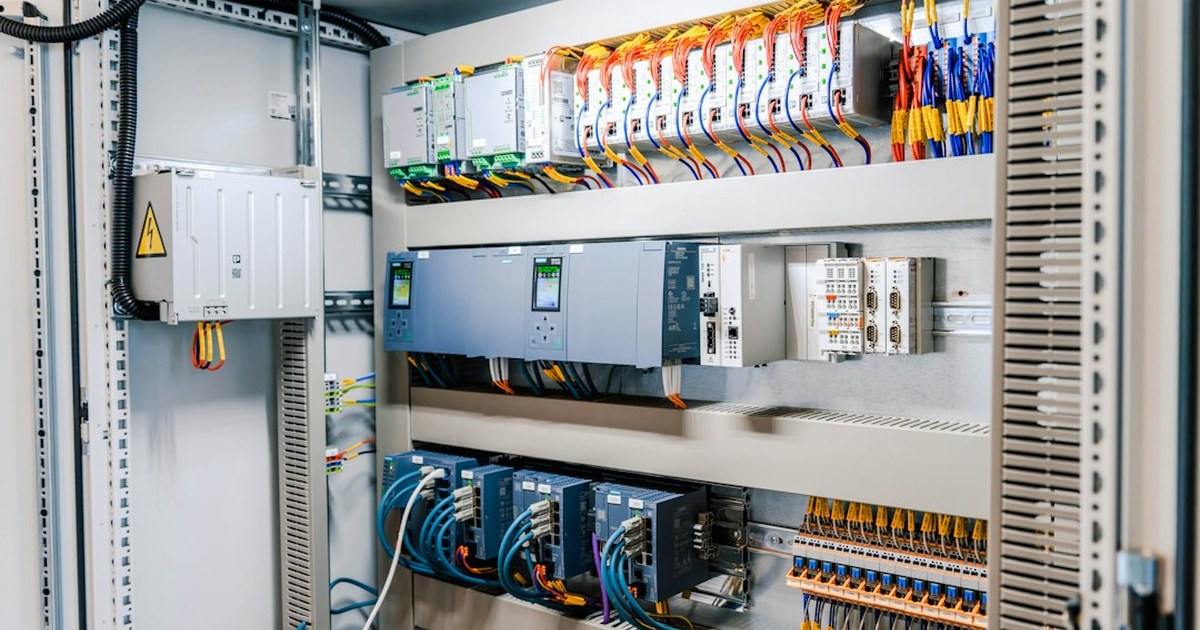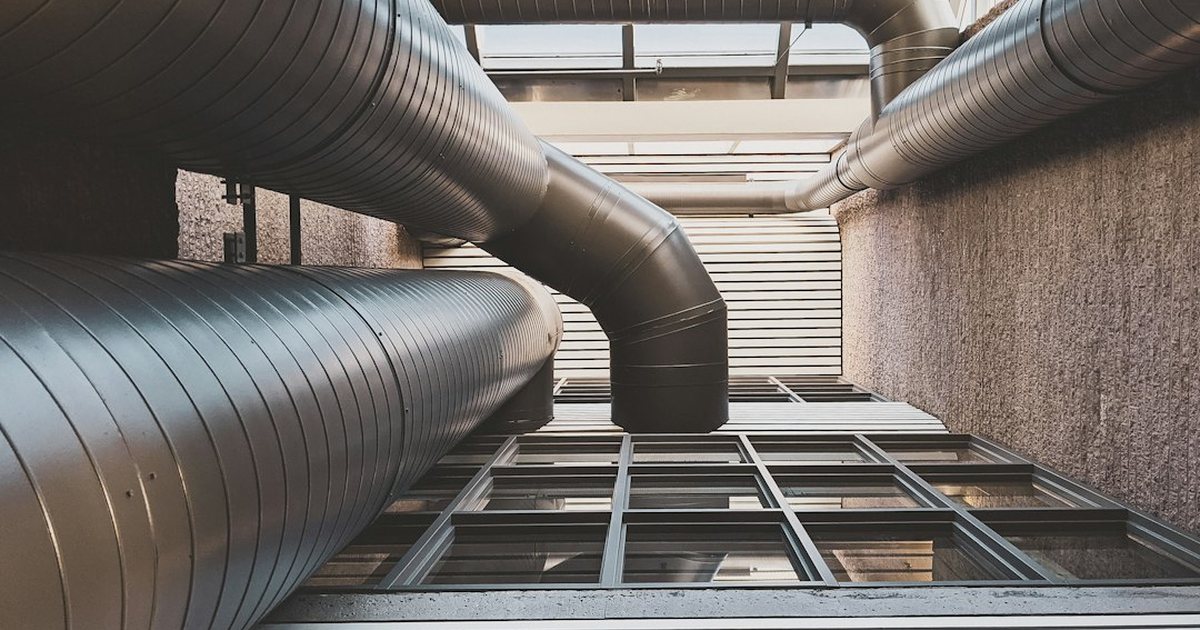
Every watt a Bitcoin miner consumes leaves the machine as heat. That is not a design flaw, it is physics: an ASIC is effectively a resistive heater that happens to perform useful computation on the way. A 1MW mining container rejects very close to 1MW of thermal energy into the air around it, and in most deployments that energy is simply thrown away.
Waste heat recovery asks a straightforward question: if you are already paying for that energy, can any of it be sold or used a second time? The answer is often yes, but the economics are more demanding than the enthusiasm around the idea suggests. This guide covers what actually works, what the constraints are, and when it is worth engineering for.
The Grade Problem
The single most important concept in heat reuse is grade, meaning the temperature at which the heat is available. Air-cooled ASICs typically exhaust air in a range that feels hot to stand in but is low grade in engineering terms. It is warm enough to heat a space, dry a product, or preheat water. It is not hot enough to drive most industrial processes, and it is nowhere near hot enough to generate electricity efficiently.
This is why proposals to convert mining exhaust back into power almost never survive contact with a spreadsheet. Thermodynamic efficiency at low temperature differentials is poor, and the capital cost of the equipment needed to exploit it is high relative to the value recovered.
Liquid cooling changes the picture meaningfully. Direct-to-chip and immersion systems capture heat in a fluid rather than diffusing it into a large volume of air, which raises both the grade and the usability of the output. A liquid loop delivers a concentrated, pumpable, controllable thermal stream. That is a far more tractable input for a heat customer than a wall of hot air.
Applications That Genuinely Work
Space and District Heating
The most proven application. Mining heat is well matched to keeping buildings, workshops and warehouses warm. In cold climates this can displace a real fuel bill for the heat host. The constraint is seasonal: demand collapses in summer, so the facility still needs full conventional heat rejection for the months when nobody wants the output.
Greenhouse Agriculture
Greenhouses need large volumes of low-grade heat and tend to want it year-round in cold regions. The match is good, the heat customer is usually adjacent to cheap land and power, and the thermal requirement is continuous rather than peaky. This has become one of the more common real-world pairings.
Aquaculture
Fish farming requires stable water temperature, and stability is something a continuously running mining load provides unusually well. The co-location logic is strong where water and power are both available.
Drying and Dehydration
Timber drying, grain drying and food dehydration all consume low-grade heat in quantity. These are often seasonal or batch processes, which complicates the match, but the thermal fit is appropriate.
Water Preheating
Preheating water before it reaches a conventional boiler reduces the boiler’s workload. This is a modest but reliable saving, and it works in many more locations than district heating does.
Why Most Projects Do Not Happen
The thermal physics is the easy part. Projects fail on everything else:
- Proximity. Heat does not travel well. Every metre of insulated pipe costs money and loses energy. A heat customer who is not effectively on site is usually not a heat customer at all.
- Demand mismatch. Mining runs continuously. Most heat demand does not. A buyer who wants heat eight months a year leaves you to reject it conventionally for the other four, so you build and maintain two systems instead of one.
- Reliability expectations. Mining load is not guaranteed. If you curtail for grid economics or a hardware fault, the heat stops. A customer who depends on that heat for a production process needs backup, which weakens their willingness to pay.
- Capital allocation. Heat exchangers, pumps, insulated distribution and controls all cost money that could otherwise buy hashrate. The recovered value must beat that alternative use of capital, and frequently it does not.
- Contractual complexity. Selling heat makes you a utility to someone. That means service commitments, metering, pricing terms and liability, which is a different business from mining.
Where the Economics Improve
Heat reuse works best when several conditions line up at once:
- A heat customer physically adjacent to the facility, ideally on the same parcel.
- Year-round or near-year-round thermal demand.
- A customer currently buying expensive fuel, so the displaced cost is real.
- Liquid cooling already in the design, so the capture equipment is partly justified by cooling requirements rather than purely by heat sales.
- A site where the heat offtake improves permitting or community relations, which has non-financial value that sometimes decides projects.
Note the fourth point in particular. If you are deploying liquid cooling anyway for density or hardware longevity reasons, the marginal cost of making that loop useful to a neighbour is far lower than building a recovery system from scratch.
Sizing the Opportunity Before You Engineer It
A useful first-pass calculation needs only two inputs: your electrical load and the fraction you can realistically capture. Essentially all electrical input becomes heat, so a 1MW container is rejecting on the order of 1MW thermal. What you can capture is far less than that, and the capture fraction is where proposals tend to be optimistic.
With conventional air cooling, you are collecting hot exhaust from a large, leaky volume, and realistic capture is a modest share of the total. With a closed liquid loop, you are collecting heat directly at the source and the capture fraction rises substantially. That single design decision moves the project further than any amount of downstream equipment.
Translate the captured thermal output into the unit your prospective customer buys their energy in, then multiply by what they currently pay. That number, not the headline megawatt figure, is your actual annual revenue ceiling. Subtract the parasitic load of the pumps and controls you will add, because recovery equipment consumes electricity you would otherwise be selling as hashrate.
Monitoring and Control
A heat offtake arrangement introduces an operational dependency that mining alone does not have. At minimum you need flow and temperature instrumentation on both sides of the exchange, alarming when delivery falls outside contracted bounds, and a control strategy that decides what happens when mining load drops. Decide in advance whether the heat customer or the hashrate takes priority during curtailment, because that decision will be made under pressure otherwise.
Fouling is the quiet maintenance item. Heat exchangers lose effectiveness as surfaces accumulate deposits, and performance degrades gradually enough that it goes unnoticed until output is materially down. Build cleaning intervals into the operating plan rather than reacting to complaints.
Natural Gas Sites and the Integrated Case
Facilities powered by on-site natural gas generation have an additional angle: the generation equipment itself produces recoverable heat, typically at a higher grade than the ASICs do. Combined heat and power thinking is well established in that context, and a mining load that is already co-located with gas generation has two thermal streams rather than one.
This matters for containerized deployments. A modular unit sited near a gas source is often in a rural or industrial setting where an adjacent agricultural or processing heat customer is plausible, which is precisely the geography where district heating in an urban sense is not.
How to Evaluate It Honestly
Before committing engineering budget, work through this in order:
- Identify the customer first, not the technology. A recovery system without a contracted offtaker is a stranded asset.
- Quantify their annual demand profile, including the months they do not want heat.
- Establish what they currently pay for the energy you would displace. This sets the ceiling on what your heat is worth.
- Price the full capture and distribution system, including the conventional rejection capacity you still need for mismatch periods.
- Compare the return against simply deploying more hashrate with the same capital.
- Decide what you are contractually promising, and whether curtailment rights survive that promise.
If the project only works on the assumption of continuous uptime and a perfectly matched customer, it does not work.
The Practical Position
Waste heat recovery is real, proven in specific configurations, and genuinely valuable where the geography and the offtaker align. It is not a universal upgrade, and it is not a substitute for the fundamentals. The dominant lever on mining economics remains the price of the power going in, not the resale of the heat coming out. A site at $0.055 to $0.075 per kWh is profitable without any heat revenue at all, while a site at retail industrial rates is not rescued by selling warm air.
Treat heat reuse as a margin enhancement on an already sound site, and evaluate it with the same discipline you would apply to any other capital deployment.
Rax Mining builds natural-gas-powered modular data center units designed around low delivered power cost, with 1MW containers deploying turnkey in roughly 60 days at $600,000. If you are evaluating a site where a heat offtaker is plausible, see the NatGas MDU specification or browse available hardware in our shop. To model the power economics for a specific location, call +1-718-766-8559 or email info@rax.ae.
Explore Rax Mining
- Bitcoin Miner Hosting — Competitive rates from $0.075/kWh
- NatGas MDU Units — 1MW modular datacenter containers
- Mining Profitability Calculator — Estimate your mining returns
- Our Facility — Tour our mining infrastructure