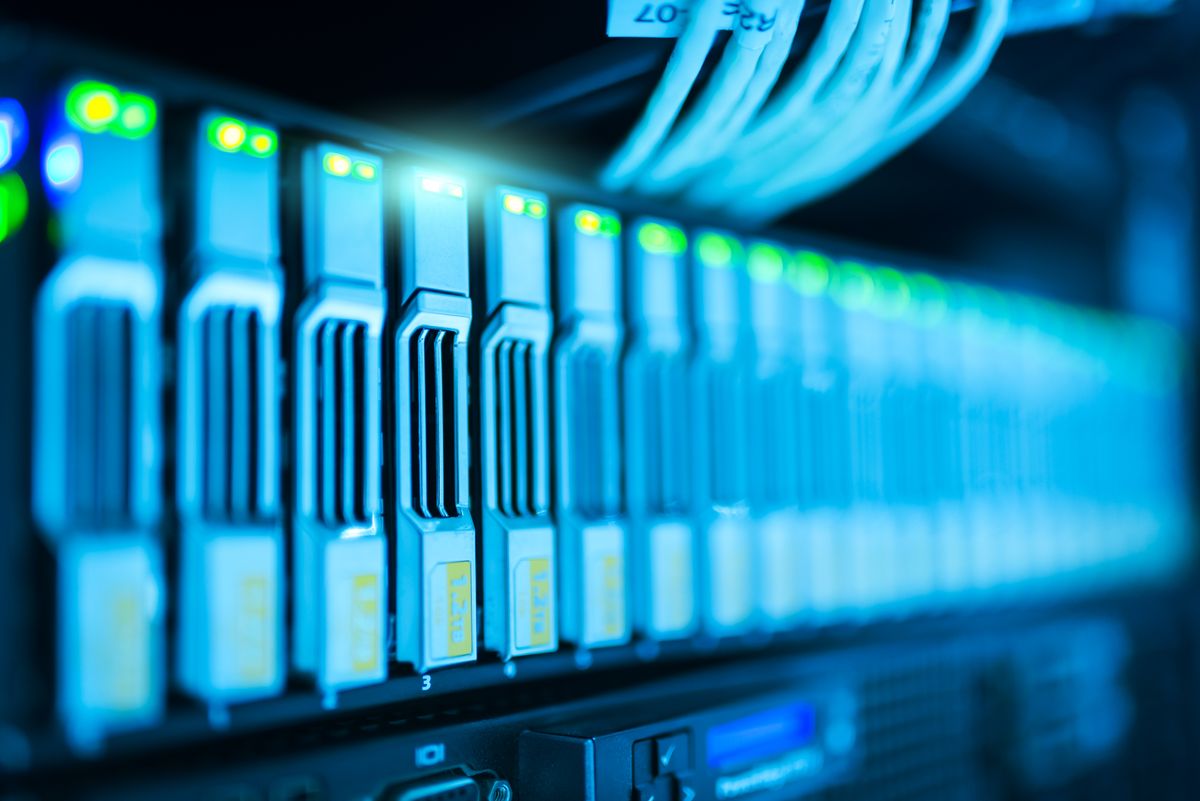
The worlds of Bitcoin mining and artificial intelligence are colliding in ways few predicted. As AI workloads demand massive computational power and cheap electricity, Bitcoin mining operators are uniquely positioned to bridge the gap. Their existing infrastructure — wholesale power contracts, cooling systems, and remote facility management expertise — is exactly what AI data centers need.
Why Bitcoin Miners Are Pivoting to AI Hosting
Bitcoin mining companies have spent years securing the three things AI companies desperately need: cheap power, physical space, and thermal management expertise. With AI training runs consuming megawatts of electricity over weeks or months, the economics align perfectly with mining infrastructure.
Several factors are driving this convergence:
- Power procurement expertise — Mining operators negotiate wholesale electricity contracts at rates between $0.03-0.06/kWh, well below retail data center rates of $0.08-0.15/kWh
- Cooling infrastructure — Both ASIC miners and GPU clusters generate extreme heat. Mining facilities already have industrial cooling solutions in place
- Remote site management — Mining operations run 24/7 in remote locations with minimal on-site staff, a model that translates directly to AI inference deployments
- Flexible load profiles — Mining can be curtailed during peak demand, making miners ideal grid partners for utilities serving growing AI loads
The Economics: Mining vs. AI Hosting Revenue
A single megawatt of Bitcoin mining capacity generates roughly $150,000-300,000 annually in mining revenue (depending on BTC price and difficulty). That same megawatt dedicated to AI/HPC hosting can generate $400,000-800,000 annually through colocation contracts with AI companies. The revenue premium explains why publicly traded miners like Rax Mining’s hosting division are actively diversifying.
Revenue Comparison per Megawatt (2026 Estimates)
| Metric | BTC Mining | AI/HPC Hosting |
|---|---|---|
| Annual revenue per MW | $150K-300K | $400K-800K |
| Contract length | Month-to-month | 2-5 years |
| Revenue predictability | Variable (BTC price) | Fixed contracts |
| Upfront GPU/ASIC cost | $1-3M per MW | Customer-provided |
| Power cost sensitivity | Very high | Moderate |
| Cooling requirements | High | Very high |
Infrastructure Requirements: What Transfers and What Doesn’t
Not everything from a mining facility translates directly to AI hosting. GPU clusters demand higher power density per rack, more sophisticated networking (high-bandwidth interconnects), and stricter uptime SLAs. Here’s what mining operators can leverage versus what needs upgrading:
Direct Transfers
- Power distribution — Transformers, switchgear, and power distribution units (PDUs) work for both workloads
- Cooling systems — Especially immersion and liquid cooling setups used in modern mining
- Physical security — Fencing, cameras, access controls are universal
- Utility relationships — Existing wholesale power agreements and grid interconnections
- Remote monitoring — 24/7 NOC operations and alerting systems
Required Upgrades
- Networking — AI clusters need 100-400Gbps interconnects vs. mining’s basic internet
- Redundancy — AI hosting typically requires N+1 or 2N power redundancy vs. mining’s simpler setups
- Environmental controls — Tighter temperature and humidity ranges for GPU reliability
- Rack density — AI racks can pull 40-100kW vs. mining’s 5-20kW per rack equivalent
Rax Mining’s Hybrid Approach
At Rax Mining, we’re building infrastructure that serves both markets. Our NatGas MDU (Modular Datacenter Units) are designed with the flexibility to support ASIC mining, GPU compute, or hybrid deployments. The modular approach means we can deploy capacity incrementally — starting with mining and transitioning individual containers to AI workloads as demand grows.
Our data center facilities across Texas, Nebraska, and the Midwest provide access to wholesale power starting at $0.075/kWh — rates that make both mining and AI hosting economically viable. With up to 30MW of available capacity, we can accommodate large-scale AI deployments alongside our mining operations.
The Grid Flexibility Advantage
One of mining’s most underappreciated advantages in the AI era is grid flexibility. Bitcoin miners can instantly curtail operations during peak demand, earning demand response payments while supporting grid stability. This makes mining operations ideal co-tenants with AI workloads that require guaranteed uptime.
When the grid is stressed, mining operations ramp down while AI workloads continue running on dedicated power. The utility sees a reduced total load, and the mining operator earns curtailment credits. It’s a win-win that wholesale power arrangements increasingly formalize into contracts.
What This Means for Mining Hosting Customers
For customers hosting miners with operations like Rax Mining, the AI convergence is broadly positive. Infrastructure investments get amortized across multiple revenue streams, which means hosting providers can maintain competitive rates while upgrading facilities. Better cooling, better power redundancy, and better network connectivity benefit ASIC miners too.
If you’re considering colocation for your miners, look for hosting providers who are investing in hybrid-capable infrastructure. Facilities designed for both mining and AI workloads will be better maintained, better funded, and more likely to offer long-term stability.
Looking Ahead: 2026 and Beyond
The Bitcoin mining and AI infrastructure convergence is still in its early stages. As AI models grow larger and training runs consume more power, the demand for mining-style infrastructure will only increase. Operators who build flexible, multi-use facilities today will capture value from both markets.
For detailed analysis of mining economics, use our mining profitability calculator or explore our advanced mining data dashboard. To discuss hosting options for your ASIC or GPU hardware, contact our team or call 718-766-8559.
Explore Rax Mining
- Bitcoin Miner Hosting — Competitive rates from $0.075/kWh
- NatGas MDU Units — 1MW modular datacenter containers
- Mining Profitability Calculator — Estimate your mining returns
- Our Facility — Tour our mining infrastructure