Transporting ASIC miners safely is one of the most overlooked challenges in Bitcoin mining. These machines are dense, heavy, sensitive to shock, and expensive to replace. Whether you are shipping a single unit to a colocation facility, receiving a bulk order from a manufacturer, or relocating your fleet between sites, the logistics of moving mining hardware require careful planning. This guide covers everything miners need to know about shipping ASICs domestically and internationally.
Why ASIC Shipping Requires Special Attention
ASIC miners are not ordinary electronics. A single Antminer S21 Pro weighs approximately 17 kilograms (37 pounds), draws over 3,500 watts, and contains precision hash boards with thousands of tiny BGA solder joints that are vulnerable to vibration and impact. Drop an ASIC from waist height onto concrete and you can crack a hash board, shear fan mounts, or dislodge the control board connector, turning a multi-thousand-dollar machine into a paperweight.
The financial stakes are significant. A pallet of 20 S21 Pro units represents roughly $50,000 in equipment at current market prices. Damage to even a few units during transit can wipe out months of projected mining revenue. Professional packaging and shipping practices are not optional when hardware values run this high.
Domestic Shipping: Methods and Best Practices
Freight vs. Parcel Carriers
For small shipments (1 to 4 units), standard parcel carriers like UPS, FedEx, and USPS are viable options. For larger shipments (5+ units or palletized loads), less-than-truckload (LTL) freight is more cost-effective and provides better handling for heavy, dense cargo.
- Parcel (1-4 units): UPS Ground or FedEx Ground is the standard choice. Expect $40 to $80 per unit for domestic shipping depending on distance and weight. Always select a service level that includes tracking and offers insurance options.
- LTL Freight (5+ units): Palletized shipments via freight carriers like R+L Carriers, XPO Logistics, or Estes Express. Costs typically run $200 to $600 per pallet depending on distance, weight class, and accessorial charges (liftgate, residential delivery, inside delivery). Freight is slower (3 to 7 business days domestically) but handles bulk shipments far more safely than parcel.
- Full Truckload (100+ units): For large fleet deployments, a dedicated truck provides the most protection and best per-unit economics. A standard 53-foot trailer can carry several hundred ASIC miners on pallets.
Packaging Standards
Proper packaging is the single most important factor in preventing shipping damage. Follow these standards:
- Original manufacturer packaging: If you still have the original Bitmain or MicroBT boxes, use them. These are designed specifically for the machine’s weight and dimensions, with molded foam inserts that cushion the unit on all six sides.
- Aftermarket packaging: If original boxes are unavailable, use a double-walled corrugated box rated for the unit’s weight (minimum 275 ECT for a 40-pound miner). Line all six interior faces with at least 2 inches of closed-cell foam (polyethylene or polyurethane). Open-cell foam compresses too easily and offers inadequate protection.
- Anti-static protection: Wrap each unit in an anti-static bag or anti-static bubble wrap. ASIC hash boards contain sensitive integrated circuits that can be damaged by electrostatic discharge during handling.
- Fan protection: Remove external fans or secure them with zip ties to prevent them from spinning during transit. Free-spinning fans in a vibrating package can burn out fan bearings or damage the motor.
- Power supply units: If the PSU is external (as with many Antminer models), package it separately from the miner body to prevent the heavy PSU from impacting the hash boards during transit.
Palletizing for Freight
When shipping multiple units via freight, palletize properly:
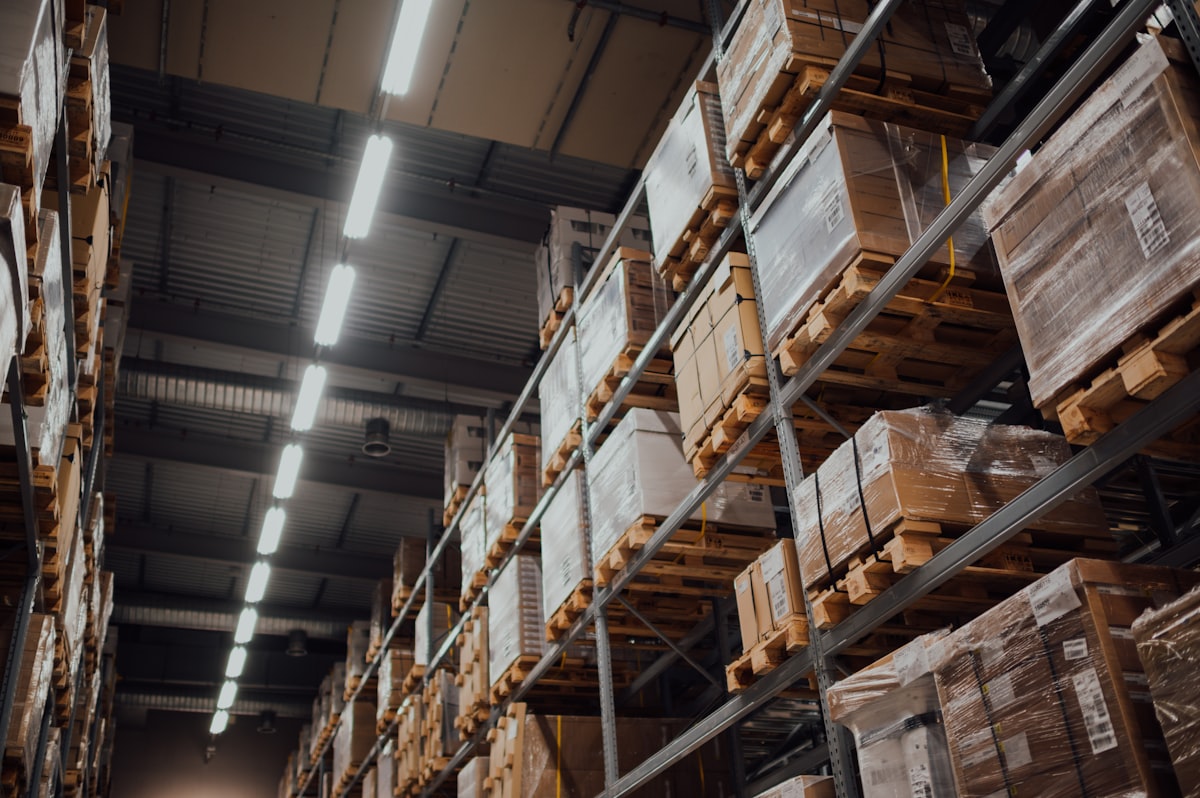
- Use standard 48×40 inch pallets in good condition (no broken deck boards).
- Stack boxes no more than two layers high for ASIC miners (they are too heavy for deeper stacking).
- Secure all boxes to the pallet with stretch wrap (minimum 80-gauge, at least 3 full revolutions around the base and top).
- Place a layer of cardboard between stacked layers to distribute weight.
- Label the pallet as “FRAGILE – ELECTRONIC EQUIPMENT” on all four sides and top.
- Include a tilt indicator and shock sensor if the shipment is high-value (these are inexpensive and provide evidence if mishandling occurs during transit).
International Shipping and Customs
Importing from Manufacturers
Most ASIC miners are manufactured in China and shipped to the United States via ocean freight or air freight. Key considerations for international imports:
- Harmonized Tariff Code: ASIC miners are typically classified under HTS 8471.80 (other data processing machines) or 8543.70 (electrical machines with individual functions). The correct classification affects duty rates. As of mid-2026, import tariffs on Chinese electronics remain a significant cost factor for U.S. miners.
- Customs brokerage: Use a licensed customs broker for any shipment exceeding $2,500 in declared value. They handle the Customs and Border Protection entry process, duty calculation, and regulatory compliance. Self-clearing is technically possible but error-prone for first-time importers.
- Ocean vs. air freight: Ocean freight (typically 25 to 35 days from Shenzhen to a U.S. West Coast port) costs roughly $3 to $6 per kilogram. Air freight (3 to 5 days) costs $8 to $15 per kilogram but gets machines mining faster. The break-even calculation depends on current hashprice: if mining revenue exceeds the air freight premium within the time saved, air freight pays for itself.
- Incoterms: Understand the shipping terms. FOB (Free on Board) means you bear costs and risk from the port of origin. DDP (Delivered Duty Paid) means the seller handles everything to your door. CIF (Cost, Insurance, and Freight) is a middle ground. Most large manufacturer orders ship FOB or EXW (Ex Works, meaning you arrange everything from the factory).
Receiving and Inspection
When a shipment arrives, conduct a thorough receiving inspection before signing the delivery receipt as accepted:
- Exterior inspection: Check all boxes for visible damage, water staining, crush marks, or punctures before the driver leaves. Photograph any damage with the delivery vehicle visible in the frame.
- Note exceptions: If damage is visible, write “DAMAGED” or “SUBJECT TO INSPECTION” on the delivery receipt. Never sign as received in good condition if the packaging shows signs of mishandling.
- Open and verify: Within 24 hours of delivery, open every box and verify the hardware matches the order (correct model, correct hashrate variant, correct firmware version). Power on each unit and run a 30-minute burn-in test to confirm all hash boards are hashing at expected rates.
- Document shortages: Count every unit against the packing list. Report discrepancies to the shipper and seller immediately. Freight claims have strict filing deadlines (typically 9 months for domestic, shorter for international).
Insurance for Shipments
Standard carrier liability (released-value protection) covers only pennies per pound, far below the actual value of mining hardware. Always purchase full-value shipping insurance:
- Carrier-declared value: UPS and FedEx allow you to declare the full value of the shipment for an additional fee (typically 2% to 3% of the declared value). This is the simplest option for parcel shipments.
- Third-party cargo insurance: For large freight shipments, companies like Falvey Insurance Group, Roanoke Insurance, or Shipsurance offer per-shipment or annual cargo policies. Rates are typically 1% to 2% of the declared value.
- Marine cargo insurance: For ocean freight imports, an all-risk marine cargo policy is essential. This covers damage, theft, and loss during the entire transit from factory to your facility. Your customs broker or freight forwarder can arrange this.
For comprehensive coverage of your equipment beyond shipping, see our guide on insurance for Bitcoin mining operations.
Fleet Relocation Between Facilities
Relocating miners between hosting facilities is a common scenario when operators chase better power rates, consolidate operations, or move equipment to newer facilities with better infrastructure. Key considerations:
- Downtime cost: Every day your miners are in transit is lost revenue. For a fleet of 50 S21 Pro units, transit downtime costs roughly $500 to $800 per day in foregone mining revenue at current hashprices. Factor this into any relocation decision.
- Coordination with both facilities: Coordinate power-down at the origin facility and rack-ready infrastructure at the destination. Ensure the receiving facility has open slots, configured PDUs, and network connectivity ready before equipment arrives.
- Cleaning before packing: Mining environments accumulate dust. Clean all miners with compressed air before packing them for relocation. Shipping dusty miners means the dust gets shaken deeper into the heat sinks during transit.
- Temperature considerations: Avoid shipping ASIC miners in extreme cold (below freezing) without climate-controlled transport. Rapid temperature changes when powering on cold equipment can cause condensation on circuit boards.
Common Shipping Mistakes and How to Avoid Them
- Under-packaging: Using a single-wall box with packing peanuts instead of proper foam. Peanuts shift during transit, leaving the miner unprotected on impact.
- Not removing fans: Leaving fans free to spin destroys bearings over long-distance transit. Secure them or remove them.
- Skipping insurance: Carrier standard liability on a $2,500 miner might pay out $15. Always declare value.
- Ignoring customs requirements: Failing to include proper commercial invoices, packing lists, or certificates of origin causes customs holds that can add weeks of delay and storage fees.
- Not inspecting on receipt: Signing a clean delivery receipt eliminates your ability to file a freight claim later. Always inspect before signing.
Cost Comparison: Shipping Methods
Approximate costs for shipping ASIC miners within the United States (2026 rates):
- 1 unit, UPS Ground (cross-country): $50 to $80 + insurance
- 10 units, LTL freight: $400 to $700 + insurance
- 50 units, LTL freight (2 pallets): $800 to $1,400 + insurance
- 200+ units, full truckload: $2,000 to $4,000 depending on distance
- International air freight (per unit from China): $120 to $250 + duties
- International ocean freight (per unit from China): $40 to $80 + duties (25-35 day transit)
The Bottom Line
Shipping ASIC miners is a solved problem, but only if you follow established best practices. Proper packaging, adequate insurance, thorough receiving inspection, and appropriate carrier selection protect your investment during what is inherently a risky phase of the equipment lifecycle. Whether you are deploying new hardware to a colocation facility like Rax Mining or relocating your fleet, treating logistics as a critical operational function rather than an afterthought will save you money and headaches.
For questions about deploying your miners at one of our professionally managed hosting facilities, contact Rax Mining at 718-766-8559 or email info@rax.ae.
Explore Rax Mining
- Bitcoin Miner Hosting — Competitive rates from $0.075/kWh
- NatGas MDU Units — 1MW modular datacenter containers
- Mining Profitability Calculator — Estimate your mining returns
- Our Facility — Tour our mining infrastructure