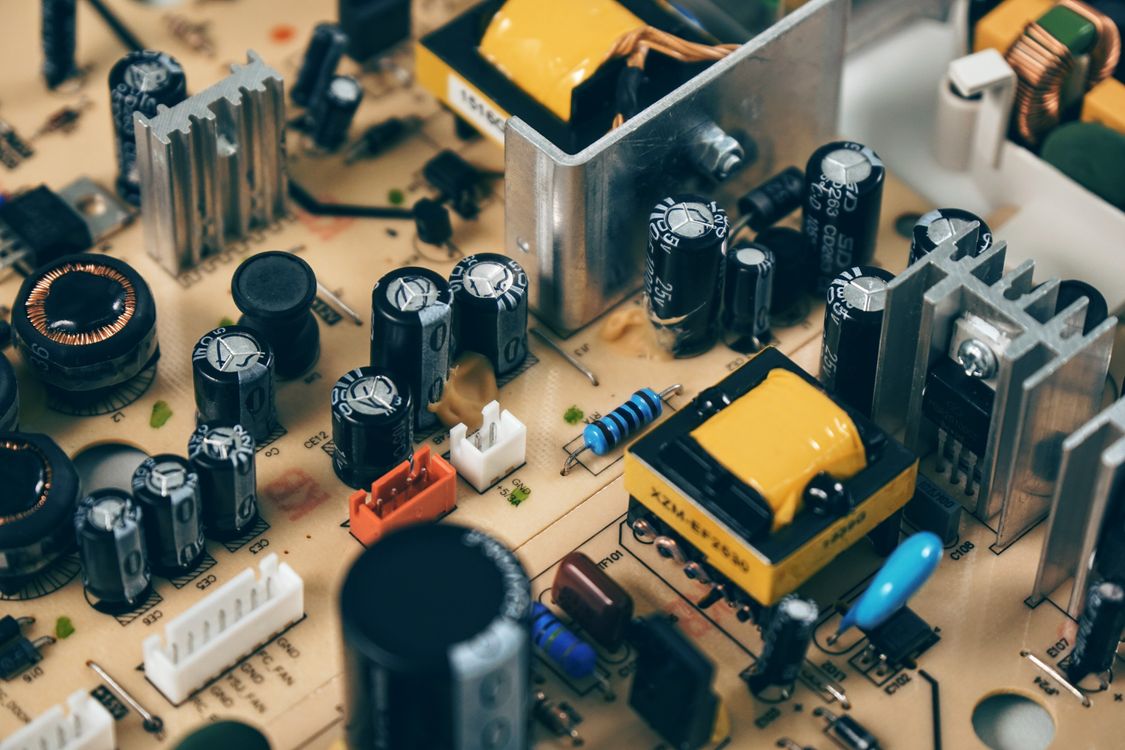
Why the PSU Deserves More Attention Than the Hash Board
Most Bitcoin miners obsess over hash rates and cooling but overlook the component that determines whether the machine runs at all: the power supply unit. A failing PSU does not just cause downtime. It can damage hash boards worth thousands of dollars, create fire hazards, and silently waste electricity through poor conversion efficiency. Understanding PSU specifications, failure patterns, and upgrade paths is essential for any operation running more than a handful of machines.
This guide covers everything from efficiency ratings to real-world failure diagnostics, giving you the knowledge to keep your fleet running reliably. For broader maintenance strategies, see our ASIC maintenance guide.
PSU Fundamentals: What the Power Supply Actually Does
An ASIC miner PSU converts alternating current (AC) from your facility’s electrical system to direct current (DC) at the specific voltage and amperage the hash boards require. Modern Bitcoin ASIC miners typically need 12V DC at extremely high current, often 150 to 300 amps depending on the model and overclock settings.
Key PSU Specifications
| Specification | What It Means | Typical Range (2026 ASICs) | Why It Matters |
|---|---|---|---|
| Wattage Rating | Maximum continuous power delivery | 3,000W – 5,500W per PSU | Must exceed machine TDP by 10-20% margin |
| Input Voltage Range | AC voltage the PSU accepts | 200-277VAC (most), some 100-277VAC | Must match facility power (208V or 240V typical) |
| Output Voltage | DC voltage delivered to hash boards | 12V – 14V DC | Must match ASIC requirements exactly |
| Output Current | Maximum amperage on 12V rail | 150A – 300A+ | Determines if PSU can handle overclocking |
| Efficiency Rating | Percentage of input power converted to usable output | 88% – 96% | Higher efficiency = lower electricity cost, less heat |
| Power Factor | How cleanly PSU draws power from AC source | 0.95 – 0.99 (active PFC) | Low PF increases utility demand charges |
80 PLUS Efficiency Ratings Decoded
The 80 PLUS certification system rates PSU efficiency at 20%, 50%, and 100% load. For mining operations running machines at constant full load, the 100% load efficiency is most relevant. Here is what each tier means for your electricity bill.
Efficiency Tier Comparison at Full Load
| 80 PLUS Tier | Efficiency at 100% Load | Annual Waste per 3,000W PSU | Annual Cost of Waste ($0.075/kWh) |
|---|---|---|---|
| Standard (80 PLUS) | 80% | 6,570 kWh | $361 |
| Bronze | 85% | 4,636 kWh | $255 |
| Silver | 88% | 3,578 kWh | $197 |
| Gold | 90% | 2,920 kWh | $161 |
| Platinum | 92% | 2,283 kWh | $126 |
| Titanium | 94% | 1,674 kWh | $92 |
The difference between an 80 PLUS Standard and Platinum PSU across 100 machines is $23,500 per year in wasted electricity alone. At scale, PSU efficiency is not a nice-to-have; it is a direct determinant of operating margin. Bitmain S21 series machines ship with Platinum-rated APW12 PSUs, while older S19 models often had Gold-rated APW7 or APW9 units. When evaluating which ASIC miners to buy, factor in PSU efficiency as a recurring cost advantage.
Common PSU Failure Modes and Diagnostics
Power supply failures account for an estimated 25-35% of all ASIC miner downtime events. Recognizing failure patterns early prevents cascading damage to hash boards and other components.
Failure Mode Analysis
| Failure Mode | Symptoms | Root Cause | Prevention |
|---|---|---|---|
| Capacitor degradation | Intermittent shutdowns, voltage ripple, buzzing noise | Heat stress, age (2-4 year lifespan at 50C+) | Adequate cooling, replace capacitors proactively at 3 years |
| Fan failure | PSU overheating, thermal shutdown, reduced output | Dust accumulation, bearing wear | Monthly fan inspection, clean every 90 days |
| Voltage rail instability | Hash board errors, random reboots, low hash rate | Worn voltage regulators (MOSFETs), overloading | Never exceed 95% rated load continuously |
| Input rectifier failure | Complete shutdown, tripped breaker, no LED indicators | Power surges, poor power quality | Surge protection, line conditioning for unstable grids |
| Connector burnout | Melted connector, charring smell, intermittent power | Loose connections, corrosion, vibration | Torque connectors to spec, inspect quarterly |
| Thermal compound failure | MOSFETs overheating despite adequate airflow | Dried thermal interface material | Replace thermal compound at 2-year intervals |
Diagnostic Steps When a PSU Fails
When a machine goes down and PSU failure is suspected, follow this sequence. First, check all LED indicators on the PSU. Most Bitmain APW units have green (normal), yellow (warning), and red (fault) indicators. Second, measure AC input voltage at the PSU terminals. Voltage below 200V or above 280V indicates a facility power issue, not a PSU failure. Third, measure DC output voltage with a multimeter. The 12V rail should read between 11.8V and 12.6V under load. Readings below 11.5V or above 13V indicate PSU failure. Fourth, check for audible signs: clicking, buzzing, or high-pitched whine from capacitors suggests imminent failure even if the machine is still running. Fifth, inspect all connectors for discoloration, melting, or carbon deposits.
PSU Replacement and Upgrade Options
When a PSU fails, you face a decision between OEM replacement and aftermarket upgrade. Both paths have merits depending on your situation.
OEM Replacement
The safest option is replacing with the manufacturer’s specified PSU. Bitmain APW12 for S21 series, APW9+ for S19 XP, and APW7 for older S19 models. OEM replacements guarantee compatibility, maintain warranty coverage (if applicable), and require zero configuration changes. Pricing ranges from $150 to $400 depending on model and availability.
Aftermarket and Server PSU Conversions
Some operators convert server-grade PSUs (HP 2400W, Dell 1100W in parallel) for use with ASIC miners. This approach offers potential cost savings and sometimes higher efficiency ratings, but requires custom wiring harnesses and careful voltage regulation. Only recommended for operators with electrical engineering expertise. Incorrect voltage or inadequate current capacity will destroy hash boards instantly.
When to Upgrade vs Replace
If your current PSU is more than three years old, an efficiency upgrade may pay for itself within 12 to 18 months through electricity savings alone. Upgrading from Gold to Platinum efficiency on 50 machines saves approximately $1,750 per year at $0.075/kWh. Factor in reduced cooling load (every watt of PSU waste becomes heat your cooling system must remove) and the payback period shortens further.
PSU Best Practices for Fleet Operations
Running dozens or hundreds of machines requires a systematic approach to PSU management that goes beyond individual machine troubleshooting.
Inventory Management
Keep spare PSUs equal to 5-8% of your fleet size. For a 200-machine facility, that means 10-16 spare PSUs on hand. This allows immediate swap-and-repair workflows that minimize downtime. Label each spare with the date received and the compatible machine models.
Environmental Controls
PSU lifespan correlates directly with operating temperature. Every 10 degrees Celsius above 25C reduces electrolytic capacitor life by approximately 50%. Target ambient air temperature below 35C at the PSU intake for maximum longevity. Ensure PSU cooling fans have clear airflow paths and are not obstructed by cable routing.
Power Quality
Invest in power quality monitoring at your main distribution panel. Track voltage, frequency, total harmonic distortion (THD), and power factor continuously. Facilities with THD above 8% or voltage fluctuations greater than plus or minus 5% should install line conditioning equipment. Poor power quality is a silent PSU killer that accelerates component wear across your entire fleet.
For hosted mining operations, Rax Mining maintains power quality standards and PSU monitoring across all hosting facilities, ensuring maximum uptime and component longevity for client machines.
Future Trends: What Is Coming for Mining PSUs
The PSU landscape continues evolving alongside ASIC hardware. Watch for 48V DC distribution (already appearing in next-generation data centers) which could reduce current by 4x and dramatically improve distribution efficiency. Gallium nitride (GaN) power stages are entering the mining PSU market, offering 97%+ efficiency in a smaller form factor. Digital PSUs with built-in telemetry will eventually enable predictive maintenance, flagging components approaching end-of-life before catastrophic failure occurs.
Need Help Optimizing Your Mining Infrastructure?
Whether you are troubleshooting PSU failures across a fleet or planning a new facility with optimal power infrastructure from day one, Rax Mining provides expert guidance and turnkey solutions. Reach out to our team to discuss your operation’s needs.
Explore Rax Mining
- Bitcoin Miner Hosting — Competitive rates from $0.075/kWh
- NatGas MDU Units — 1MW modular datacenter containers
- Mining Profitability Calculator — Estimate your mining returns
- Our Facility — Tour our mining infrastructure