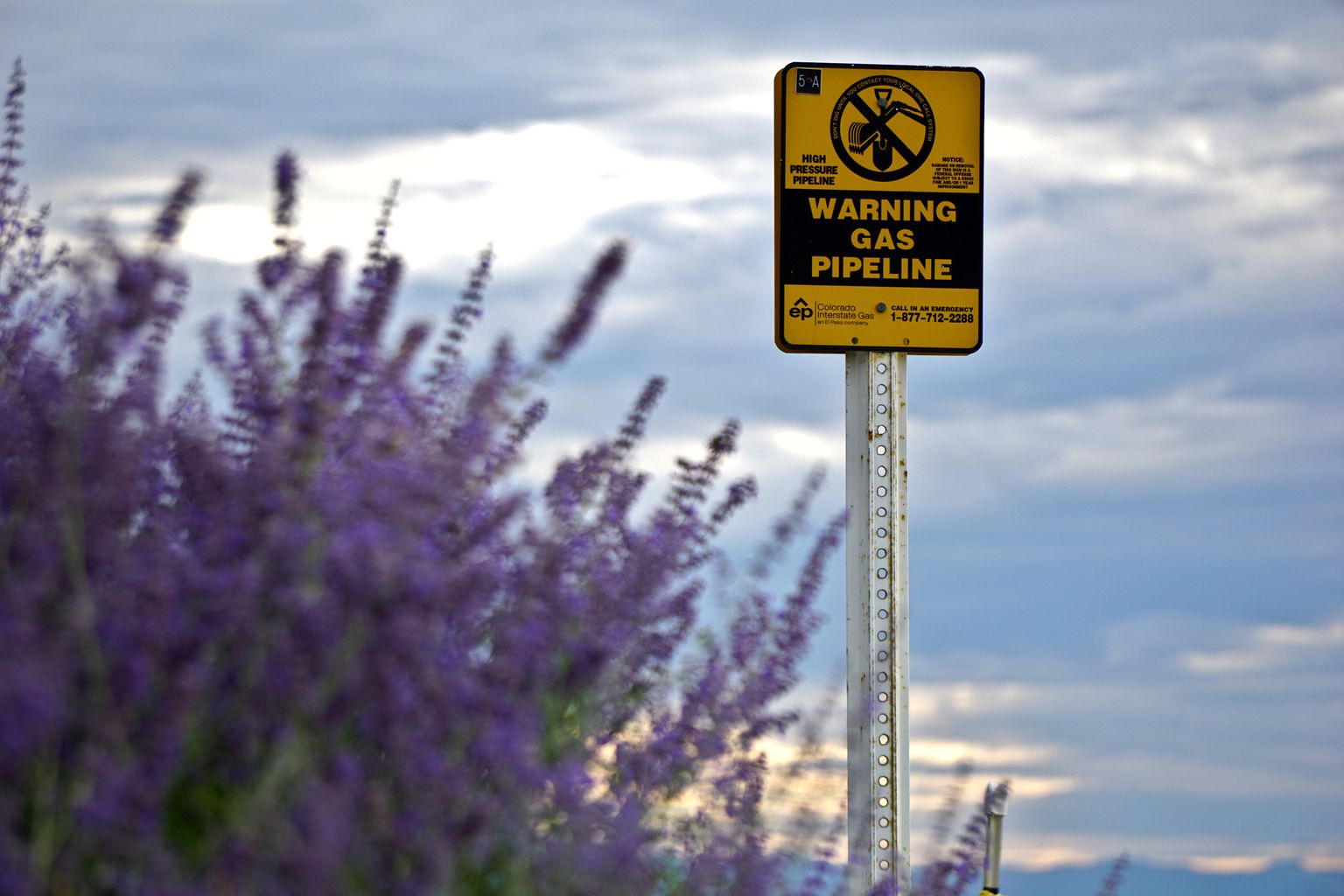
The Grid Power Problem: Why Miners Are Moving Off-Grid
The economics of Bitcoin mining in 2026 are brutally simple: electricity cost determines whether an operation prints money or bleeds it. With the network hashrate pushing past 950 EH/s and difficulty above 127 trillion, the margin between profit and loss has never been thinner. At the current U.S. industrial average of $0.0885/kWh, many grid-connected operations are barely covering their electricity bills, let alone generating meaningful returns on hardware.
Natural gas Bitcoin mining has emerged as the definitive answer to this squeeze. By pairing on-site natural gas generators with containerized Mobile Data Units (MDUs), operators are achieving effective power costs between $0.03 and $0.05 per kilowatt-hour — a 40 to 65 percent reduction compared to grid-connected facilities. That cost advantage translates directly into hashrate that remains profitable through difficulty increases, price corrections, and the looming 2028 halving.
This is not a fringe strategy. Natural gas now accounts for approximately 38 percent of Bitcoin mining’s total energy mix, making it the single largest individual energy source powering the network. The combination of NatGas generation with modular, containerized mining infrastructure represents the operational model that is defining the next era of mining at scale.
How NatGas-Powered Container Mining Works
The NatGas MDU model is straightforward in concept and powerful in execution. A natural gas generator — typically a reciprocating engine or microturbine rated between 500 kW and 2 MW — is deployed directly at a gas source. This generator feeds electricity to one or more mining containers (MDUs) positioned alongside it. The entire system operates behind the meter, meaning power never touches the utility grid.
The Core Infrastructure Stack
- Gas supply: Wellhead gas, associated gas from oil production, stranded gas reserves, or landfill gas. Flow rates are metered and regulated to match generator demand.
- Generator set: Industrial-grade natural gas generators convert raw gas to electricity. Modern units achieve 35 to 42 percent thermal efficiency and can operate on gas with varying BTU content.
- Electrical distribution: Switchgear, transformers, and PDUs step power down and distribute it to individual ASIC miners inside the container.
- Mining container (MDU): A purpose-built, climate-controlled enclosure housing ASIC miners, cooling systems, networking equipment, and monitoring infrastructure. Standard configurations range from 250 kW to 1 MW per unit.
- Remote monitoring: Satellite or cellular connectivity enables fleet management, performance tracking, and automated shutdowns from anywhere in the world.
The critical advantage is co-location: the power source and the mining load exist in the same physical footprint. There are no transmission losses, no utility interconnection fees, no demand charges, and no exposure to grid price volatility. The operator controls the entire energy supply chain from fuel source to hash output.
The Cost Advantage: NatGas vs. Grid Power
The financial case for NatGas mining is built on a structural cost advantage that grid-connected operations cannot match. Here is how the numbers break down for a representative 1 MW deployment:
Grid-connected facility (industrial rate):
- Base electricity rate: $0.06 to $0.10/kWh (varies by state and utility)
- Demand charges: $5 to $15 per kW per month
- Transmission and distribution fees: $0.01 to $0.02/kWh
- Effective all-in cost: $0.07 to $0.12/kWh
NatGas behind-the-meter operation:
- Fuel cost (wellhead or stranded gas): $0.50 to $2.50 per MMBtu
- Generator fuel consumption: approximately 8,500 BTU per kWh
- Effective fuel cost per kWh: $0.005 to $0.021
- Generator maintenance and operations: $0.008 to $0.015/kWh
- Effective all-in cost: $0.02 to $0.04/kWh
At stranded gas sites where the alternative is flaring, fuel is often available at zero or near-zero cost because the gas has no pipeline access and no other commercial use. In these scenarios, the all-in power cost drops below $0.02/kWh — a figure that makes virtually any current-generation ASIC miner profitable regardless of network difficulty or Bitcoin price movements.
For context, the difference between $0.04/kWh and $0.08/kWh on a 1 MW operation running at 95 percent uptime translates to approximately $333,000 in annual electricity savings. Over the typical three-year lifecycle of a mining fleet, that is nearly $1 million in additional margin from power costs alone.
Containerized MDU Advantages: Speed, Portability, and Scale
The container form factor is what makes NatGas mining operationally viable at remote and off-grid locations. Traditional brick-and-mortar data centers require 12 to 20 months of construction, extensive permitting, and millions in site preparation before a single ASIC powers on. Containerized MDUs eliminate most of that timeline and cost.
Rapid Deployment
A fully configured mining container ships from the manufacturer with electrical distribution, cooling, racking, and networking already installed and tested. On-site deployment involves placing the unit on a prepared pad, connecting power from the generator, and establishing network connectivity. Total time from delivery to hashing: two to six weeks, compared to seven to twenty months for a permanent facility. Rax Mining’s NatGas MDU solutions are engineered specifically for this rapid-deployment model.
Portability and Asset Protection
Unlike a permanent building, a mining container is a relocatable asset. If a gas well depletes, lease terms change, or a better site becomes available, the entire operation can be disconnected, transported, and redeployed. This portability fundamentally changes the risk profile of mining infrastructure investments. The container retains residual value regardless of the site’s future, and operators are never locked into a location that stops making economic sense.
Modular Scalability
NatGas container deployments scale linearly. An operator can start with a single 1 MW unit and add containers as gas supply and capital allow, growing to 5 MW, 10 MW, or even 30 MW without redesigning the site infrastructure. Each container is an independent, self-contained mining unit. This modular approach means capital deployment matches revenue generation — there is no requirement to fund 30 MW of infrastructure before earning the first satoshi. Rax Mining’s hosting infrastructure supports deployments at every scale from single containers to multi-megawatt installations.
Environmental Benefits: Turning Waste Into Hashrate
The environmental argument for NatGas Bitcoin mining has shifted from defensive to proactive. Three specific mechanisms make this model a net positive for emissions reduction.
Stranded Gas Capture
The U.S. alone vents or flares an estimated 1.5 billion cubic feet of natural gas per day from oil production sites where pipeline infrastructure does not exist. This gas has no market and no transportation route. Without on-site utilization, it is either burned in an open flare (destroying 90 to 95 percent of methane) or vented directly into the atmosphere (destroying zero percent). Bitcoin mining generators consume this gas productively and destroy up to 99.9 percent of methane — significantly outperforming even well-maintained flares.
Flare Mitigation and Regulatory Compliance
The EPA’s NSPS OOOOb rule requires oil and gas operators to eliminate routine flaring by 2026 unless it is technically infeasible. Using stranded gas for on-site power generation — including Bitcoin mining — qualifies as a “beneficial use” under this regulation. Mining operators who deploy at flare sites are not merely reducing emissions; they are providing a compliance pathway for oil and gas producers who would otherwise face regulatory penalties. This creates a powerful alignment of incentives between the energy and mining industries.
Methane Destruction Efficiency
Methane has a global warming potential more than 25 times that of carbon dioxide over a 100-year period. A natural gas generator powering mining equipment converts methane to CO2 and water through controlled combustion, reducing the greenhouse impact by a factor of 25. Organizations like Crusoe Energy have demonstrated this model at scale, deploying over 425 modular data centers across seven U.S. states and Argentina, capturing nearly 22 billion cubic feet of natural gas and mitigating 2.7 million metric tons of greenhouse gas emissions.
ROI Projections: A 1 MW NatGas Container Operation
The following projections are based on current market conditions as of September 2026, using conservative assumptions for a single 1 MW NatGas-powered mining container.
Capital expenditure:
- Mining container (1 MW, fully configured): $150,000 to $250,000
- Natural gas generator (1.2 MW rated): $200,000 to $350,000
- ASIC miners (approximately 300 units at 20 J/TH): $250,000 to $400,000
- Site preparation, electrical, and ancillary: $50,000 to $100,000
- Total capital outlay: $650,000 to $1,100,000
Operating economics (monthly):
- Power consumption: 1 MW at 95% uptime = 684,000 kWh/month
- Fuel cost at $0.025/kWh: $17,100/month
- Generator maintenance: $5,000 to $8,000/month
- Hashrate output (S21-class ASICs at 200 TH/s each): approximately 60 PH/s
- Monthly BTC revenue at current hashprice (~$37/PH/day): approximately $66,600/month
- Net monthly cash flow: $41,500 to $44,500
- Simple payback period: 15 to 26 months
These projections improve substantially at stranded gas sites where fuel costs approach zero. With free gas, the same 1 MW operation generates approximately $56,000 to $61,000 in monthly net cash flow, compressing the payback period to 11 to 18 months. Operators running multiple containers benefit from economies of scale on generator maintenance, site management, and monitoring infrastructure. For a detailed analysis of your specific deployment scenario, the Rax Mining profitability calculator provides customizable inputs for power cost, hashrate, and hardware configuration.
The Regulatory Landscape: Tailwinds for Behind-the-Meter Mining
The regulatory environment in 2026 has shifted decisively in favor of behind-the-meter NatGas mining operations, driven by three converging policy trends.
EPA Methane Reduction Rules
The OOOOb and OOOOc rules create direct economic incentives for oil and gas producers to find beneficial uses for stranded gas rather than flaring it. Mining operators who can demonstrate methane destruction efficiency above 98 percent gain preferential treatment as compliance partners for upstream producers. This regulatory pressure is expanding the inventory of available gas sites and, in many cases, creating scenarios where gas is offered to miners at below-market or zero cost in exchange for documented emissions reductions.
State-Level Mining Incentives
Texas, Wyoming, North Dakota, Oklahoma, and several other energy-producing states have enacted legislation or regulatory frameworks that explicitly support behind-the-meter power generation for data center and mining operations. These frameworks typically exempt behind-the-meter operations from utility franchise fees, transmission charges, and certain permitting requirements that apply to grid-connected facilities. Wyoming’s industrial-use energy legislation, in particular, has created a favorable environment for NatGas mining deployments on state and federal land.
Carbon Credit Opportunities
Verified methane destruction at flare gas sites can generate carbon credits under several voluntary and compliance frameworks. While the carbon credit market remains fragmented, operators who maintain detailed emissions monitoring and third-party verification can generate supplemental revenue of $5 to $15 per metric ton of CO2-equivalent avoided. For a 1 MW operation destroying 100 percent of wellhead gas, this can represent $10,000 to $30,000 in annual supplemental revenue.
Choosing the Right NatGas MDU Configuration
Not all NatGas mining deployments are created equal. The optimal configuration depends on gas supply characteristics, site conditions, and investment objectives. Key decision factors include:
- Gas quality and consistency: Wellhead gas composition varies significantly. Generators must be specified for the actual BTU content and contaminant levels (H2S, CO2, moisture) at each site. Sour gas requires additional treatment equipment.
- Gas volume and duration: A site producing 200 MCF/day supports approximately 400 to 600 kW of generation. Match container capacity to sustainable gas flow, not peak production.
- Climate and altitude: Generator derating at altitude (typically 3 to 4 percent per 1,000 feet above sea level) and cooling system performance in extreme heat or cold both affect sizing.
- Grid proximity: Fully off-grid sites require self-contained power, while sites near grid infrastructure may benefit from hybrid configurations that use grid power as backup.
Rax Mining’s consulting services include site assessment, gas analysis, and equipment specification to ensure each deployment is optimized for its specific conditions. Whether you are evaluating a single wellhead site or planning a multi-site rollout across a producing basin, the engineering starts with the gas supply and works outward to the hardware.
The Path Forward: NatGas Containers as Mining Infrastructure Standard
The convergence of four structural forces — rising grid power costs, tightening post-halving economics, EPA methane regulations, and maturing containerized mining technology — is making NatGas-powered container deployments the default infrastructure model for new mining capacity in North America.
Operators who secure gas supply agreements and deploy modular infrastructure now are positioning themselves with the lowest cost basis in the industry. When the 2028 halving cuts block rewards to 1.5625 BTC, the operations still standing will be those running at $0.03 to $0.04 per kilowatt-hour, not those paying grid rates of $0.08 or more.
The question for mining operators in 2026 is no longer whether NatGas containers represent the future. The question is how quickly you can deploy them.
Ready to explore NatGas-powered mining for your operation? View Rax Mining’s NatGas MDU solutions, browse available mining hardware, or contact our team to discuss your deployment scenario.
Explore Rax Mining
- Bitcoin Miner Hosting — Competitive rates from $0.075/kWh
- NatGas MDU Units — 1MW modular datacenter containers
- Mining Profitability Calculator — Estimate your mining returns
- Our Facility — Tour our mining infrastructure