Choosing the right cooling strategy for your ASIC miners is no longer just a facility management decision — it is one of the biggest levers on your bottom line. In 2026, with post-halving margins tighter than ever, the difference between immersion cooling and traditional air cooling can determine whether your mining operation runs profitably or bleeds cash.
This guide breaks down both cooling methods head-to-head, covering efficiency, cost, hardware longevity, noise, scalability, and total ROI — so you can make the right choice for your specific situation.
Understanding the Two Approaches
How Air Cooling Works in Mining Facilities
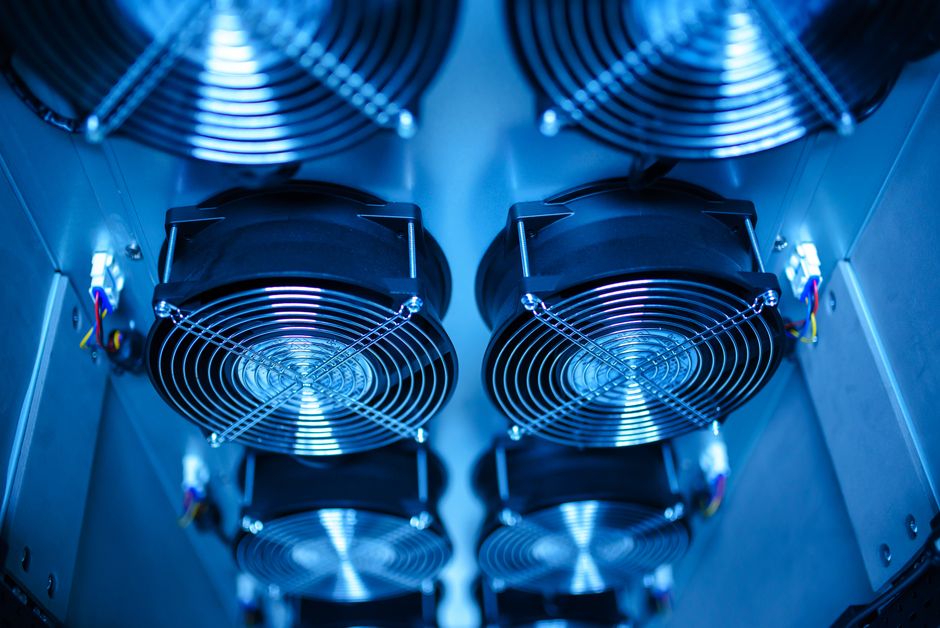
Air cooling is the traditional and most widely deployed method in Bitcoin mining. ASIC miners ship with built-in fans that push ambient air across internal heat sinks and hash boards to dissipate thermal energy. In a facility setting, operators supplement these onboard fans with industrial exhaust systems, intake louvers, evaporative cooling walls, and sometimes spot cooling units to manage ambient temperatures across hundreds or thousands of machines.
The appeal is simplicity. Air-cooled setups require minimal specialized infrastructure beyond proper ventilation, electrical distribution, and rack space. Most hosting providers operate air-cooled facilities because the barrier to entry is lower and the operational model is well understood.
How Immersion Cooling Works
Immersion cooling submerges entire ASIC miners in a bath of dielectric (non-conductive) fluid. This engineered coolant — typically a synthetic or mineral-based oil — absorbs heat directly from every component on the hash board, power supply, and control board simultaneously. The heated fluid is then circulated through a heat exchanger (often a dry cooler or cooling tower) and returned to the tank.
Because liquid is roughly 1,000 times more effective at transferring heat than air, immersion systems achieve dramatically lower operating temperatures and more uniform thermal distribution across the machine. There are no fans — the ASIC’s onboard fans are removed entirely before submersion.
Efficiency and Power Consumption: The Numbers
This is where the financial case for immersion cooling gets compelling. Facility efficiency is measured by Power Usage Effectiveness (PUE) — the ratio of total facility power to the power consumed by computing equipment alone.
- Air-cooled facilities typically operate at a PUE of 1.3 to 1.6. That means for every 1 MW powering miners, another 300-600 kW goes to cooling infrastructure (fans, HVAC, evaporative systems).
- Immersion-cooled facilities achieve PUE between 1.02 and 1.10. Cooling overhead drops to as little as 2-10% of total power draw.
At scale, this difference is massive. Consider a 10 MW mining operation paying $0.065/kWh (comparable to Rax Mining’s hosting rates):
- Air cooling at PUE 1.4: Total draw = 14 MW. Annual cooling cost = ~$2.28 million in overhead power.
- Immersion at PUE 1.05: Total draw = 10.5 MW. Annual cooling cost = ~$284,000 in overhead power.
- Annual savings: approximately $2 million on cooling power alone.
For operators evaluating their mining profitability, this efficiency gap translates directly into hashrate-per-dollar improvement.
Hardware Longevity and Maintenance
Air Cooling: The Wear Factor
Air-cooled ASIC miners face several degradation vectors:
- Dust accumulation clogs heat sinks and reduces airflow over time, requiring regular cleaning cycles.
- Fan failure is the most common hardware issue. Each miner runs multiple high-RPM fans 24/7, and fan bearings wear out within 12-18 months.
- Thermal cycling — temperature swings between day/night or seasonal changes — stresses solder joints and can cause hash board failures.
- Corrosion from humidity, especially in facilities without climate control, degrades PCB traces and connectors.
Typical air-cooled ASIC lifespan in a well-maintained facility: 3-4 years before significant performance degradation.
Immersion Cooling: Extended Hardware Life
Immersion eliminates most of these failure modes:
- No dust exposure — hardware is sealed in fluid, eliminating particulate contamination entirely.
- No fans — the primary mechanical failure point is removed from the equation.
- Stable temperatures — fluid maintains consistent operating temperature regardless of ambient conditions, eliminating thermal cycling stress.
- Corrosion protection — dielectric fluid shields components from moisture and oxidation.
Miners in immersion systems can potentially run for 5-8 years with minimal degradation, providing 2-3 extra years of mining revenue compared to air-cooled hardware. That extended lifespan directly improves total cost of ownership and hardware investment returns.
Overclocking and Performance Gains
Immersion cooling unlocks performance headroom that air cooling simply cannot match. Because the fluid removes heat so efficiently, operators can safely overclock their ASIC miners by 20-40% above stock settings without exceeding safe thermal thresholds.
For example, an Antminer S21 rated at 200 TH/s on air cooling might achieve 250-270 TH/s when immersed — effectively gaining 25-35% more hashrate from the same hardware investment. At current network difficulty levels, that additional hashrate translates directly to higher daily revenue.
Air-cooled miners, by contrast, are generally limited to stock speeds or modest overclocks of 5-10% before hitting thermal limits. Pushing beyond that risks throttling, instability, or permanent hash board damage. Firmware solutions like Braiins OS+, LuxOS, and Vnish can optimize air-cooled performance, but the thermal ceiling remains the hard constraint.
Noise Levels: A Practical Consideration
Air-cooled ASIC miners are extremely loud. A single Antminer S21 produces approximately 75 decibels — comparable to a vacuum cleaner running continuously. A facility with hundreds of machines requires hearing protection for all personnel and creates significant community noise concerns, particularly in areas with residential neighbors or noise ordinances.
Immersion-cooled miners produce virtually zero noise. With fans removed and all moving parts limited to fluid circulation pumps, immersion facilities operate at conversational volume levels (40-50 dB). This opens up site selection possibilities that would be impossible with air cooling, including urban and suburban locations.
Cost Comparison: Upfront vs. Ongoing
Air Cooling Capital Costs
- Infrastructure: Ventilation systems, exhaust fans, intake louvers, optional evaporative cooling: $50-150 per kW of deployed capacity.
- Facility: Standard industrial warehouse or container with electrical distribution.
- Maintenance: Fan replacements, regular cleaning, HVAC upkeep: $100-200 per miner per year.
Immersion Cooling Capital Costs
- Tanks and fluid: $500-1,500 per miner for single-phase immersion (tank + dielectric fluid).
- Heat rejection: Dry coolers or cooling towers: $200-500 per kW.
- Preparation: Fan removal, connector sealing, and miner preparation: $50-100 per unit.
- Maintenance: Lower ongoing costs (no fan replacements, no cleaning), but fluid monitoring and periodic top-off required.
The upfront investment for immersion is 3-5x higher than air cooling. However, with a typical payback period of 6-18 months from combined energy savings, overclocking gains, and reduced maintenance, the total cost of ownership over a 3-5 year horizon favors immersion for operations above 1 MW.
Scalability and Density
Immersion cooling achieves significantly higher power density per square foot. Because heat removal is so efficient, operators can pack more machines into less space. A typical immersion facility can deploy 50-100 kW per rack compared to 10-20 kW per rack in air-cooled setups — a 5x improvement in density.
For operators leasing facility space or evaluating locations, this density advantage means lower real estate costs per unit of hashrate deployed.
Which Cooling Method Is Right for You?
Air Cooling Makes Sense When:
- You are deploying fewer than 100 miners or under 500 kW.
- You need to get operational quickly with minimal upfront investment.
- You are using a third-party hosting provider (most operate air-cooled facilities).
- Your electricity rate is low enough that cooling overhead does not materially impact margins.
- You want to maintain manufacturer warranties (some void coverage for immersed machines).
Immersion Cooling Makes Sense When:
- You are deploying at scale (1 MW+) and plan to operate for 3+ years.
- Electricity costs are a primary margin concern and you need every efficiency gain.
- You want to overclock hardware for maximum hashrate without risking damage.
- Noise restrictions limit your site options.
- You are building a purpose-built facility and can design around immersion from the start.
- You want to maximize hardware resale value by minimizing wear.
The Hybrid Approach: What Leading Operators Are Doing
Many of the largest mining operations in 2026 are adopting a hybrid strategy. They run the bulk of their fleet on air cooling at low-cost hosting sites and deploy a smaller immersion-cooled segment for their newest, most efficient machines (like the Antminer S21 XP Hyd) where overclocking gains justify the additional infrastructure cost.
This approach balances capital efficiency with operational performance. The air-cooled fleet handles baseline hashrate production, while the immersion fleet targets maximum efficiency and revenue per watt.
Frequently Asked Questions
Does immersion cooling void ASIC miner warranties?
In most cases, yes — unless the machine is specifically rated for immersion (like hydro-cooled models from Bitmain or MicroBT). Converting an air-cooled miner to immersion typically voids the manufacturer warranty. However, the extended hardware lifespan from immersion often outweighs the warranty benefit.
What type of fluid is used for immersion cooling?
Single-phase immersion systems use engineered dielectric fluids — typically synthetic hydrocarbons or mineral oils specifically formulated for electronics cooling. These fluids do not conduct electricity, have high heat capacity, and are chemically stable over years of operation.
Can I convert my existing air-cooled miners to immersion?
Yes, most SHA-256 ASIC miners can be converted. The process involves removing all fans, sealing certain connectors, and sometimes modifying the control board firmware to suppress fan-error alerts. Total conversion cost is typically $50-100 per machine plus the immersion tank and fluid.
How does immersion cooling affect resale value?
Immersion-cooled miners generally maintain higher resale value because they experience less physical wear. Hash boards remain clean, solder joints are not stressed by thermal cycling, and there is no dust contamination. Buyers in the secondary market often pay a premium for immersion-maintained hardware.
Bottom Line
For small-to-medium operations using hosted infrastructure, air cooling remains the practical and cost-effective choice. For operators building or scaling their own facilities above 1 MW, immersion cooling delivers measurable advantages in efficiency, hardware longevity, and total ROI that compound over time.
The key is matching your cooling strategy to your scale, timeline, and electricity costs. Whether you choose air, immersion, or a hybrid approach, the right cooling decision starts with understanding your operational economics — and working with experienced hosting partners who can help you model the numbers.
Ready to explore hosting options with optimized cooling infrastructure? Contact Rax Mining to discuss your deployment needs.
Explore Rax Mining
- Bitcoin Miner Hosting — Competitive rates from $0.075/kWh
- NatGas MDU Units — 1MW modular datacenter containers
- Mining Profitability Calculator — Estimate your mining returns
- Our Facility — Tour our mining infrastructure