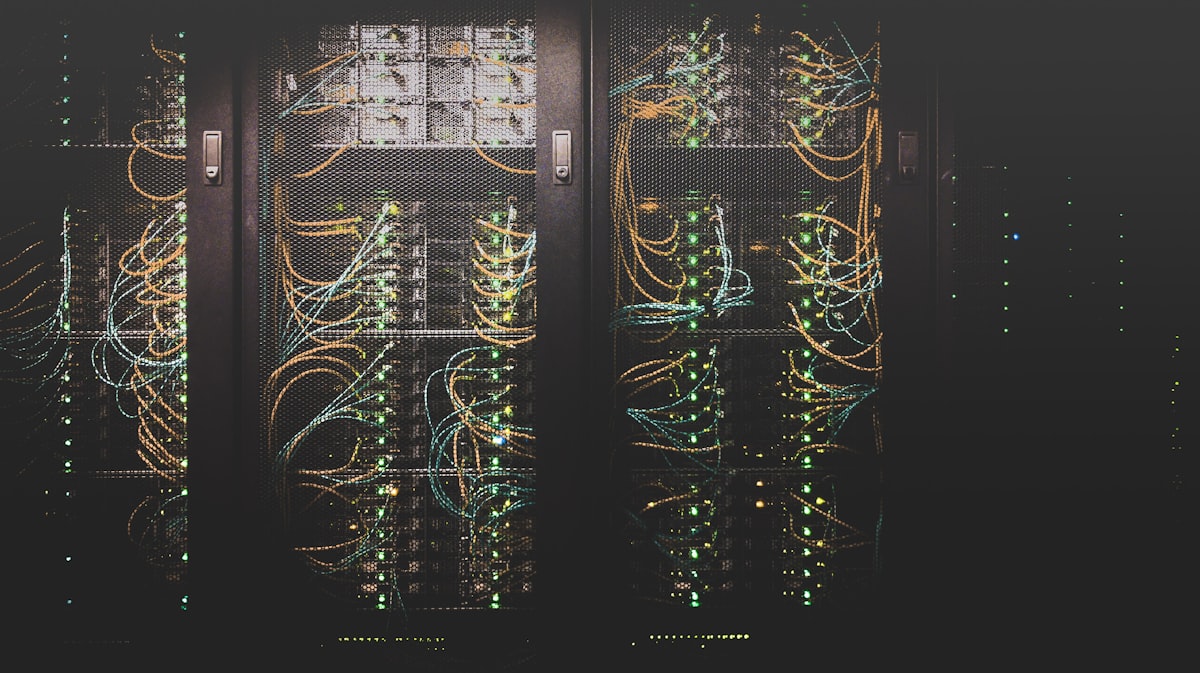
The Bitcoin mining industry is undergoing its most significant strategic pivot since the 2024 halving. In 2026, major publicly traded mining companies are converting surplus power capacity and data center infrastructure into AI computing revenue, creating a dual-use model that fundamentally changes mining economics. Hut 8 alone has contracted over $26 billion in AI data center agreements. Core Scientific and TeraWulf have signed multi-billion-dollar deals with hyperscalers. The question for every mining operator is no longer whether to diversify into AI hosting — it is how quickly they can capture this opportunity before the window narrows.
This guide examines the convergence of Bitcoin mining and AI data center operations: why the overlap exists, what it takes to convert mining infrastructure, the real economics of dual-revenue models, and how independent operators can position themselves alongside the publicly traded giants already making this transition.
Why Bitcoin Mining Infrastructure Maps to AI Computing
Bitcoin mining and AI training share three critical infrastructure requirements that make mining facilities natural candidates for AI workloads: massive power capacity, advanced cooling systems, and physical security in remote or semi-remote locations with favorable energy economics.
A typical 10 MW Bitcoin mining facility already has the power delivery infrastructure — transformers, switchgear, distribution panels, and utility interconnection — that an AI cluster requires. The power density per rack differs (ASIC miners run 5-8 kW per unit vs. AI GPU servers at 40-70 kW per rack), but the upstream electrical infrastructure is largely transferable. The facility already has relationships with utilities, existing power purchase agreements, and proven grid interconnection — elements that take 12-24 months to establish from scratch for a new AI data center.
Cooling infrastructure presents both an advantage and a challenge. Mining facilities with immersion cooling or advanced air cooling can repurpose those systems for GPU clusters, though AI workloads require tighter temperature control (typically 18-27 degrees Celsius vs. the wider tolerance of ASIC miners). Facilities running basic air cooling may need significant HVAC upgrades.
The Economics of Dual-Revenue Mining Operations
The economic case for adding AI hosting to a mining operation is driven by a simple comparison: AI hosting generates $100-200+ per kW per month in revenue versus $15-40 per kW per month for Bitcoin mining at current hashprices. When Bitcoin hashprice sits near $32/PH/day and network difficulty hovers around 127T, many mining operations running older-generation hardware are at or below breakeven. AI hosting provides a floor of predictable revenue that mining alone cannot offer.
Consider a 10 MW facility currently running 100% Bitcoin mining. At $0.075/kWh power costs through a Rax Mining hosting arrangement, the facility generates roughly $150,000-300,000 per month in mining revenue depending on hardware efficiency and BTC price. Converting 3 MW of that capacity to AI hosting at $150/kW/month adds $450,000 in predictable monthly revenue while reducing Bitcoin mining revenue by approximately 30%. The net result: higher total revenue with dramatically lower volatility.
The capital expenditure to convert mining space to AI-ready infrastructure ranges from $8-15 million per MW, depending on the starting condition of the facility and the tier of AI customer being targeted. Enterprise AI customers (banks, pharmaceutical companies, autonomous vehicle developers) require Tier III or higher redundancy, which means dual power feeds, N+1 cooling, and 99.98% uptime SLAs — a significant step up from the 95-99% uptime standards common in Bitcoin mining colocation.
What the Publicly Traded Miners Are Doing
The publicly traded mining companies provide a roadmap for how this convergence is playing out at scale. Understanding their moves helps independent operators identify which strategies are replicable and which require institutional-scale capital.
Hut 8 has built the largest AI data center pipeline in the mining industry, with contracted revenue exceeding $26.6 billion. Their strategy centers on acquiring existing data center assets and converting surplus mining capacity into GPU-ready infrastructure. Hut 8’s advantage comes from their early moves: they secured power contracts and land before the AI demand wave hit mining markets.
Core Scientific emerged from bankruptcy restructuring with a clear dual-use strategy, signing agreements with AI hyperscalers that leverage their existing power infrastructure across multiple U.S. sites. Core Scientific’s model demonstrates that even distressed mining assets can find new life in the AI economy.
TeraWulf has focused on nuclear and zero-carbon powered AI hosting, positioning its facilities as ESG-compliant options for AI customers who face increasing pressure to reduce the carbon footprint of their computing. This niche strategy commands premium pricing — customers willingly pay 20-30% above market rates for verifiably clean AI computing.
Practical Requirements for Converting Mining Capacity to AI Hosting
Converting mining infrastructure to accommodate AI workloads requires upgrades across five areas. Operators considering this transition should evaluate each area against their existing capabilities before committing capital.
1. Power Quality and Redundancy
ASIC miners tolerate brief power interruptions and voltage fluctuations that would crash GPU clusters running multi-day training jobs. AI hosting requires uninterruptible power supplies (UPS), automatic transfer switches (ATS), and generator backup. Budget $500-800 per kW for power conditioning and redundancy upgrades.
2. Network Connectivity
Mining facilities typically operate on modest internet connections (100 Mbps to 1 Gbps) since ASIC miners exchange small data packets. AI workloads require 10-100 Gbps connectivity with low latency and redundant fiber paths. In remote mining locations, the cost of pulling dedicated fiber can reach $50,000-200,000 per mile.
3. Cooling Precision
GPU servers require precise temperature and humidity control. Mining facilities with existing immersion cooling systems have an advantage here, as immersion is increasingly the preferred cooling method for high-density AI racks. Air-cooled mining facilities need to add hot/cold aisle containment, precision air handlers, and environmental monitoring at the rack level.
4. Physical Security and Compliance
AI customers processing sensitive data (healthcare, financial, government) require SOC 2 Type II compliance, which mandates access controls, surveillance, visitor logs, and documented security procedures. Mining facilities built for hardware security may need to add biometric access, mantrap entries, and compliance documentation systems.
5. Staff Expertise
Mining technicians maintain ASIC hardware. AI hosting requires network engineers, systems administrators, and customer support staff who understand GPU infrastructure, InfiniBand networking, and enterprise SLAs. Plan for 2-3 additional specialized hires per MW of AI capacity.
Revenue Models for Mining-AI Hybrid Operations
Three revenue models have emerged as miners add AI capacity. Each offers different risk-reward profiles and capital requirements.
Bare-metal colocation provides power and physical space to AI customers who bring their own GPU hardware. This model requires the least conversion capital (primarily power and cooling upgrades) and generates $80-120 per kW per month. It is the most accessible entry point for independent operators.
Managed GPU hosting involves purchasing GPU servers and renting them as a service. This model requires substantial capital ($150,000-400,000 per NVIDIA H100 or Blackwell server) but generates $200-500+ per kW per month. The higher margins compensate for the hardware depreciation risk.
Hybrid flex capacity dynamically allocates power between mining and AI based on relative profitability. When BTC price rises and hashprice improves, more capacity shifts to mining. When hashprice drops, capacity flows to AI hosting. This requires sophisticated power management and contractual flexibility with AI customers but delivers the optimal economic result across market cycles.
How Independent Operators Can Compete
Independent mining operators (1-10 MW) cannot match the scale of publicly traded miners, but they can compete in specific niches. Mid-market AI customers — startups, research labs, small enterprises — are underserved by hyperscalers and too small for the large mining companies to prioritize. These customers need 50-500 kW of GPU capacity with responsive support and flexible contracts.
Start with bare-metal colocation: convert 1-2 MW of mining capacity to AI-ready space with proper cooling, power redundancy, and 10 Gbps connectivity. Partner with GPU-as-a-service brokers who aggregate small customers. This approach lets you test the AI market with $500,000-1,500,000 in conversion capital rather than the $8-15 million per MW required for enterprise-grade facilities.
Operators already hosting with Rax Mining can explore hybrid arrangements where existing power infrastructure supports both mining and AI colocation. The shared power delivery and site management reduce the marginal cost of adding AI capacity.
Risks and Considerations
The mining-to-AI pivot carries risks that operators must evaluate honestly.
Customer concentration: Many mining companies are signing single large AI contracts. If that customer churns or renegotiates, revenue drops dramatically. Diversify across multiple AI customers when possible.
Technology cycles: GPU technology evolves rapidly. Hardware purchased today may be obsolete in 2-3 years. Structure managed hosting contracts with refresh clauses and depreciation schedules that protect your margins.
Regulatory uncertainty: AI data centers face growing regulatory scrutiny around energy consumption, data privacy, and export controls on AI hardware. Mining operators already navigate energy regulation, but AI adds new compliance layers.
Opportunity cost: Every megawatt diverted to AI is a megawatt not mining Bitcoin. If BTC rallies significantly (as it has in August 2026, with prices rebounding above $76,000), the relative economics can shift back toward mining. The hybrid flex model mitigates this risk but adds operational complexity.
The Path Forward
The convergence of Bitcoin mining and AI data centers is not a temporary trend — it reflects a structural reality. Both industries compete for the same fundamental resource: cheap, reliable, large-scale electrical power. Mining companies that secured power capacity during the 2020-2024 buildout now hold assets that AI companies need desperately and cannot replicate quickly.
For operators running mining-only businesses, the question is not whether to explore AI hosting but when and at what scale. Start by assessing your facility’s conversion readiness across the five dimensions outlined above. Identify which revenue model fits your capital position and risk tolerance. Connect with Rax Mining’s consulting team to evaluate hybrid deployment strategies that maximize your infrastructure’s total revenue per megawatt.
The operators who move now — while AI demand still outstrips data center supply by a wide margin — will capture the best economics. Those who wait may find that the cost of conversion has risen as labor, equipment, and fiber connectivity become scarcer in mining regions where AI buildout is accelerating.
Frequently Asked Questions
Can a mining facility run AI workloads without converting 100% of its capacity?
Yes. The hybrid model is the most common approach, where operators convert a portion of their facility (typically 20-40%) to AI-ready infrastructure while continuing to mine Bitcoin with the remainder. This diversifies revenue without abandoning mining entirely.
How long does it take to convert mining infrastructure to AI hosting?
A basic bare-metal colocation conversion (power conditioning, cooling upgrades, connectivity) takes 3-6 months for a 1-3 MW block. Enterprise-grade conversions targeting Tier III standards can take 9-18 months depending on permitting and equipment lead times.
Is the AI data center demand sustainable, or is it a bubble?
Current projections from major research firms estimate that global AI compute demand will grow 3-5x between 2026 and 2030. While individual companies may overbuild in the short term, the structural demand for AI training and inference capacity appears durable across healthcare, autonomous vehicles, financial modeling, and enterprise automation.
What power rate makes AI hosting more profitable than Bitcoin mining?
At current hashprices near $32/PH/day, AI hosting typically becomes more profitable than mining at any power rate above $0.04/kWh. Below $0.04/kWh with efficient hardware (sub-15 J/TH), mining can still compete. The crossover point shifts with BTC price — a sustained rally above $90,000 would push the crossover higher.
Do I need to buy GPU hardware to start AI hosting?
No. Bare-metal colocation lets you provide power, cooling, and space while customers supply their own hardware. This model has the lowest capital requirement and is the recommended starting point for mining operators new to AI hosting.
Explore Rax Mining
- Bitcoin Miner Hosting — Competitive rates from $0.075/kWh
- NatGas MDU Units — 1MW modular datacenter containers
- Mining Profitability Calculator — Estimate your mining returns
- Our Facility — Tour our mining infrastructure