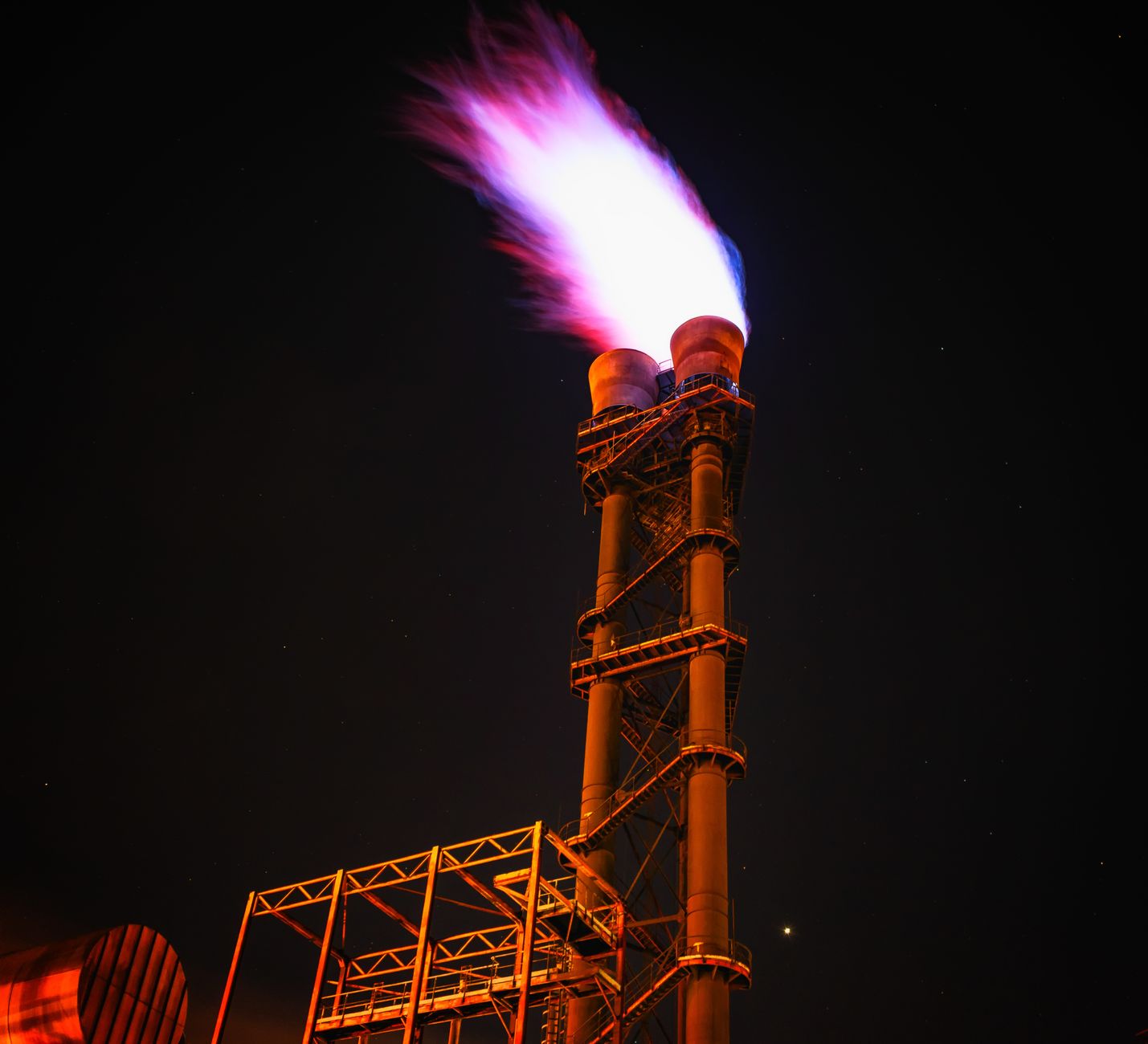
Every day, oil and gas producers burn off — or “flare” — enormous volumes of natural gas that cannot economically reach a pipeline. It is energy quite literally going up in smoke, along with the emissions it creates. Bitcoin mining has emerged as one of the most practical ways to put that stranded energy to work: converting otherwise-wasted gas into electricity, and electricity into hashrate and revenue.
What is flared and stranded gas?
When oil is extracted, natural gas often comes up with it. If there is no pipeline nearby, or if the volume is too small to justify infrastructure, that gas is “stranded.” Producers frequently flare it — burning it at the wellhead — to dispose of it safely. Flaring wastes a valuable fuel and releases CO2 and unburned methane, a potent greenhouse gas. Stranded gas represents a massive pool of low-cost, underutilized energy.
How Bitcoin mining monetizes stranded gas
The concept is elegant: bring the load to the energy instead of the energy to the load. A modular deployment places generators and ASIC miners directly at the well site. The generators convert the stranded gas into electricity, and the miners consume that electricity 24/7, producing bitcoin. Because Bitcoin mining is location-independent and interruptible, it can operate anywhere there is power — including remote well pads with no grid connection.
The benefits stack up
- Emissions reduction. Combusting gas in an engine to generate power destroys far more methane than an open flare, reducing the effective greenhouse impact of the gas that would have been flared anyway.
- New revenue for producers. Gas that had zero or negative value becomes a monetizable input, turning a disposal cost into an income stream.
- Ultra-low-cost power for miners. Stranded gas is among the cheapest energy sources available, translating into a very low cost per kilowatt-hour — the single most important variable in mining profitability.
- Grid independence. Off-grid operation avoids interconnection queues and grid constraints entirely.
The modular container approach
The key to making flare-gas mining practical is standardized, deployable infrastructure. Modular data-center units — self-contained containers housing miners, power distribution, and cooling — can be trucked to a site, connected to on-site generation, and brought online quickly. When the well’s economics change or the gas depletes, the same container can be relocated to the next site. This mobility matches the transient nature of stranded-gas resources.
Rax Mining’s natural-gas-powered modular data-center units are built for exactly this model: turnkey, containerized capacity designed to convert on-site gas into hashrate at competitive power economics, with power costs as low as $0.075/kWh.
Challenges to plan for
Flare-gas mining is not without complexity. Gas composition and pressure vary by site and affect generator performance. Uptime depends on well activity and generator maintenance. Remote sites require robust monitoring and physical security. And operators must navigate the commercial relationship with the gas producer. These are solvable engineering and logistics problems — but they reward experience and standardized infrastructure over improvised builds.
The bottom line
Flare-gas mining aligns incentives that rarely align: producers reduce waste and emissions while creating revenue, and miners access some of the cheapest power on earth. As Bitcoin mining matures, converting stranded and flared gas into hashrate is one of the clearest examples of the industry turning a problem into productive infrastructure.
To learn how modular, gas-powered mining could fit your energy assets, contact the Rax Mining team or explore our infrastructure solutions.
Explore Rax Mining
- Bitcoin Miner Hosting — Competitive rates from $0.075/kWh
- NatGas MDU Units — 1MW modular datacenter containers
- Mining Profitability Calculator — Estimate your mining returns
- Our Facility — Tour our mining infrastructure