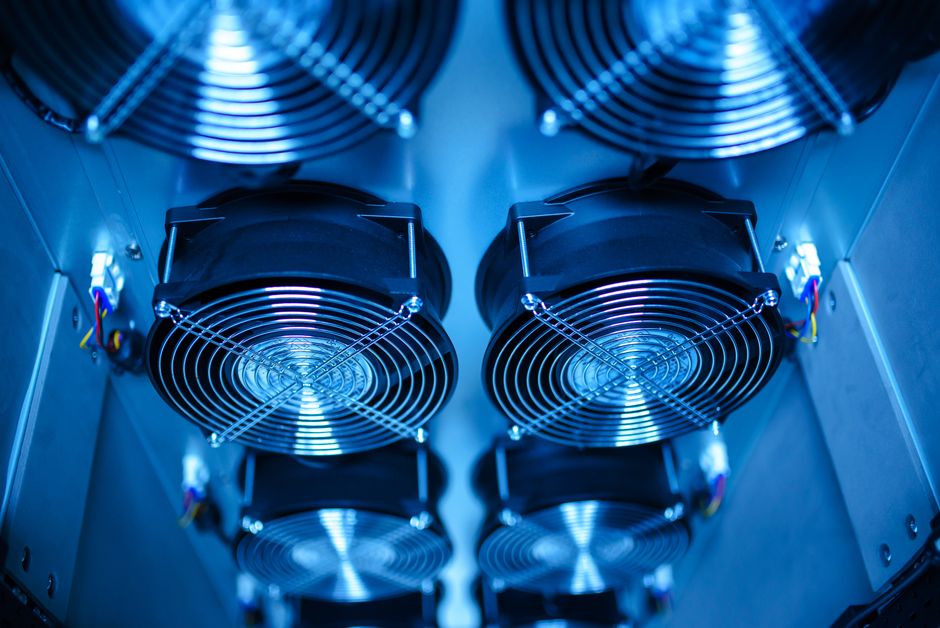
Every Bitcoin miner shares a simple, often-overlooked truth: an ASIC converts almost 100% of the electricity it draws into heat. A single modern machine pulling 3,500 watts is, thermodynamically, a 3,500-watt space heater that happens to secure the Bitcoin network as a side effect. For most operators that heat is a problem to be exhausted as fast and cheaply as possible. For a growing number of forward-thinking operations, it is a second product waiting to be sold.
Heat recovery — capturing the thermal energy an ASIC rejects and putting it to productive use — can offset heating bills, create new revenue, and improve the sustainability profile of a mining operation. This guide explains how it works, where it makes sense, and how to think about the economics.
How much heat does a Bitcoin miner actually produce?
The math is straightforward. Electrical power in equals heat power out. A rack of ten machines at 3.5 kW each rejects 35 kW of thermal energy continuously — roughly the output of a mid-size residential furnace running at full tilt, 24 hours a day, 365 days a year. A 1 MW site rejects 1 MW of heat, or about 3.4 million BTU per hour.
That is an enormous, predictable, around-the-clock thermal resource. Unlike solar or waste heat from an intermittent industrial process, mining heat is available every hour the machines are running, which for a well-managed operation is nearly all of them.
Methods of capturing mining heat
There are three broad approaches, each suited to different scales and end uses.
Forced-air capture
The simplest method. Instead of venting hot exhaust air outside, it is ducted to where warmth is useful — a warehouse, workshop, greenhouse, or barn. Air-cooled ASICs already move large volumes of air, so the infrastructure is minimal: ducting, dampers, and controls. The trade-off is that air is a low-grade heat carrier; it works well for space heating but poorly for anything requiring higher temperatures.
Hydronic (water) capture
Hydronic systems use a heat exchanger or water-cooled hardware to transfer heat into a water loop. Warm water is far more useful than warm air: it can be piped long distances, stored, and used for radiant floor heating, domestic hot water, or industrial processes. Rax Mining’s modular units support both air and hydro (liquid) cooling for exactly this reason.
Immersion capture
Immersion-cooled miners submerge hardware in a dielectric fluid, which is then run through a heat exchanger. Immersion produces the cleanest, highest-grade heat and the tightest temperature control, making it the preferred route for operations that want to sell heat as a serious product rather than simply dump it usefully.
Where mining heat becomes revenue
The best heat-recovery projects pair a miner with a nearby process that needs constant, low-cost thermal energy. Proven applications include:
- Greenhouses and controlled-environment agriculture — extending growing seasons and cutting heating costs in cold climates.
- Aquaculture — maintaining optimal water temperatures for fish and shrimp farming.
- District and residential heating — feeding warm water into building heating loops, a model already deployed in parts of northern Europe.
- Drying and dehydration — lumber kilns, grain drying, and food processing.
- Pools, spas, and hospitality — a steady, low-cost source of hot water.
- Industrial pre-heating — warming feedwater or process inputs to reduce a facility’s primary fuel burn.
In each case, the miner earns on two fronts: Bitcoin from the hashrate, and either avoided heating fuel cost or direct payment for delivered heat.
The economics of heat recovery
Heat recovery rarely changes the core mining decision — power cost and machine efficiency still dominate profitability — but it can meaningfully improve the margin at the edges. Consider a partner who currently spends heavily on propane or natural gas for heating. If a miner can displace that fuel, the value of the recovered heat is the avoided fuel cost, which in cold regions can run to tens of thousands of dollars per year for even a modest deployment.
The key variables are the temperature grade you can deliver, the distance between the miner and the heat load, and how consistently that load exists. Space heating is seasonal; a year-round industrial process is far more valuable. The capital cost of ducting, heat exchangers, and controls must be weighed against the annual heat value, and the miner must remain profitable on its own power economics before heat is even considered.
Is heat recovery right for your operation?
Heat recovery is most attractive when three conditions line up: you are mining in a cold or heating-intensive climate, you have a nearby and preferably year-round thermal load, and you can deploy hydronic or immersion cooling to deliver useful-grade heat. Operators in warm climates or without a heat off-taker will usually find the added complexity is not worth it — efficient exhaust and good airflow are the better investment.
For those in the right situation, though, heat recovery turns a pure cost center into a hybrid asset. It also strengthens the case for mining with regulators and communities, positioning the operation as an energy-efficiency partner rather than simply a large load.
Build it into the design from day one
The cheapest time to plan for heat recovery is before the concrete is poured. Retrofitting ducting, plumbing, and heat exchangers into a running site is far more expensive than designing them in. If you are planning a new build or expansion, model the heat load alongside the power load from the start.
Rax Mining designs and operates hosting and modular infrastructure with both air and liquid cooling, and our team can help you evaluate whether heat recovery fits your site and economics. To explore a custom deployment, book a consulting call or contact our team. If you are still weighing hosting versus building your own facility, our hosting service lets you deploy capacity without the capital and complexity of a ground-up build.
Explore Rax Mining
- Bitcoin Miner Hosting — Competitive rates from $0.075/kWh
- NatGas MDU Units — 1MW modular datacenter containers
- Mining Profitability Calculator — Estimate your mining returns
- Our Facility — Tour our mining infrastructure